Match List-I with List-II
|
List-I Revaluation of assets and reassessment of liabilities at the time of admission of a new partner |
List-II Journal Entry |
|
(A) For increase in the value of an asset |
(I) Revaluation A/c Dr. To Asset A/c |
|
(B) For reduction in the amount of a liability |
(II) Revaluation A/c Dr. To Liability A/c |
|
(C) For reduction in the value of an asset |
(III) Asset A/c Dr. To Revaluation A/c |
|
(D) For appreciation in the amount of a liability |
(IV) Liability A/c Dr. To Revaluation A/c |
Choose the correct answer from the options given below:
Answer & explanation
Correct answer: option 4
The correct answer is Option (4) → (A)-(III), (B)-(IV), (C)-(I), (D)-(II)
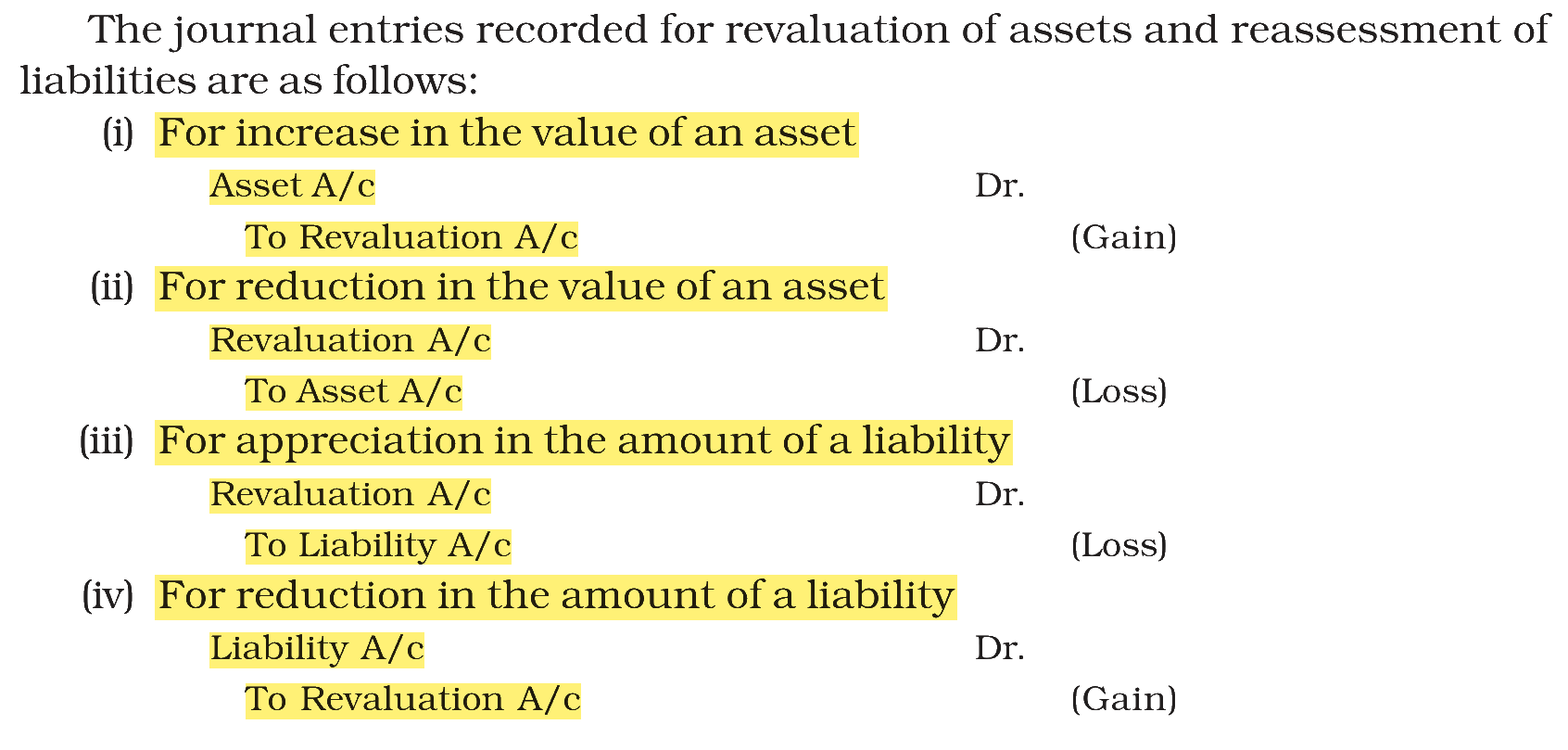
The Revaluation Account is credited with every gain (a rise in an asset or a fall in a liability) and debited with every loss (a fall in an asset or a rise in a liability).
(A) For increase in the value of an asset — this matches (III). A gain: Asset A/c Dr., To Revaluation A/c.
(B) For reduction in the amount of a liability — this matches (IV). A gain: Liability A/c Dr., To Revaluation A/c.
(C) For reduction in the value of an asset — this matches (I). A loss: Revaluation A/c Dr., To Asset A/c.
(D) For appreciation in the amount of a liability — this matches (II). A loss: Revaluation A/c Dr., To Liability A/c.
NCERT (2026-27 edition):
|