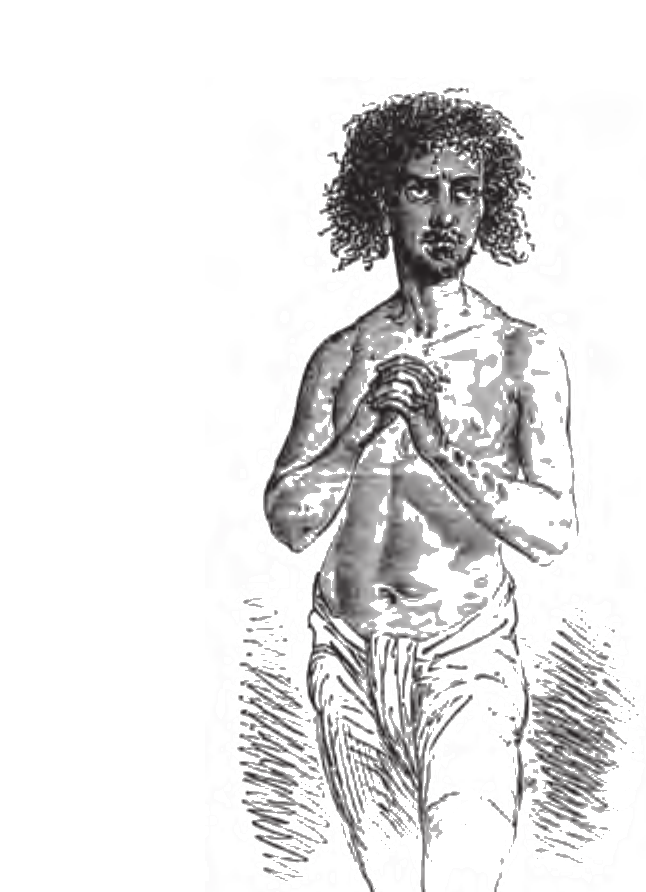
________________ was the leader of the Santhal rebellion.
Answer & explanation
Correct answer: option 4
The correct answer is Option (4) → Sidhu Manjhi
The Santhals had settled in the Rajmahal hills and cleared the forest for farming. Soon the state taxed their land heavily, moneylenders took over their land for unpaid debts, and zamindars tried to control the area. In 1855-56 the Santhals rose in revolt against zamindars, moneylenders and the colonial state. The leader of this rebellion was Sidhu Manjhi. After the revolt the British created the Santhal Pargana for the Santhals.
‘Diku’ in Option (3) was not a person: the Santhals called the outsiders who exploited them, such as the moneylenders, dikus.
Tip: This answer is printed under a picture of Sidhu Manjhi. Read the captions under the pictures and maps of every chapter; questions are often made from them.
NCERT (2025-26): “2.2 The Santhals: Pioneer settlers … The Santhals, however, soon found that the land they had brought under cultivation was slipping away from their hands. The state was levying heavy taxes on the land that the Santhals had cleared, moneylenders (dikus) were charging them high rates of interest and taking over the land when debts remained unpaid, and zamindars were asserting control over the Damin area. By the 1850s, the Santhals felt that the time had come to rebel against zamindars, moneylenders and the colonial state, in order to create an ideal world for themselves where they would rule. It was after the Santhal Revolt (1855-56 ) that the Santhal Pargana was created, carving out 5,500 square miles from the districts of Bhagalpur and Birbhum. The colonial state hoped that by creating a new territory for the Santhals and imposing some special laws within it, the Santhals could be conciliated.”
Fig. 9.11 Sidhu Manjhi, the leader of the Santhal rebellion |