
Forelimbs of man and paddles of whale are:
Answer & explanation
Correct answer: option 4
The correct answer is Option (4) → Homologous organs
Homologous organs have the same basic structure but may do different jobs. They show that the animals had a common ancestor, and they arise by divergent evolution. The forelimbs of whales, bats, cheetah and humans all have the same bones (humerus, radius, ulna, carpals, metacarpals and phalanges), although they are used for swimming, flying, running and grasping.
(1) Genetically modified organs — Incorrect. No such term applies here. The forelimbs are natural body parts.
(2) Extinct organs — Incorrect. Both forelimbs exist and work in living animals.
(3) Analogous organs — Incorrect. Analogous organs do the same job but have different structure, like the wings of a butterfly and of a bird. They arise by convergent evolution.
(4) Homologous organs — Correct. The structure is the same and the functions differ.
NCERT Extract:
What Are the Evidences for Evolution? – …
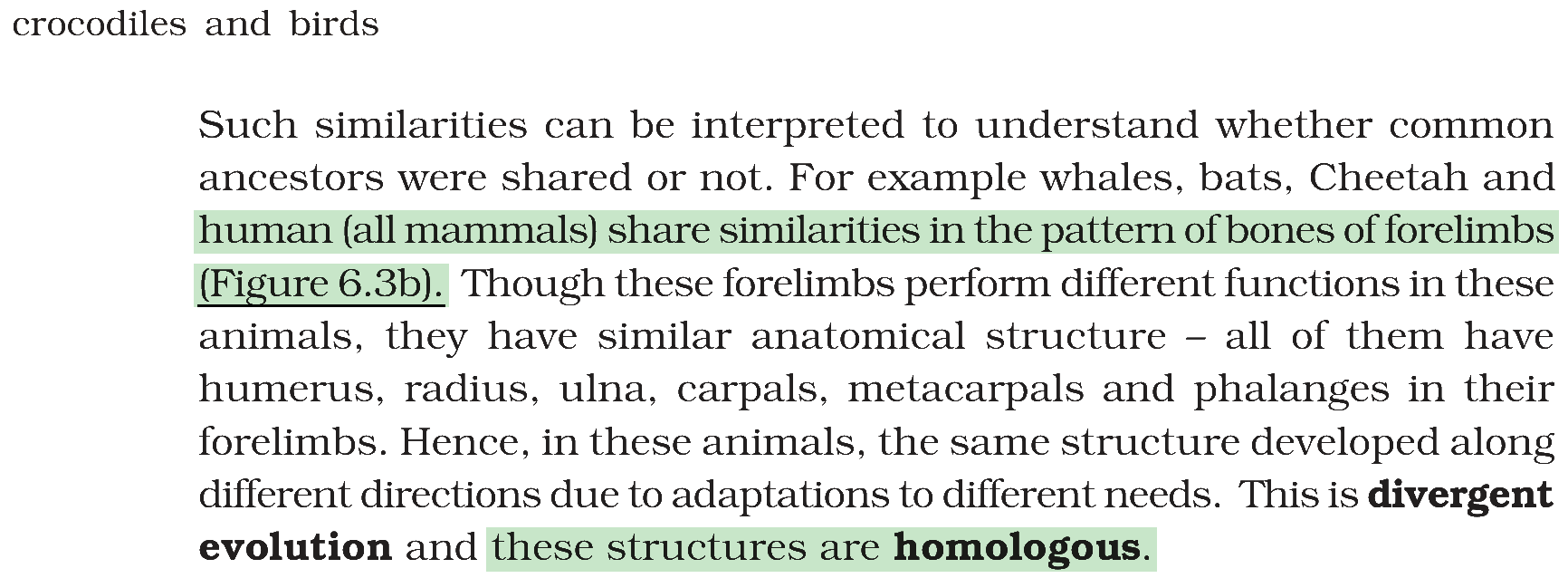
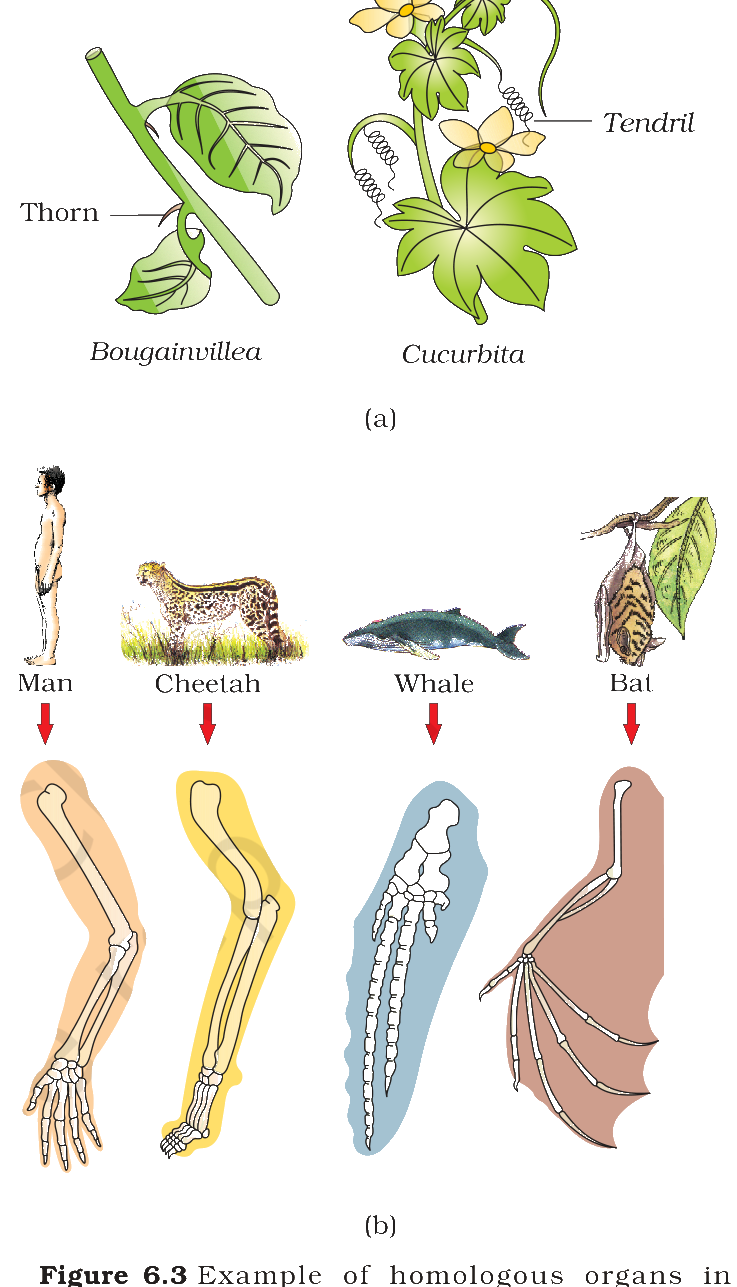
Figure 6.3 Example of homologous organs in (a) Plants and (b) Animals