Which of the following is true about Indian demography on the eve of independence ?
(A) Water and air-borne diseases were under control
(B) Infant mortality rate was 24 per thousand Live births only
(C) Overall literacy rate was less than 16 percent
(D) Life expectancy was 44 years
Choose the correct answer from the options given below :
Answer & explanation
Correct answer: option 4
The correct answer is Option (4) → (C) and (D) only
Note: The given answer is as per the official NTA Answer Key. For this question, Option (2) could also be a possible answer, as explained below.
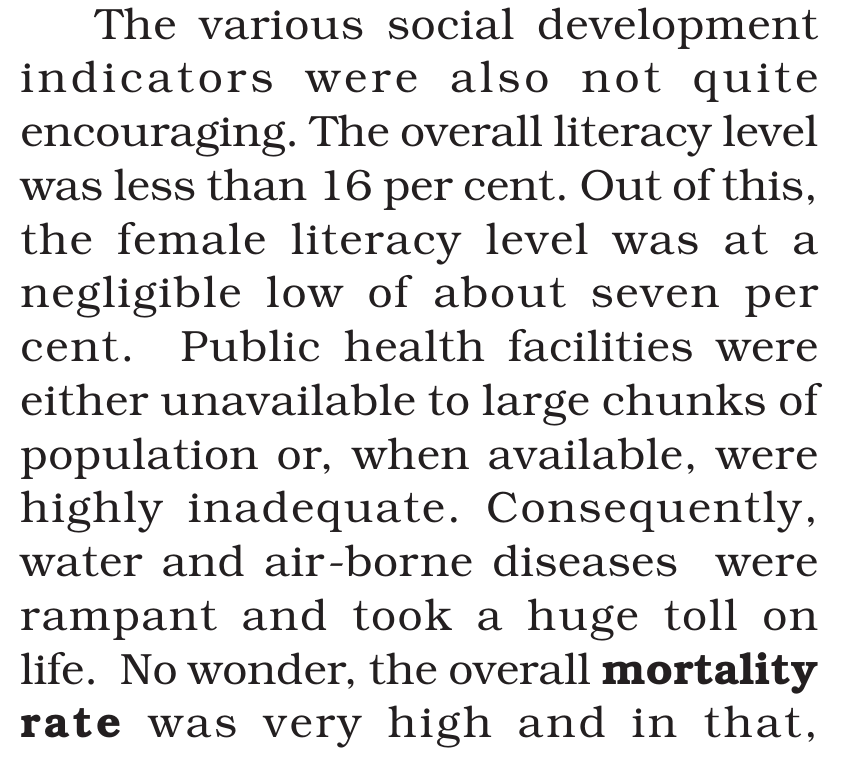
On the eve of independence, the social indicators of India were very poor. Health care was scarce, and death rates were very high.
(A) Water and air-borne diseases were under control — False. Public health facilities were highly inadequate, so water and air-borne diseases were rampant and took a huge toll on life.
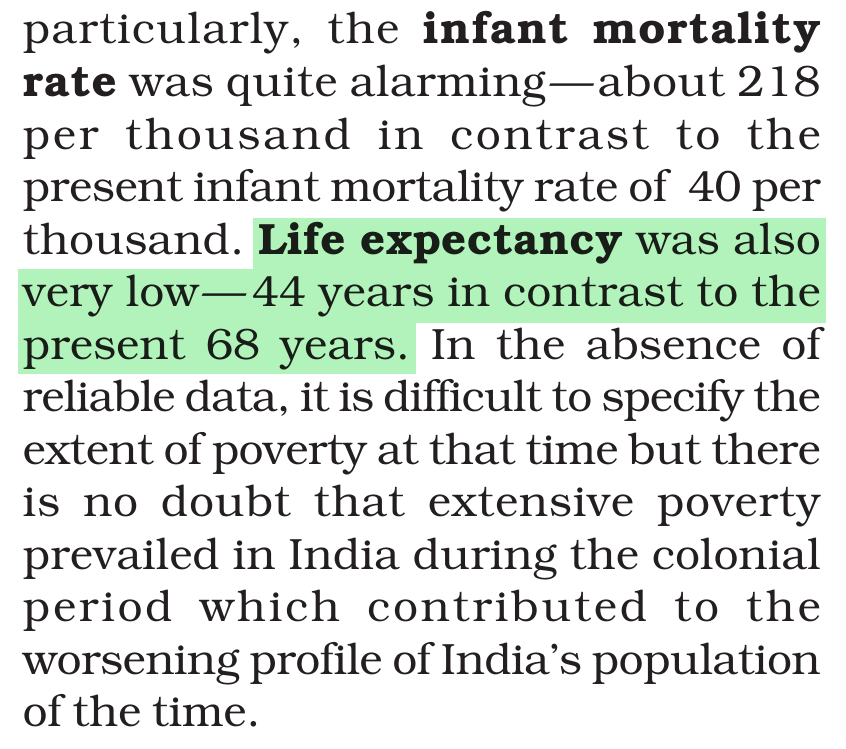
(B) Infant mortality rate was 24 per thousand Live births only — False. The infant mortality rate was alarming, about 218 per thousand.
(C) Overall literacy rate was less than 16 percent — True. The overall literacy level was less than 16 per cent, and female literacy was only about seven per cent.
(D) Life expectancy was 44 years — True as per the 2018-19 print. That print put life expectancy at 44 years. The later prints give 32 years, and with that figure (D) is false.
Note: The figure for life expectancy on the eve of independence changed between prints of the NCERT book. The 2018-19 print gave it as 44 years. The NCERT prints from 2021-22 onwards, including the NCERT book (2026-27), give it as 32 years. With 44 years, (C) and (D) are true and the answer is Option (4), as per the NTA answer key. With 32 years, only (C) is true and the answer is Option (2).
NCERT (2026-27): “1.6 Demographic Condition …The various social development indicators were also not quite encouraging. The overall literacy level was less than 16 per cent. Out of this, the female literacy level was at a negligible low of about seven per cent. Public health facilities were either unavailable to large chunks of population or, when available, were highly inadequate. Consequently, water and air-borne diseases were rampant and took a huge toll on life. No wonder, the overall mortality rate was very high and in that, particularly, the infant mortality rate was quite alarming —about 218 per thousand in contrast to the present infant mortality rate of 28 per thousand. Life expectancy was also very low — 32 years in contrast to the present 70 years.…”
|