Match the book/action in List I with their proponent in List II
| LIST-I (Book/Action) | LIST-II (Proponent) | ||
| A. | The Meghalaya Succession Act | I. | Imtiyaz Ahmad |
| B. | Contemporary India: A sociological view | II. | Patricia Uberoi |
| C. | Family, kinship and marriage in India | III. | Government of India |
| D. | Family, kinship and marriage among Muslims in India | IV. | Satish Deshpande |
Choose the correct answer from the options given below:
Answer & explanation
Correct answer: option 2
The correct answer is Option (2) → A-III, B-IV, C-II, D-I
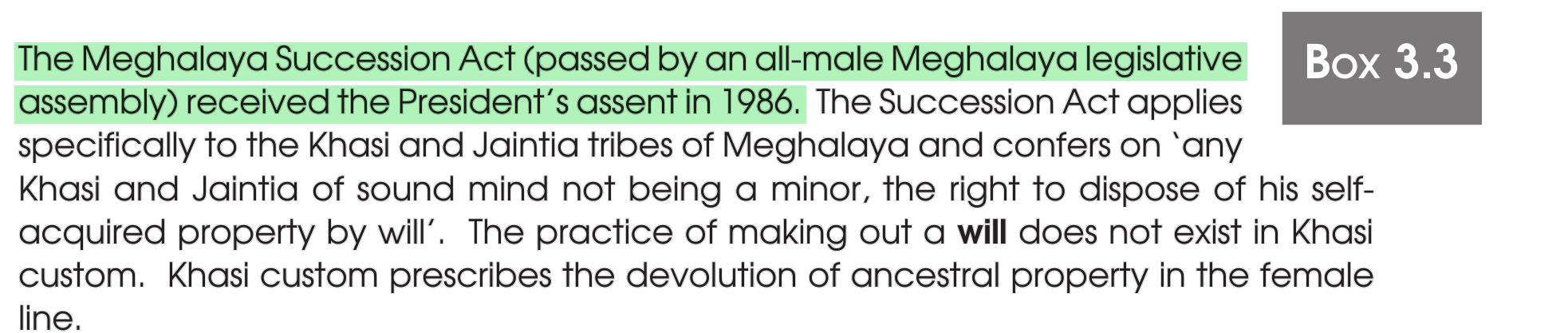
(A) The Meghalaya Succession Act — this matches (III) Government of India. The Act is a law, not a book: it was passed by the Meghalaya legislative assembly and received the President’s assent in 1986, so of the four entries it goes with the government and not with a scholar.
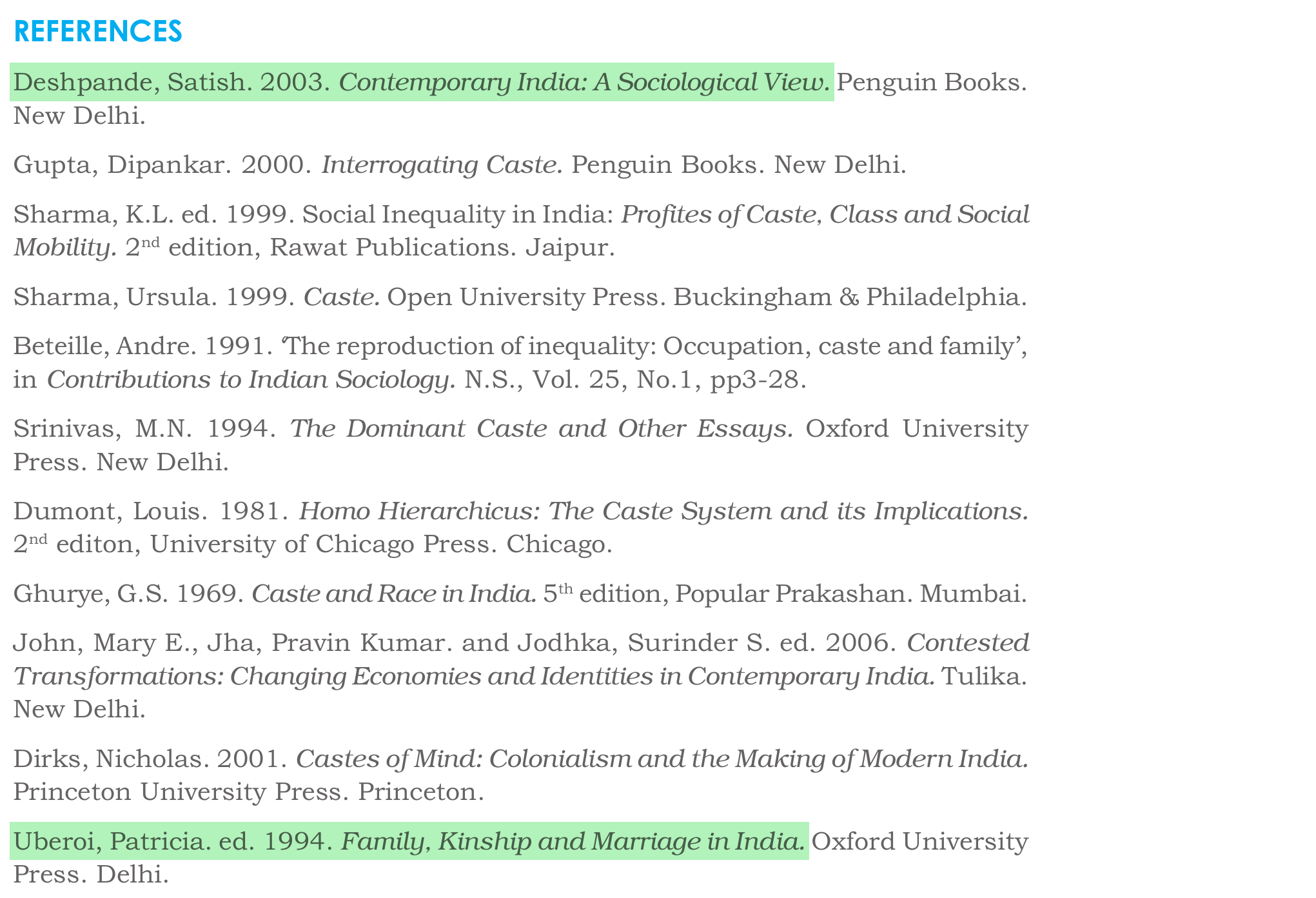
(B) Contemporary India: A sociological view — this matches (IV) Satish Deshpande.
(C) Family, kinship and marriage in India — this matches (II) Patricia Uberoi.
(D) Family, kinship and marriage among Muslims in India — this matches (I) Imtiyaz Ahmad.
Note: Box 3.3 on the Khasi matrilineal family, which describes the Meghalaya Succession Act, and the case study taken from Imtiaz Ahmad’s Family, Kinship and Marriage among Muslims in India, in the chapter ‘Social Institutions: Continuity and Change’, were there in the pre-rationalised NCERT, which NTA followed in 2023. Both have been deleted from the NCERT book (2025-26), though the chapter and its references, which name Satish Deshpande and Patricia Uberoi, are still there.
NCERT: Indian Society — Chapter 3: Social Institutions: Continuity and Change, References (2025-26)
Box 3.3, Khasi matrilineal family (Pre-rationalised NCERT)
Source line of a case study, Section 3.2 (Pre-rationalised NCERT) |