Identify the correct statement related to stress and its impact on immune system:
A. Stress can cause illness by impairing the function of the immune system.
B. Stress can affect natural killer cell cytotoxicity.
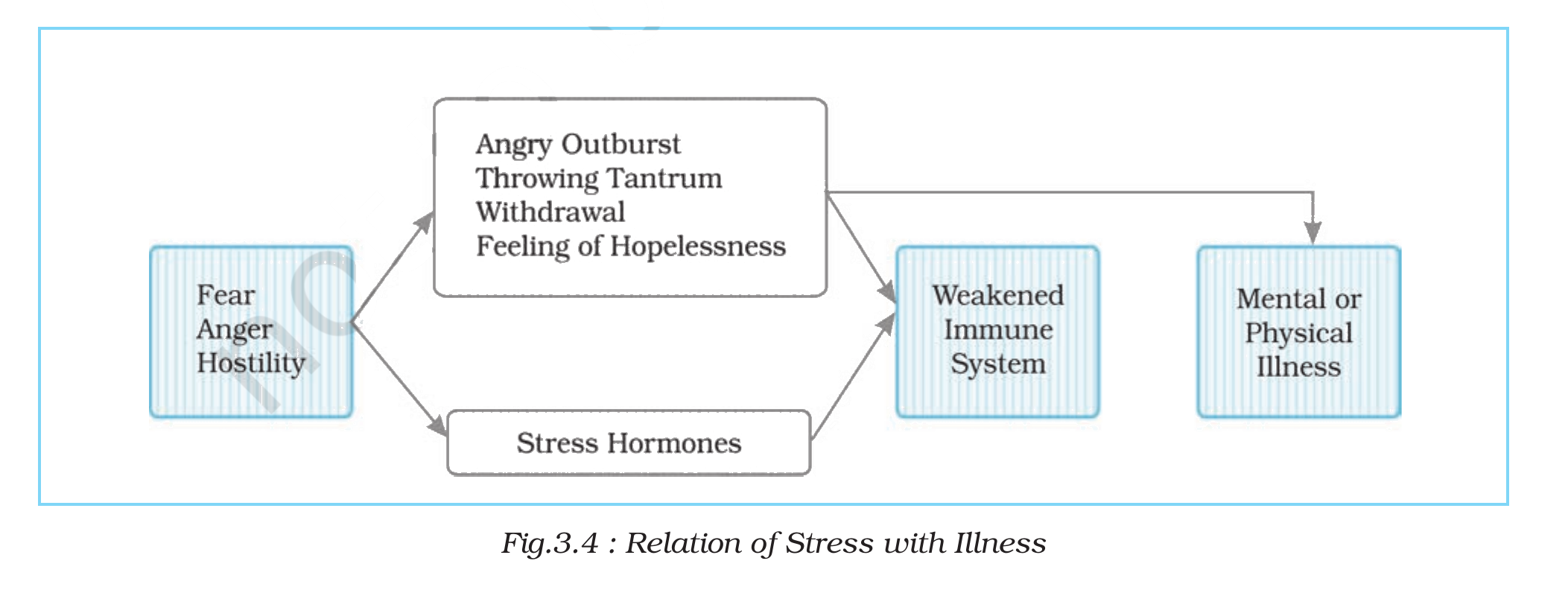
C. Stress hormones weaken the immune system and thereby affect mental and physical health.
D. Optimal Stress always enhances the functioning of immune system.
Choose the correct answer from the options given below:
Answer & explanation
Correct answer: option 2
The correct answer is Option (2) → A, B and C only
A. Stress can cause illness by impairing the function of the immune system. Correct. The immune system guards the body against viruses and other invaders. Stress weakens it, and illness follows more easily.
B. Stress can affect natural killer cell cytotoxicity. Correct. Natural killer cells fight viruses and tumours. Their killing power (cytotoxicity) is found reduced in highly stressed people, such as students facing important examinations or bereaved persons.
C. Stress hormones weaken the immune system and thereby affect mental and physical health. Correct. Negative emotions lead to the release of stress hormones, which weaken the immune system, and that in turn affects mental and physical health.
D. Optimal Stress always enhances the functioning of immune system. Incorrect. A moderate level of stress (eustress) helps performance, but there is no rule that it always improves the immune system; the link described for stress and immunity is a weakening one.
NCERT (2025-26): “Stress and the Immune System Stress can cause illness by impairing the workings of the immune system. The immune system guards the body against attackers, both from within and outside. Psychoneuroimmunology focuses on the links between the mind, the brain and the immune system. It studies the effects of stress on the immune system. How does the immune system work? The white blood cells (leucocytes) within the immune system identify and destroy foreign bodies (antigens) such as viruses. It also leads to the production of antibodies. There are several kinds of white blood cells or leucocytes within the immune system, including T cells, B cells and natural killer cells. T cells destroy invaders, and T-helper cells increase immunological activity. It is these T-helper cells that are attacked by the Human Immuno Deficiency Virus (HIV), the virus causing Acquired Immuno Deficiency Syndrome (AIDS). B cells produce antibodies. Natural killer cells are involved in the fight against both viruses and tumours. Stress can affect natural killer cell cytotoxicity, which is of major importance in the defence against various infections and cancer. Reduced levels of natural killer cell cytotoxicity have been found in people who are highly stressed, including students facing important examinations, bereaved persons, and those who are severely depressed. Studies reveal that immune functioning is better in individuals receiving social support. Also, changes in the immune system will have more effect on health among those whose immune systems are already weakened. Figure 3.4 depicts this sequence comprising negative emotions, release of stress hormones which lead to weakening of the immune system, thereby affecting mental and physical health.”
|