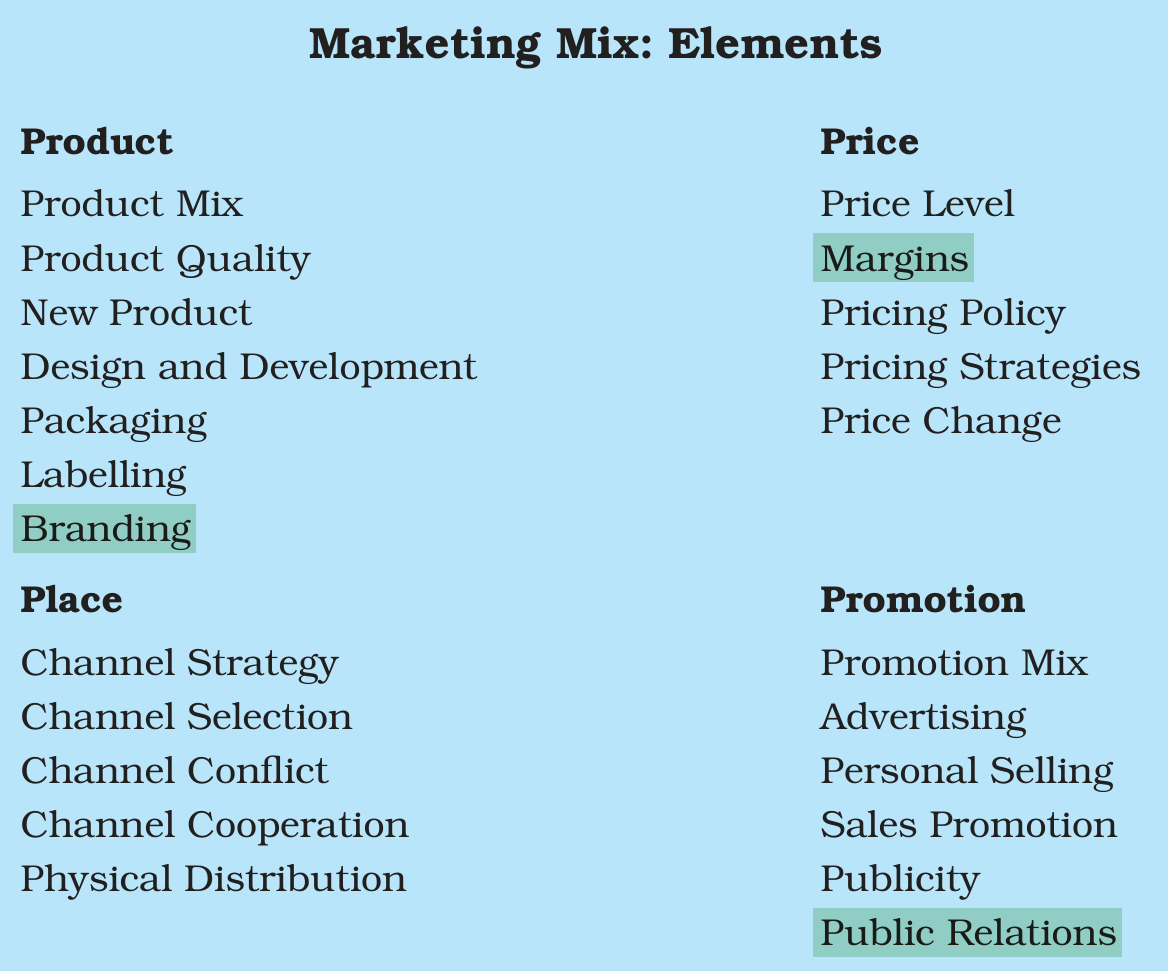
Match List-I (marketing activities) with List-II (elements of the marketing mix):
| List-I | List-II | ||
|---|---|---|---|
| (A) | Branding | (I) | Promotion |
| (B) | Margins | (II) | Product |
| (C) | Managing inventory | (III) | Place |
| (D) | Public Relations | (IV) | Price |
Choose the correct answer from the options given below:
Answer & explanation
Correct answer: option 1
The correct answer is Option (1) → (A)-(II), (B)-(IV), (C)-(III), (D)-(I)
| List-I | List-II | Reason |
|---|---|---|
| (A) Branding | (II) Product | Giving the product a name is a product decision, along with packaging and labelling. |
| (B) Margins | (IV) Price | A margin is the part of the price kept by the seller or trader as profit. Fixing margins is part of setting the price. |
| (C) Managing inventory | (III) Place | Managing inventory, storage and transport are place decisions. They make the goods available to buyers. |
| (D) Public Relations | (I) Promotion | Public relations build a good image of the firm and its products with the public. This communication with buyers is part of Promotion. |
NCERT (2026-27 Edition): “3. Place: Place or Physical Distribution include activities that make firm’s products available to the target customers. Important decision areas in this respect include selection of dealers or intermediaries to reach the customers, providing support to the intermediaries (by way of discounts, promotional campaigns, etc.). The intermediaries in turn keep inventory of the firm’s products, demonstrate them to potential buyers, negotiate price with buyers, close sales and also service the products after the sale. The other decision areas relate to managing inventory, storage and warehousing and transportation of goods from the place it is produced to the place it is required by the buyers.”
|