
Read the passage below and answer the following question.
The male reproductive system is located in the pelvis region. The testes are situated outside the abdominal cavity within a pouch called scrotum. The testis is covered by a dense covering. Each testis has about 250 compartments called testicular lobules. Each lobule contains one to three highly coiled seminiferous tubules. Each seminiferous tubule is lined on its inside by two types of cells called male germ cells and Sertoli cells. The regions outside the seminiferous tubules are called interstitial spaces. Leydig cells synthesise and secrete testicular hormones called androgens. The male sex accessory ducts include rete testis, vasa efferentia, epididymis and vas deferens. The seminiferous tubules of the testis open into the vasa efferentia through rete testis. The vasa efferentia leave the testis and open into epididymis located along the posterior surface of each testis. The epididymis leads to vas deferens that ascends to the abdomen and loops over the urinary bladder. Secretions of accessory glands constitute the seminal plasma which is rich in fructose, calcium and certain enzymes. The secretions of bulbourethral glands also helps in the lubrication of the penis.
Given below are two statements:
Statement I: Sertoli cells provide nutrition to the germ cells.
Statement II: The urethra originates from the seminal vesicle and extends through the penis to its external opening called urethral meatus.
In the light of the above statements, choose the most appropriate answer from the options given below:
Answer & explanation
Correct answer: option 1
The correct answer is Option (1) → Statement I is true but Statement II is false
Both statements are on the male reproductive system, and neither line is given in the passage.
Statement I: Sertoli cells provide nutrition to the germ cells. — True. Each seminiferous tubule is lined on its inside by male germ cells (spermatogonia) and Sertoli cells. The germ cells divide to form sperms, while the Sertoli cells feed them.
Statement II: The urethra originates from the seminal vesicle and extends through the penis to its external opening called urethral meatus. — False. The urethra originates from the urinary bladder, not from the seminal vesicle. The duct of the seminal vesicle joins the vas deferens, which then opens into the urethra as the ejaculatory duct.
So Statement I is true and Statement II is false.
NCERT Extract:
The Male Reproductive System – “… Each lobule contains one to three highly coiled seminiferous tubules in which sperms are produced. Each seminiferous tubule is lined on its inside by two types of cells called male germ cells (spermatogonia) and Sertoli cells (Figure 2.2). The male germ cells undergo meiotic divisions finally leading to sperm formation, while Sertoli cells provide nutrition to the germ cells.”
The Male Reproductive System – “… It receives a duct from seminal vesicle and opens into urethra as the ejaculatory duct (Figure 2.1a). These ducts store and transport the sperms from the testis to the outside through urethra. The urethra originates from the urinary bladder and extends through the penis to its external opening called urethral meatus.”
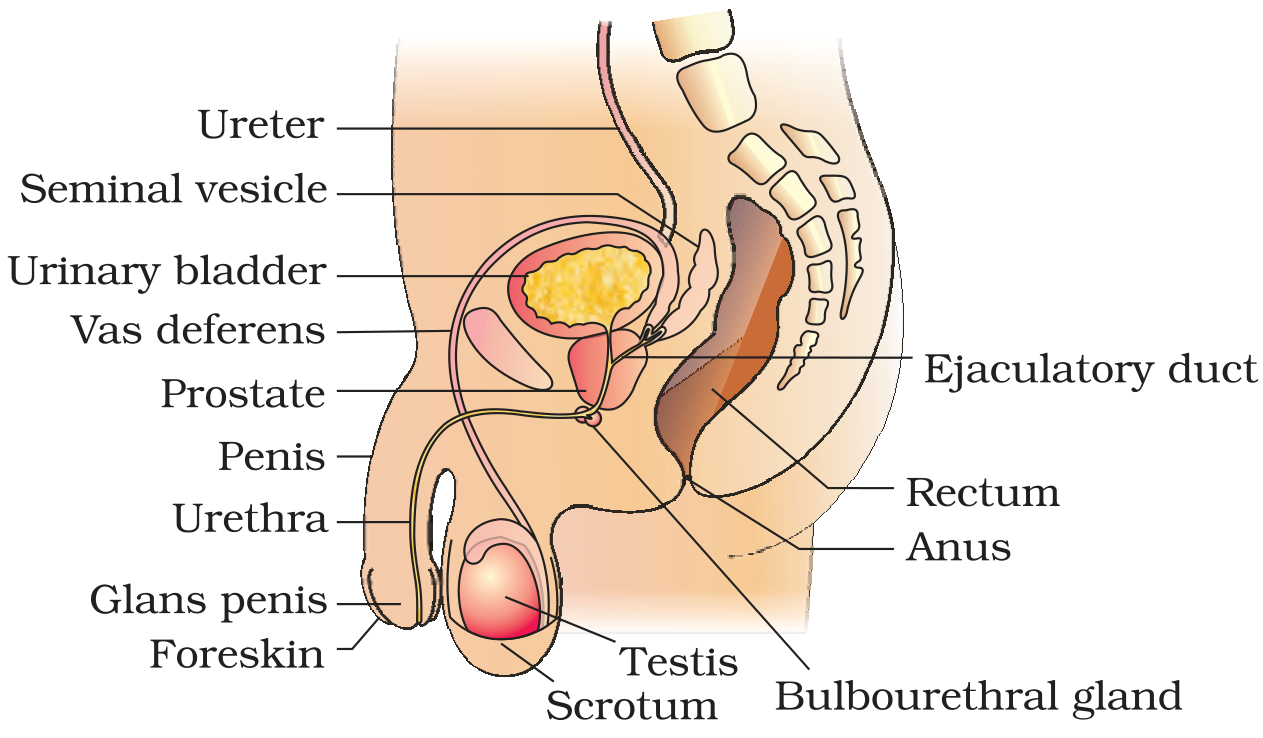
Figure 2.1(a) Diagrammatic sectional view of male pelvis showing reproductive system