Which one is not a stage of General Adaptation Syndrome (according to Selye's model)?
Answer & explanation
Correct answer: option 1
The correct answer is Option (1) → Stage of tolerance
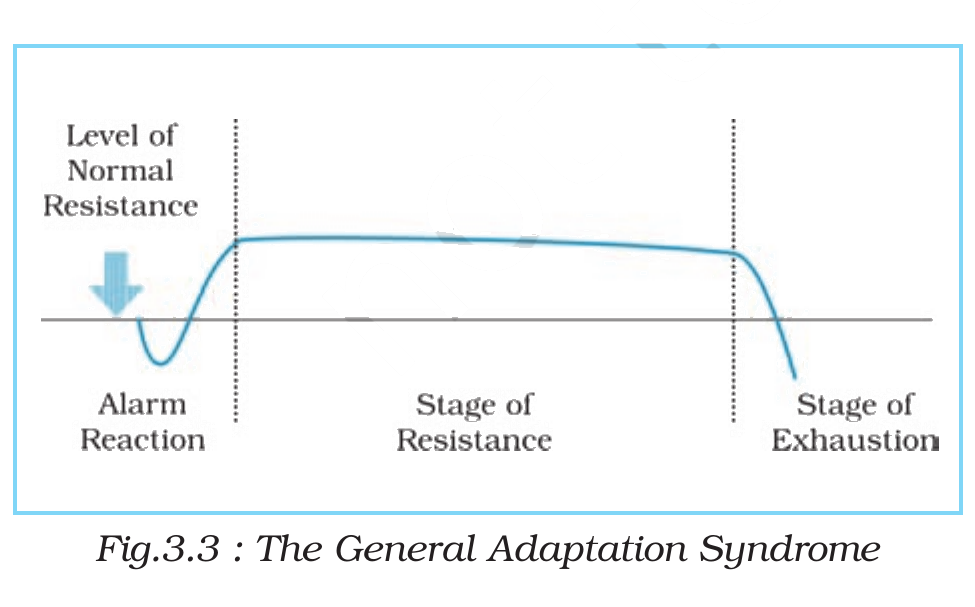
Selye found a similar pattern of bodily response in animals and patients exposed to stressors for a long time and called it the General Adaptation Syndrome (GAS). It has three stages: alarm reaction, resistance and exhaustion.
Option (1) Stage of tolerance — Not a stage of GAS (Correct). Selye’s model has no stage called tolerance. The stage in which the body copes with prolonged stress is called resistance.
Option (2) Alarm reaction — The first stage of GAS (Incorrect). A stressor activates the adrenal-pituitary-cortex system; hormones producing the stress response are released, and the person is ready for fight or flight.
Option (3) Stage of exhaustion — The third stage of GAS (Incorrect). Continued exposure to the stressor drains the body of its resources; the systems of alarm and resistance become ineffective, and stress-related diseases such as high blood pressure become more likely.
Option (4) Stage of resistance — The second stage of GAS (Incorrect). If stress is prolonged, the parasympathetic nervous system calls for more cautious use of the body’s resources, and the organism makes efforts to cope with the threat.
NCERT (2025-26): “General Adaptation Syndrome … What happens to the body when stress is prolonged? Selye studied this issue by subjecting animals to a variety of stressors such as high temperature, X-rays and insulin injections, in the laboratory over a long period of time. He also observed patients with various injuries and illnesses in hospitals. Selye noticed a similar pattern of bodily response in all of them. He called this pattern the General Adaptation Syndrome (GAS). According to him, GAS involves three stages: alarm reaction, resistance, and exhaustion (see Fig.3.3).
|