How does the behaviour therapist view anxiety?
Answer & explanation
Correct answer: option 2
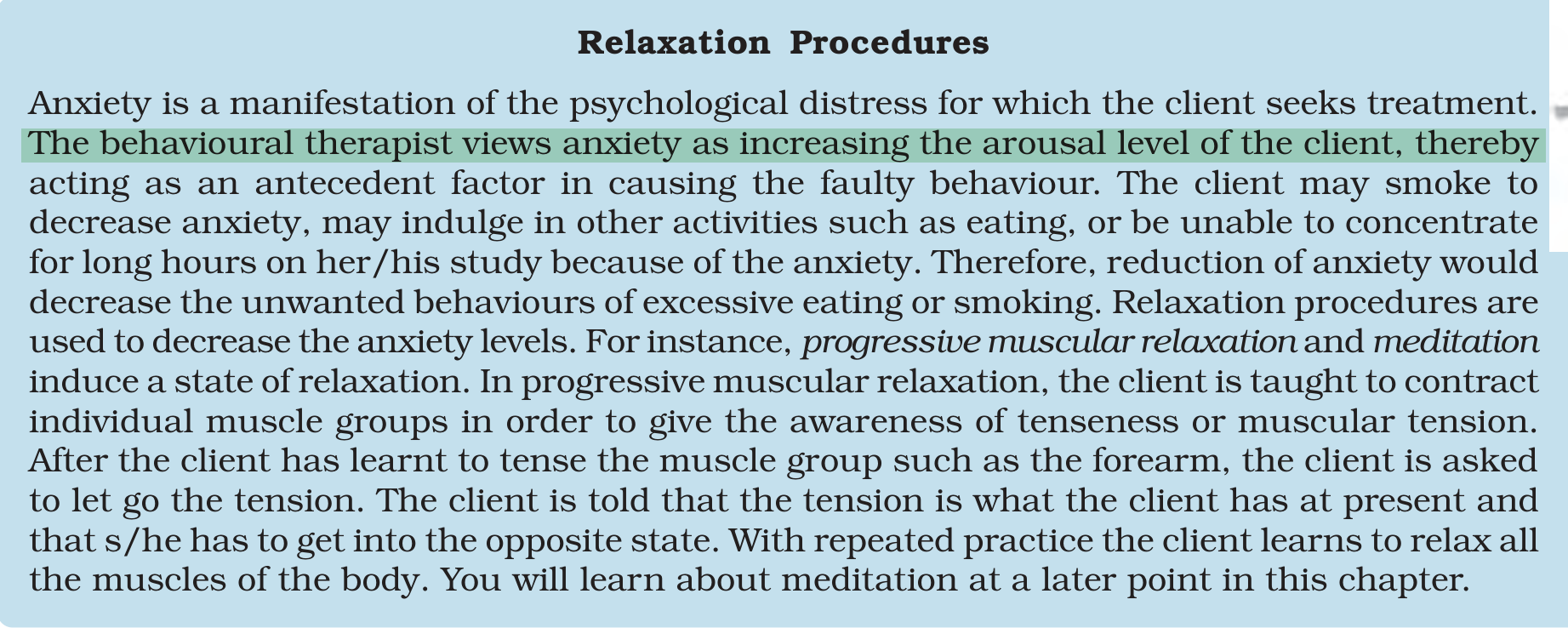
The correct answer is Option (2) → As a factor that increases arousal level
| Option | Reason |
|---|---|
| Option (1): As a sign of unresolved childhood conflicts. Incorrect. | Unresolved childhood conflicts belong to the psychodynamic view of distress. That view traces present problems to inner conflicts from early life. |
| Option (2): As a factor that increases arousal level. Correct. | The behavioural therapist sees anxiety as increasing the arousal level of the client. This raised arousal acts as an antecedent factor that leads to faulty behaviour. |
| Option (3): As a result of irrational beliefs. Incorrect. | Irrational beliefs belong to the cognitive view of distress. Rational emotive therapy traces distress to irrational beliefs about life events and replaces them with rational ones. |
| Option (4): As a symptom of excessive eating or smoking. Incorrect. | Excessive eating and smoking are unwanted behaviours a client may use to decrease anxiety. They follow from anxiety, so reducing anxiety reduces these habits. |
NCERT (2026-27):
|