
Match List-I (symbols used in human pedigree analysis) with List-II.
| List-I | List-II |
|---|---|
A.  | I. Sex unspecified |
B. 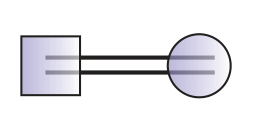 | II. Mating |
C.  | III. Mating between relatives (consanguineous mating) |
D. 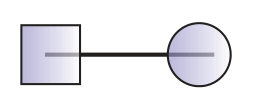 | IV. Female |
Choose the correct answer from the options given below:
Answer & explanation
Correct answer: option 3
The correct answer is Option (3) → A-IV, B-III, C-I, D-II
In pedigree analysis a family tree is drawn with standard symbols (Figure 4.13). A square is a male, a circle a female and a diamond an individual whose sex is not specified. A horizontal line joining a male and a female shows mating, and a double line shows mating between relatives.
(A) Circle — this matches (IV) Female.
(B) Square and circle joined by a double line — this matches (III) Mating between relatives (consanguineous mating). The second line marks that the two partners are related.
(C) Diamond — this matches (I) Sex unspecified.
(D) Square and circle joined by a single line — this matches (II) Mating.
So the correct code is A-IV, B-III, C-I, D-II.
Note: Not one word of this question is in the running text; it all sits in the little chart of symbols beside it. NCERT figures are exam material in their own right, so go through each one slowly.
NCERT Extract:
Pedigree Analysis – “… In human genetics, pedigree study provides a strong tool, which is utilised to trace the inheritance of a specific trait, abnormality or disease. Some of the important standard symbols used in the pedigree analysis have been shown in Figure 4.13.”
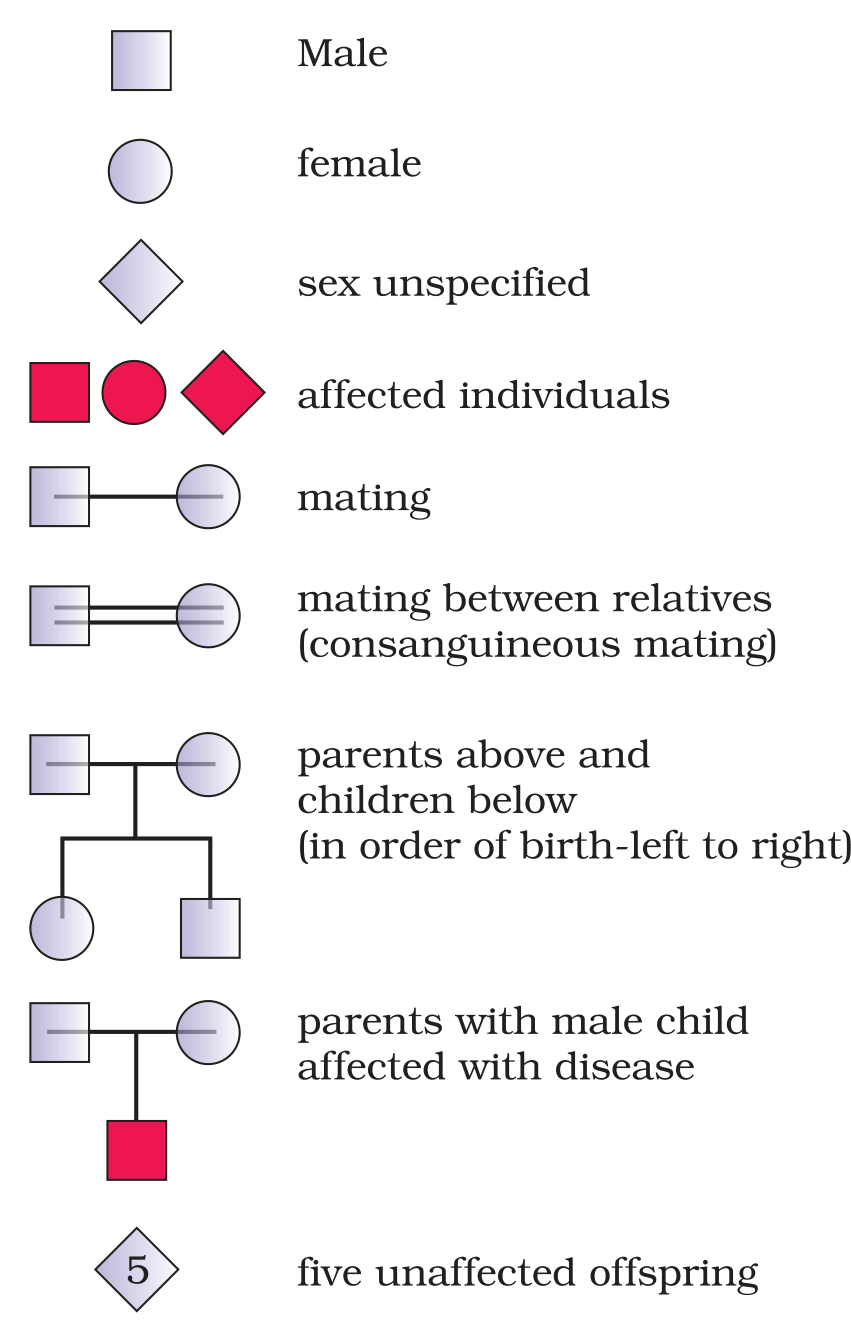
Figure 4.13 Symbols used in the human pedigree analysis