Biogas is mixture of:
Answer & explanation
Correct answer: option 4
The correct answer is Option (4) → Methane, hydrogen sulphide and carbon dioxide.
Biogas is a mixture of gases, mainly methane, made by the activity of microbes on organic matter in the absence of oxygen. Methane-producing bacteria (methanogens) such as Methanobacterium also live in the rumen of cattle, so cattle dung is used in biogas plants.
Option (1) Hydrogen sulphide, nitrogen and methane — Incorrect. Carbon dioxide is missing, and nitrogen is not one of the gases the book lists for biogas.
Option (2) Hydrogen sulphide, hydrogen and methane — Incorrect. Methanogens do release some hydrogen, but this option leaves out carbon dioxide, the second main gas of biogas.
Option (3) Hydrogen sulphide, carbon dioxide and hydrogen — Incorrect. It leaves out methane, the main gas of biogas and the one that makes it a fuel.
Option (4) Methane, hydrogen sulphide and carbon dioxide. — Correct. Biogas is a mixture of gases, predominantly methane, made by methanogens growing anaerobically on cellulosic material such as cattle dung. Along with methane it contains carbon dioxide and hydrogen sulphide, and it is used as a fuel.
NCERT Extract:
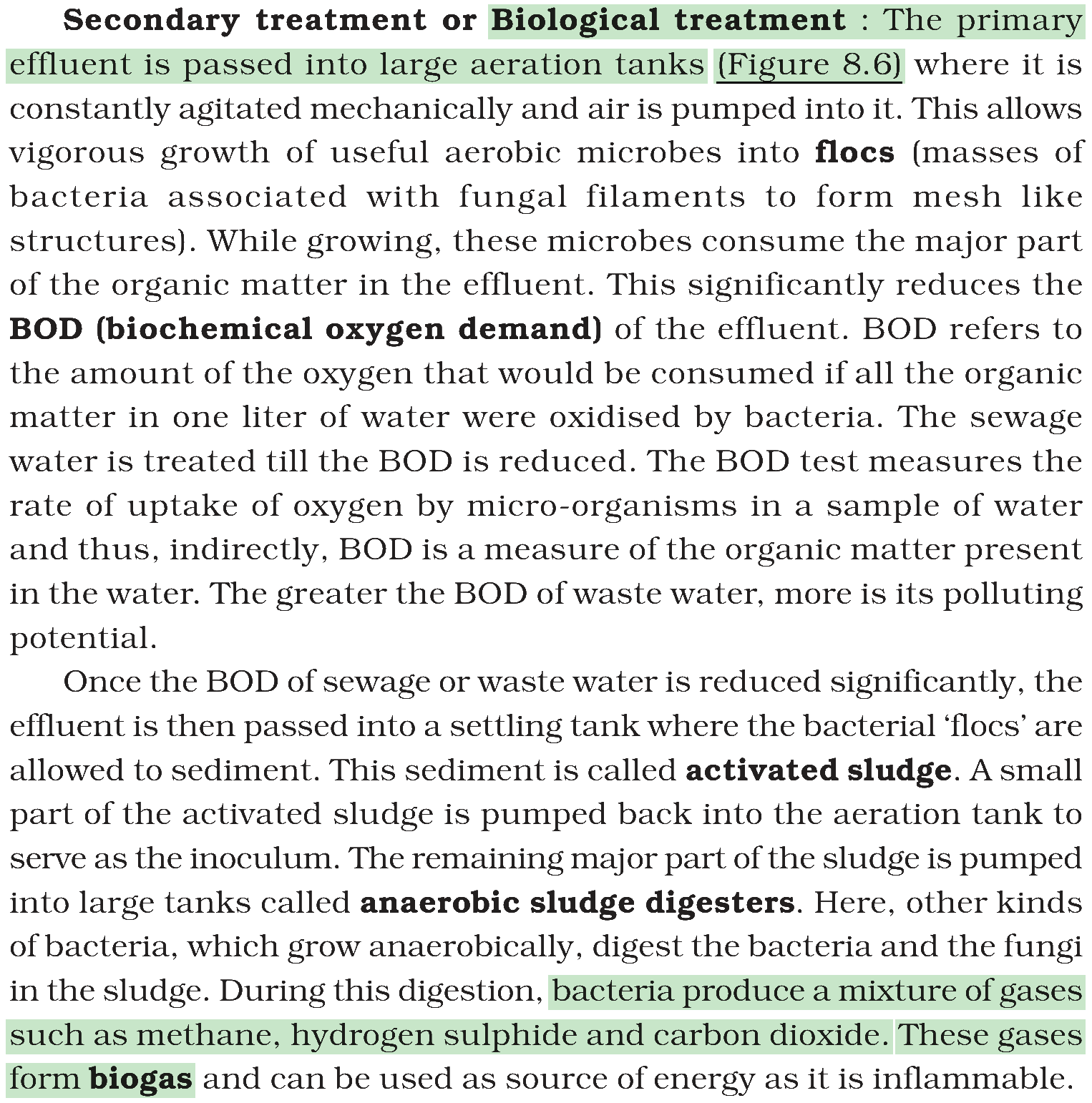
Microbes in Sewage Treatment – “… During this digestion, bacteria produce a mixture of gases such as methane, hydrogen sulphide and carbon dioxide.”
Microbes in Production of Biogas – “Biogas is a mixture of gases (containing predominantly methane) produced by the microbial activity and which may be used as fuel.”