
Read the passage and answer the following questions:
Mendel published his work on inheritance of characters in 1865 but for several reasons, it remained unrecognised till 1900. Firstly, communication was not easy (as it is now) in those days and his work could not be widely publicised. Secondly, his concept of genes (or factors, in Mendel's words) as stable and discrete units that controlled the expression of traits and, of the pair of alleles which did not 'blend' with each other, was not accepted by his contemporaries as an explanation for the apparently continuous variation seen in nature. Thirdly, Mendel's approach of using mathematics to explain biological phenomena was totally new and unacceptable to many of the biologists of his time. Finally, though Mendel's work suggested that factors (genes) were discrete units, he could not provide any physical proof for the existence of factors or say what they were made of.
Choose the correct statements from the following:
A. Chromosomes as well as genes occur in pairs.
B. The two alleles of a gene pair are located on homologous sites on homologous chromosomes.
C. During anaphase of meiosis II, the two chromosome pairs can align at the metaphase plate independently of each other.
D. According to Sutton and Boveri, the pairing and separation of a pair of chromosomes would lead to the segregation of a pair of factors they carried.
Choose the correct answer from the options given below:
Answer & explanation
Correct answer: option 1
The correct answer is Option (1) → A, B and D only
Sutton and Boveri saw that chromosomes behave like Mendel’s factors (genes): both occur in pairs, both segregate at gamete formation, and different pairs segregate independently. This idea became the chromosomal theory of inheritance.
A. Chromosomes as well as genes occur in pairs. — True. In a diploid cell, chromosomes occur as homologous pairs, and genes also occur in pairs (a pair of alleles). This is the first point of Table 4.3.
B. The two alleles of a gene pair are located on homologous sites on homologous chromosomes. — True. The two alleles of a gene sit at matching sites on the two homologous chromosomes, so when homologues separate, the alleles separate too.
C. During anaphase of meiosis II, the two chromosome pairs can align at the metaphase plate independently of each other. — False. NCERT places this independent alignment in meiosis I, where homologous pairs separate (Figure 4.9). In meiosis II only sister chromatids separate, so there are no pairs left to assort.
D. According to Sutton and Boveri, the pairing and separation of a pair of chromosomes would lead to the segregation of a pair of factors they carried. — True. Sutton and Boveri argued that the pairing and separation of a pair of chromosomes leads to the segregation of the pair of factors they carry. Sutton combined this with Mendelian principles and called it the chromosomal theory of inheritance.
NCERT Extract:
Chromosomal Theory of Inheritance – “… The important things to remember are that chromosomes as well as genes occur in pairs. The two alleles of a gene pair are located on homologous sites on homologous chromosomes. … During Anaphase of meiosis I, the two chromosome pairs can align at the metaphase plate independently of each other (Figure 4.9). … Sutton and Boveri argued that the pairing and separation of a pair of chromosomes would lead to the segregation of a pair of factors they carried. Sutton united the knowledge of chromosomal segregation with Mendelian principles and called it the chromosomal theory of inheritance.”
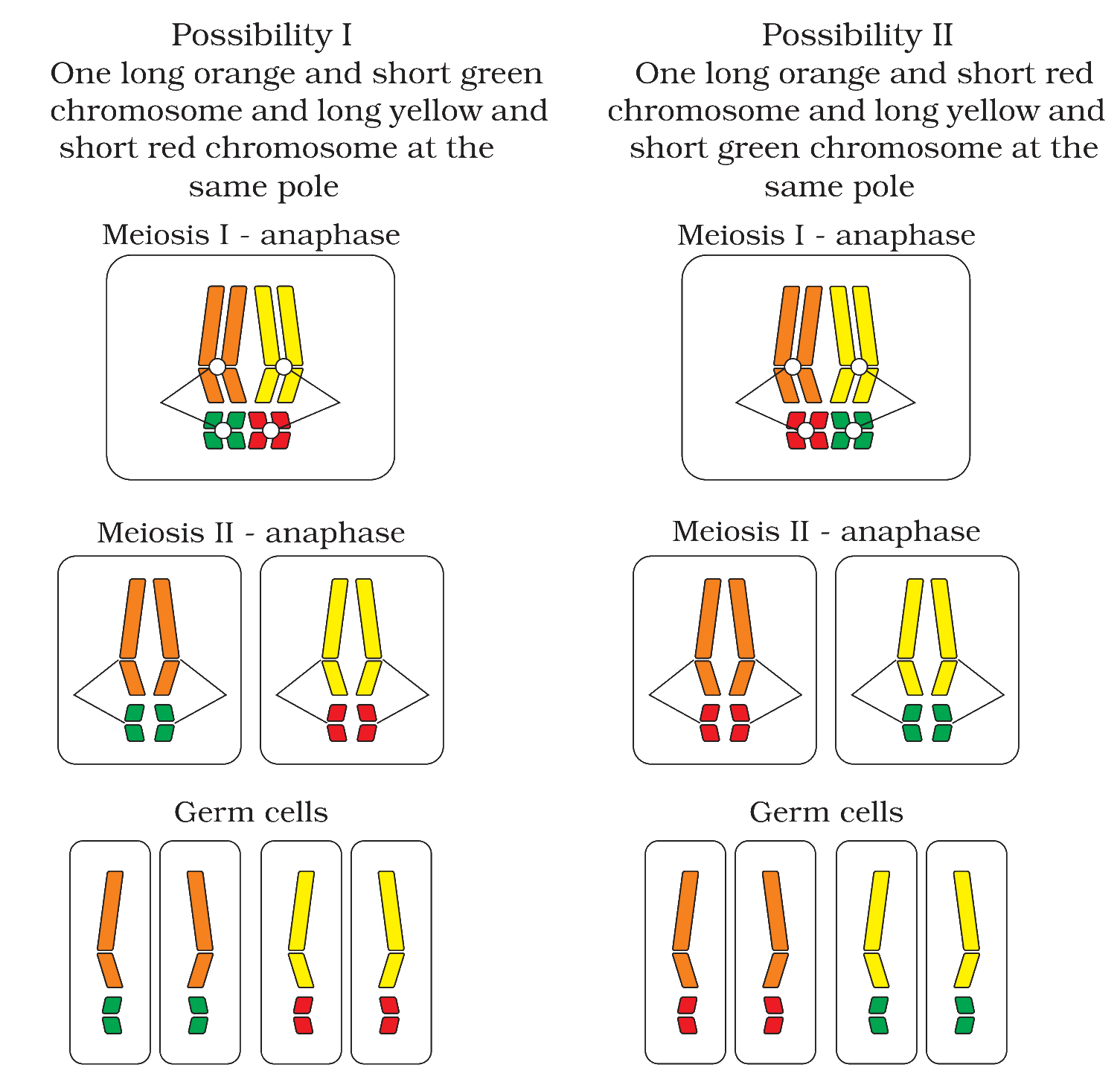
Figure 4.9 Independent assortment of chromosomes