
Spores in fungi required for asexual mode of reproduction are-
Answer & explanation
Correct answer: option 3
The correct answer is Option (3) →Conidia
Reproduction in fungi can take place by vegetative means – fragmentation, fission and budding. Asexual reproduction is by spores called conidia or sporangiospores or zoospores, and sexual reproduction is by oospores, ascospores and basidiospores. The various spores are produced in distinct structures called fruiting bodies.
Members of the Kingdom Fungi and simple plants such as algae reproduce through special asexual reproductive structures. The most common of these structures are zoospores that usually are microscopic motile structures. Other common asexual reproductive structures are conidia (Penicillium), buds (Hydra) and gemmules (sponge).
Gemmae serve as a means of asexual reproduction in many bryophytes, such as liverworts. These develop within small receptacles known as gemma cups, which are located on the thallus. When gemmae detach from the parent plant, they germinate to form new individual gametophytes.
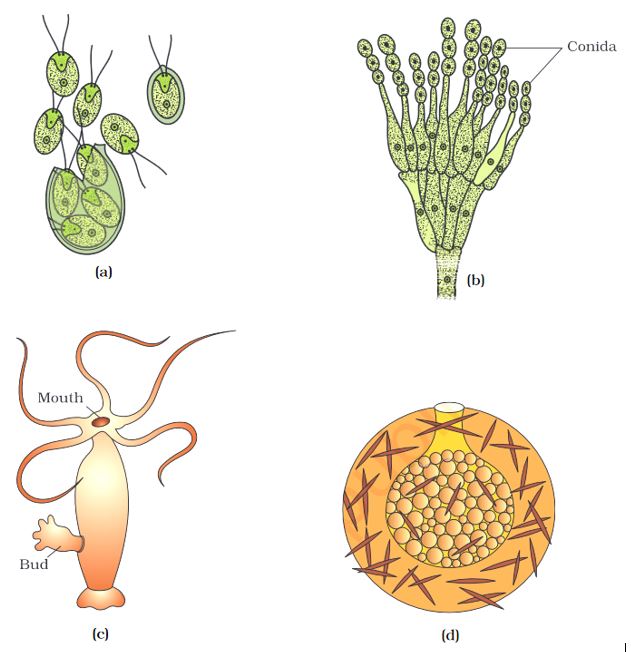
Asexual reproductive structures: (a) Zoospores of Chlamydomonas; (b) Conidia of Penicillium; (c) Buds in Hydra ; (d) Gemmules in sponge