Match List-I with List-II.
| List-I (Author) | List-II (Definition) |
|---|---|
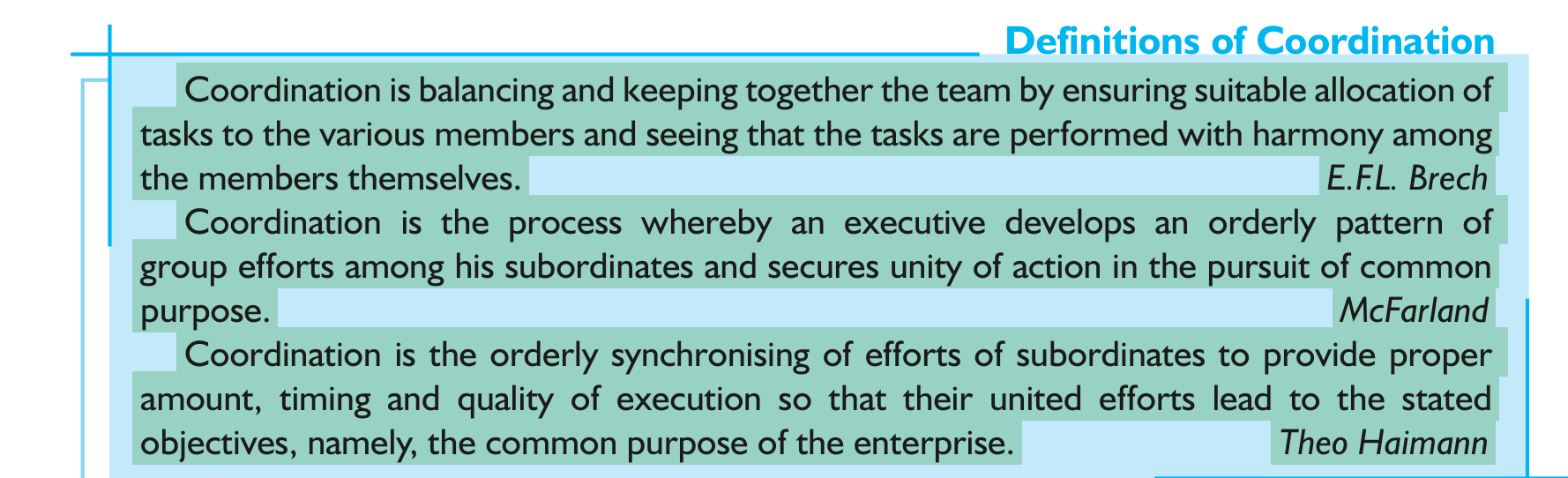
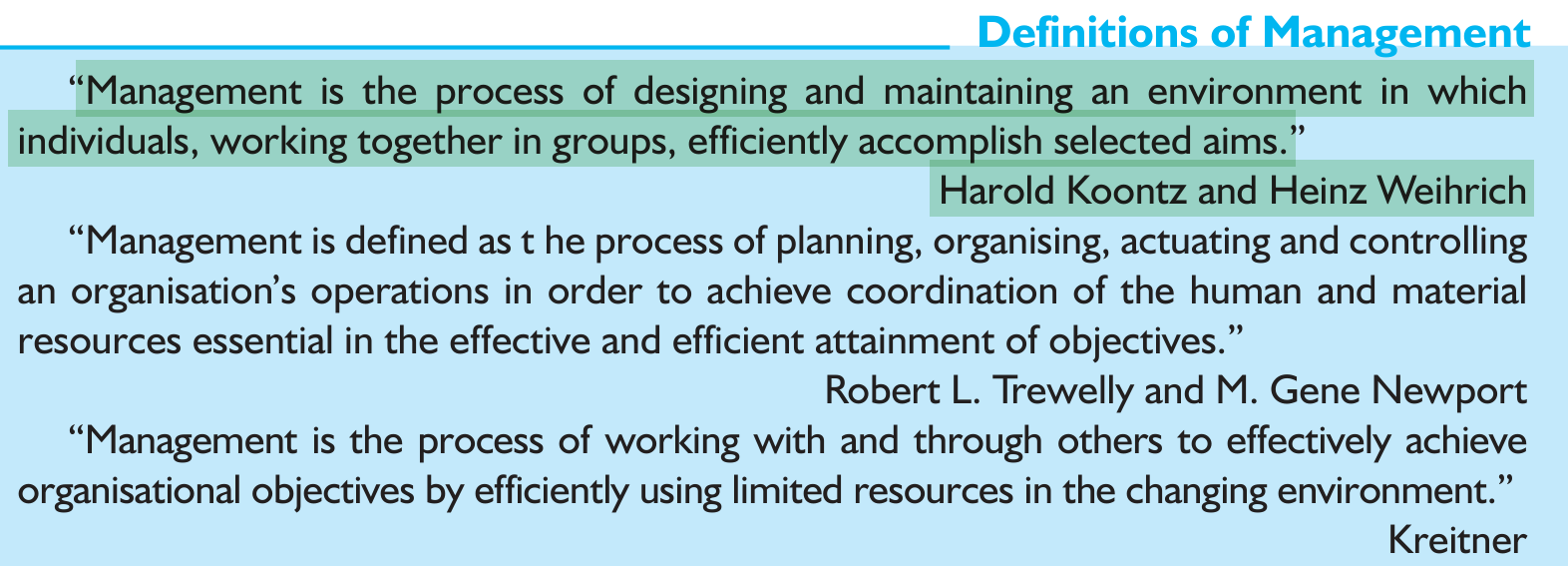
| (A) E.F.L. Brech | (I) The process of designing and maintaining an environment in which individuals, working together in groups, efficiently accomplish selected aims |
| (B) McFarland | (II) The orderly synchronising of efforts of subordinates to provide proper amount, timing and quality of execution |
| (C) Theo Haimann | (III) The process whereby an executive develops an orderly pattern of group efforts among his subordinates |
| (D) Harold Koontz and Heinz Weihrich | (IV) Balancing and keeping together the team by ensuring suitable allocation of tasks to the various members |
Choose the correct answer from the options given below:
Answer & explanation
Correct answer: option 2
The correct answer is Option (2) → (A)-(IV), (B)-(III), (C)-(II), (D)-(I)
| List-I | List-II | Reason |
|---|---|---|
| (A) E.F.L. Brech | (IV) Balancing and keeping together the team by ensuring suitable allocation of tasks to the various members | Brech sees coordination as balancing the team through a fair allocation of tasks. |
| (B) McFarland | (III) The process whereby an executive develops an orderly pattern of group efforts among his subordinates | McFarland stresses the executive building an orderly pattern of group efforts. |
| (C) Theo Haimann | (II) The orderly synchronising of efforts of subordinates to provide proper amount, timing and quality of execution | Haimann stresses synchronising efforts for the right amount, timing and quality. |
| (D) Harold Koontz and Heinz Weihrich | (I) The process of designing and maintaining an environment in which individuals, working together in groups, efficiently accomplish selected aims | This is their definition of management, not of coordination. |
NCERT (2026-27 Edition):
|