Functions of central bank are :
(A) SLR
(B) CRR
(C) Open market operations
(D) Banker's Bank
(E) Issue of currency
Choose the correct answer from the options given below :
Answer & explanation
Correct answer: option 1
The correct answer is Option (1) → (D) and (E) only
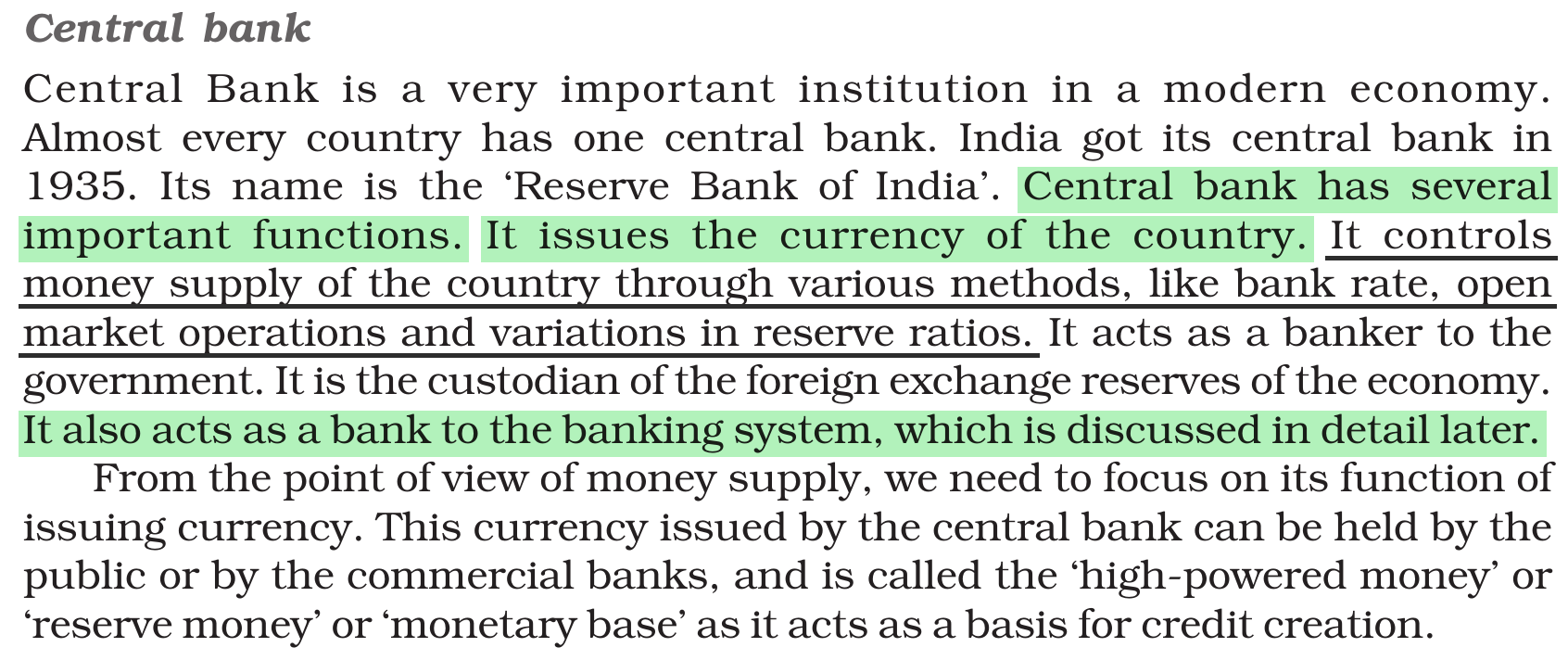
The central bank, the Reserve Bank of India (RBI), has several functions. It issues the currency, acts as banker to the government and acts as a bank to the banking system. It also controls the money supply, and for this it uses tools such as the bank rate, open market operations and reserve ratios.
(A) SLR — Not a function. The statutory liquidity ratio (SLR) is the share of deposits that banks must keep in safe, liquid assets. It is a tool the central bank uses to control credit.
(B) CRR — Not a function. The cash reserve ratio (CRR) is the share of deposits that banks must keep with the central bank. It is a tool for changing the money supply.
(C) Open market operations — Not a function. Open market operations are the buying and selling of government securities by the central bank. They too are a tool of money supply control.
(D) Banker’s Bank — Function. Commercial banks keep their reserves with the central bank, and it lends to them when they run short of funds. So it acts as a bank to the banking system.
(E) Issue of currency — Function. The central bank issues the currency of the country. In India, the RBI issues the currency notes.
NCERT (2026-27): Introductory Macroeconomics — Chapter 3: Money and Banking
|