Which of the following reasons continue to inhibit upward social mobility of the Dalits?
Answer & explanation
Correct answer: option 1
The correct answer is Option (1) → Landlessness
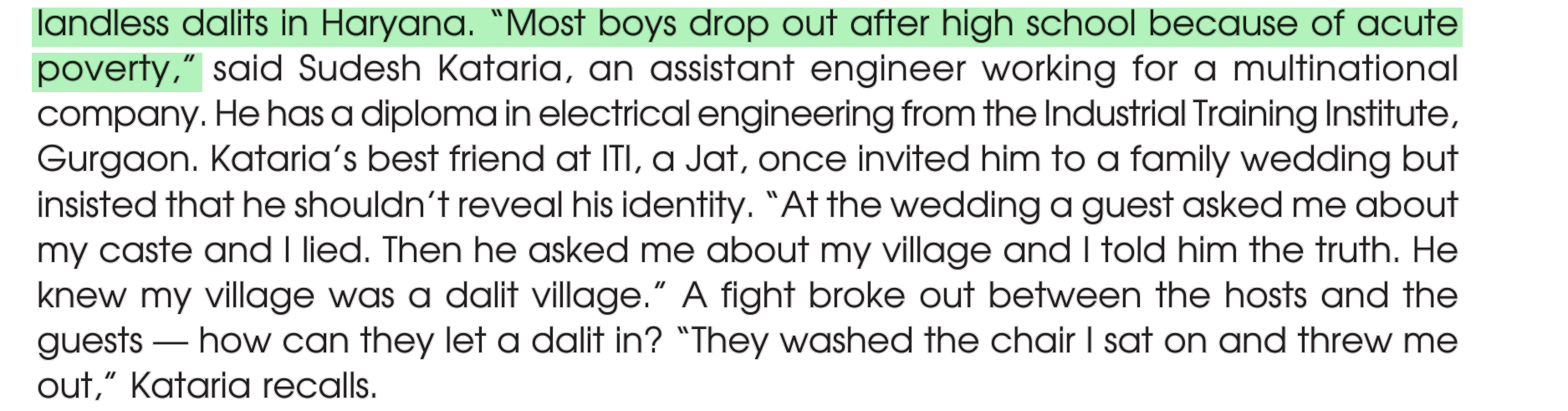
Option (1) Landlessness — Correct. Agricultural land is the single most important resource and form of property in rural society. Most of the marginal farmers and the landless belong to lower caste groups, and in many regions the former ‘Untouchable’ or dalit castes were not allowed to own land; they provided most of the agricultural labour for the dominant landowning groups. Without land, Dalits remain dependent on working for others, which holds back their rise on the social ladder. Even where Dalits have taken to education, the journey of upward social mobility remains tough for the vast majority of landless Dalits, and many boys drop out after high school because of acute poverty.
Option (4) SC reservations — Incorrect. Reservations set aside seats in legislatures, government jobs and educational institutions for the Scheduled Castes. They are meant to help Dalits move up, not to hold them back.
Note: Box 5.3, ‘D for Dalit, D for Defiance’, in the chapter ‘Patterns of Social Inequality and Exclusion’, was there in the pre-rationalised NCERT. This box has been deleted from the NCERT book (2025-26), though the chapter is still there.
NCERT: Indian Society — Chapter 5: Patterns of Social Inequality and Exclusion, Box 5.3 (Pre-rationalised)
|