Regarding Average Propensity to save:
(A) APS can be zero
(B) APS can be more than one
(C) APS can be negative
(D) APS can be one
(E) APS can be positive
Choose the correct answer from the options given below :
Answer & explanation
Correct answer: option 1
The correct answer is Option (1) → (A), (C), (E) Only
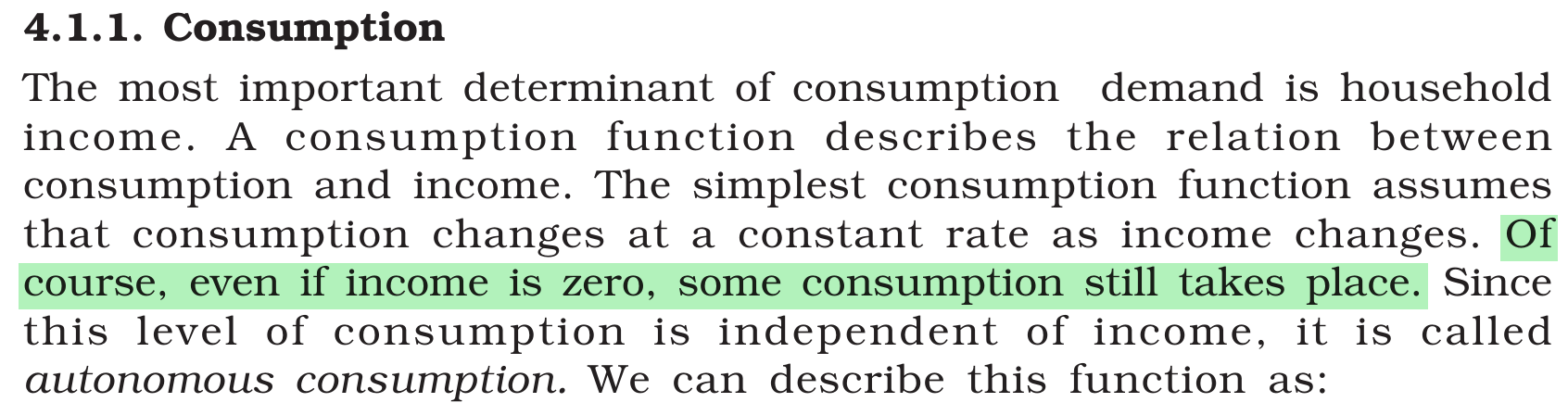
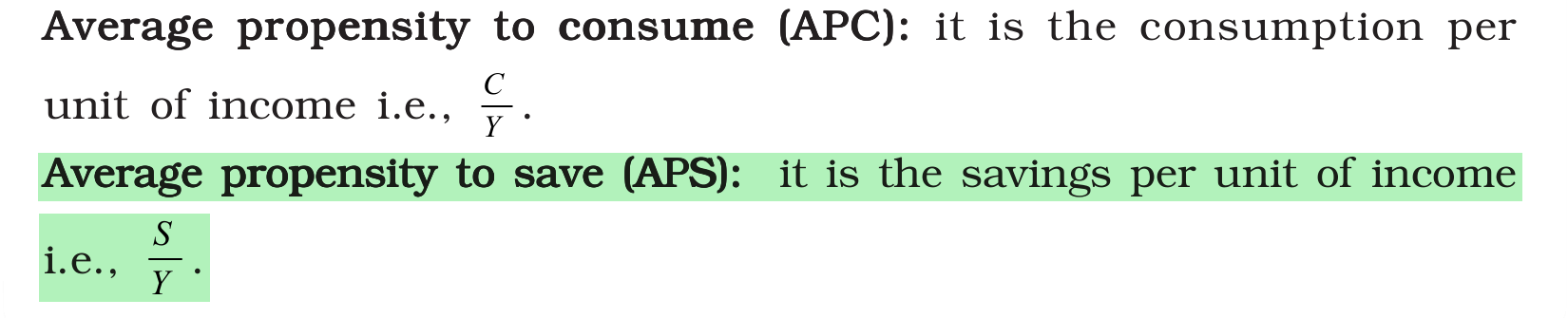
The average propensity to save (APS) is saving per unit of income, S/Y. Since saving is income minus consumption, APS = 1 − APC, where APC is the average propensity to consume (C/Y). Some consumption takes place even at zero income (autonomous consumption), so consumption is never zero.
(A) APS can be zero — True. At the income where consumption equals income, saving is zero, so APS is zero.
(B) APS can be more than one — False. Saving can never be more than income, since that would need negative consumption.
(C) APS can be negative — True. At low incomes people consume more than they earn, using past savings or loans. Saving is then negative (dissaving).
(D) APS can be one — False. APS would be one only if all income were saved and consumption were zero, which does not happen.
(E) APS can be positive — True. At higher incomes consumption is less than income, so saving is positive.
NCERT (2026-27): Introductory Macroeconomics — Chapter 4: Determination of Income and Employment
|