Match List-I with List-II
| List-I | List-II |
| (A) Current Account | (I) Receipts < Payments |
| (B) Capital Account | (II) Net Investment Income. |
| (C) Current Account Deficit | (III) Transfer Payment |
| (D) Trade in Services | (IV) Portfolio Investment |
Choose the correct answer from the options given below:
Answer & explanation
Correct answer: option 4
The correct answer is Option (4) → (A)-(III), (B)-(IV), (C)-(I), (D)-(II)
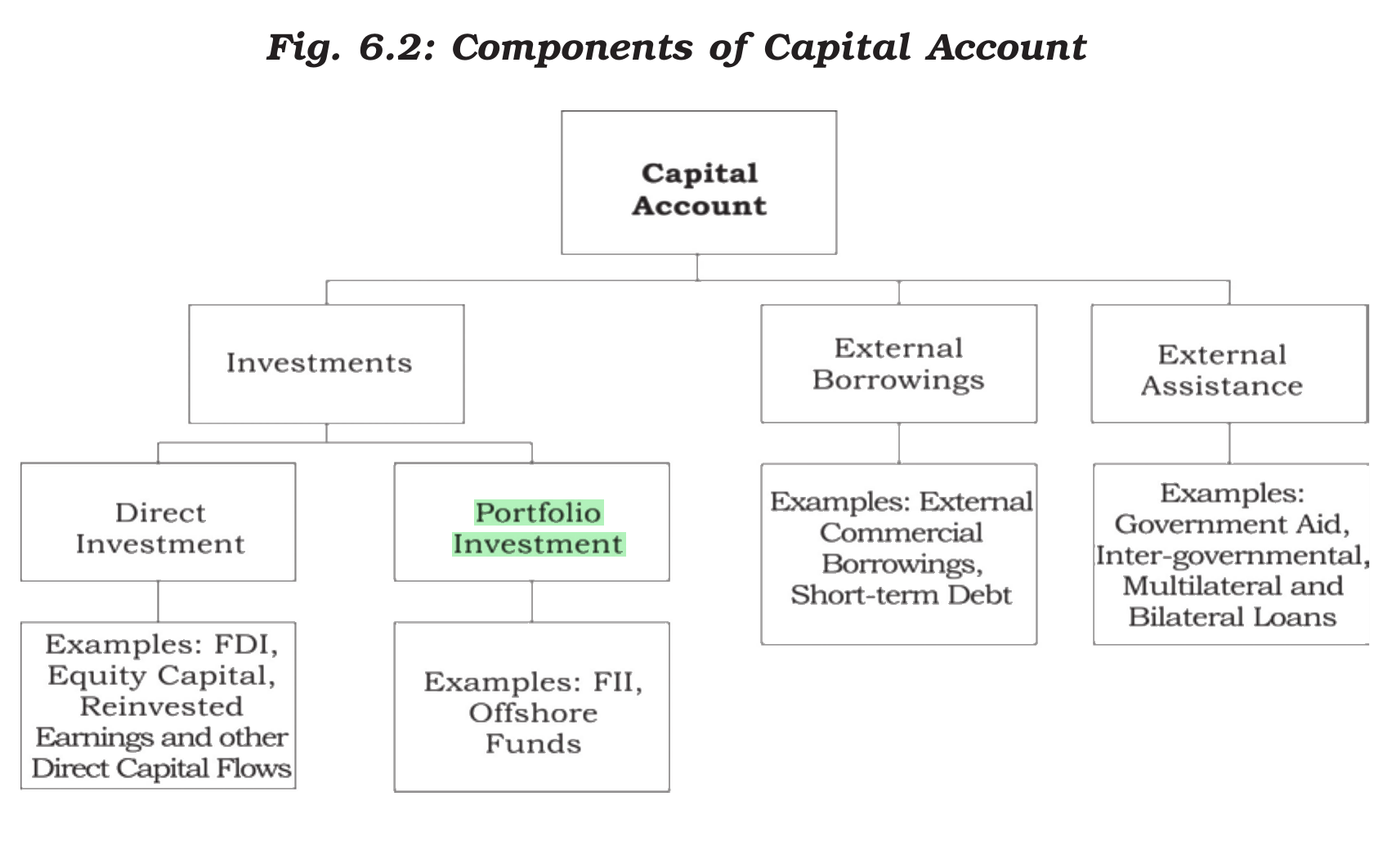
The balance of payments (BoP) has two main accounts. The current account records trade in goods and services and transfer payments. The capital account records all international trade in assets.
| List-I | List-II | Reason |
|---|---|---|
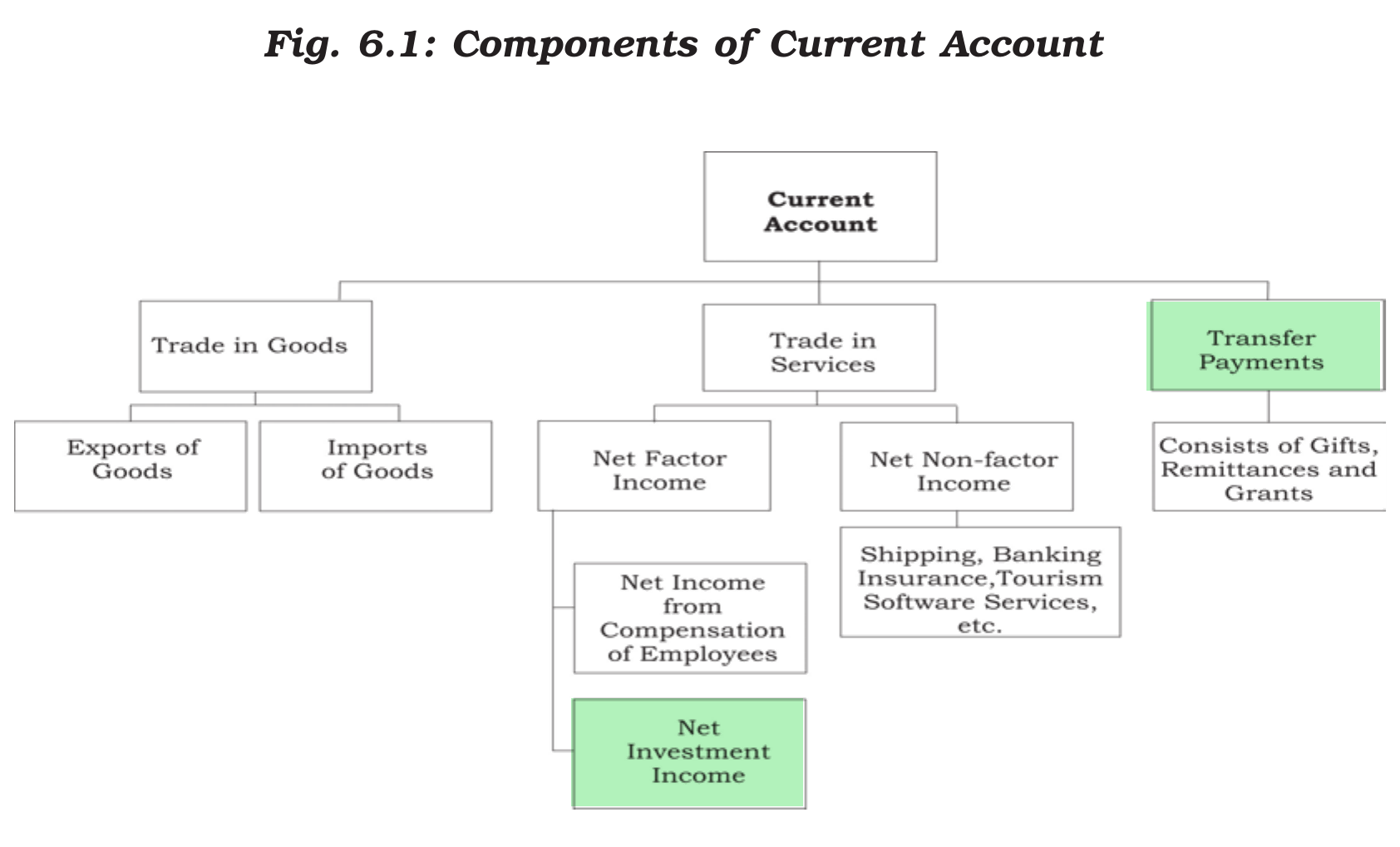
| (A) Current Account | (III) Transfer Payment | Transfer payments are received ‘for free’, with nothing given in return: gifts, remittances and grants. They go in the current account. |
| (B) Capital Account | (IV) Portfolio Investment | Buying shares and bonds of another country is trade in assets. So portfolio investment is a capital account item. |
| (C) Current Account Deficit | (I) Receipts < Payments | There is a deficit when receipts are less than payments. The nation then borrows from other countries. |
| (D) Trade in Services | (II) Net Investment Income. | Investment income (interest, dividends and profits on assets abroad) is factor income, and trade in services includes factor income. So net investment income is part of trade in services. |
Note: (A) Current Account → both (II) and (III). Net investment income and transfer payments are both recorded in the current account.
NCERT (2026-27): “6.1.1 Current Account Current Account is the record of trade in goods and services and transfer payments. Figure 6.1 illustrates the components of Current Account. … Trade in services includes factor income and non-factor income transactions. Transfer payments are the receipts which the residents of a country get for ‘free’, without having to provide any goods or services in return. They consist of gifts, remittances and grants.… Balance on Current Account Current Account is in balance when receipts on current account are equal to the payments on the current account. A surplus current account means that the nation is a lender to other countries and a deficit current account means that the nation is a borrower from other countries.… 6.1.2 Capital Account Capital Account records all international transactions of assets. An asset is any one of the forms in which wealth can be held, for example: money, stocks, bonds, Government debt, etc. … Fig. 6.2 classifies the items which are a part of capital account transactions.…”
|