Which of the following is a feature of Fayol’s principle of Unity of Direction?
Answer & explanation
Correct answer: option 2
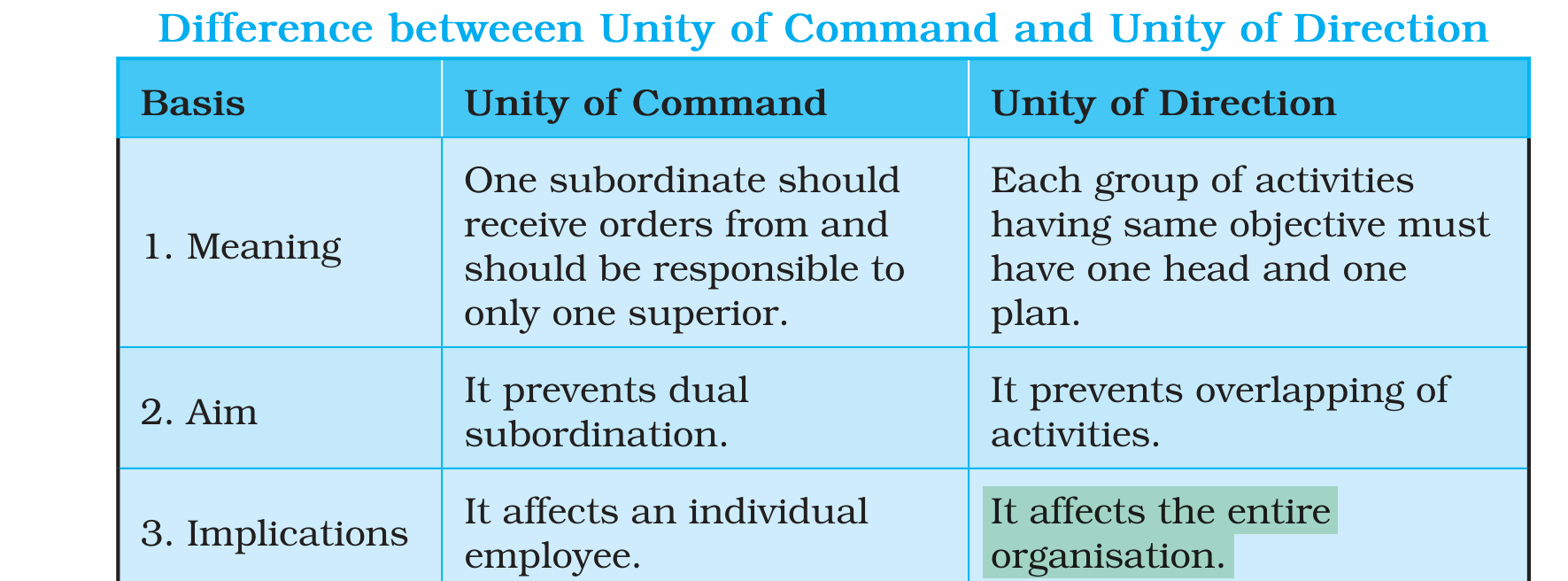
The correct answer is Option (2) → It affects the entire organisation.
Option (1) It affects an individual employee. — Incorrect. This is the implication of unity of command, which fixes one boss for each employee.
Option (2) It affects the entire organisation. — Correct. Unity of direction asks for one head and one plan for each group of activities with the same objective. It decides how all the units of the firm are grouped and run, so it affects the entire organisation.
Option (3) It prevents dual subordination. — Incorrect. Preventing dual subordination is the aim of unity of command. Unity of direction aims to prevent overlapping of activities.
Option (4) It balances decentralisation with the manager's retention of final authority. — Incorrect. This belongs to centralisation and decentralisation. Fayol wanted subordinates involved through decentralisation, while managers keep final authority through centralisation.
NCERT (2026-27 Edition):
|