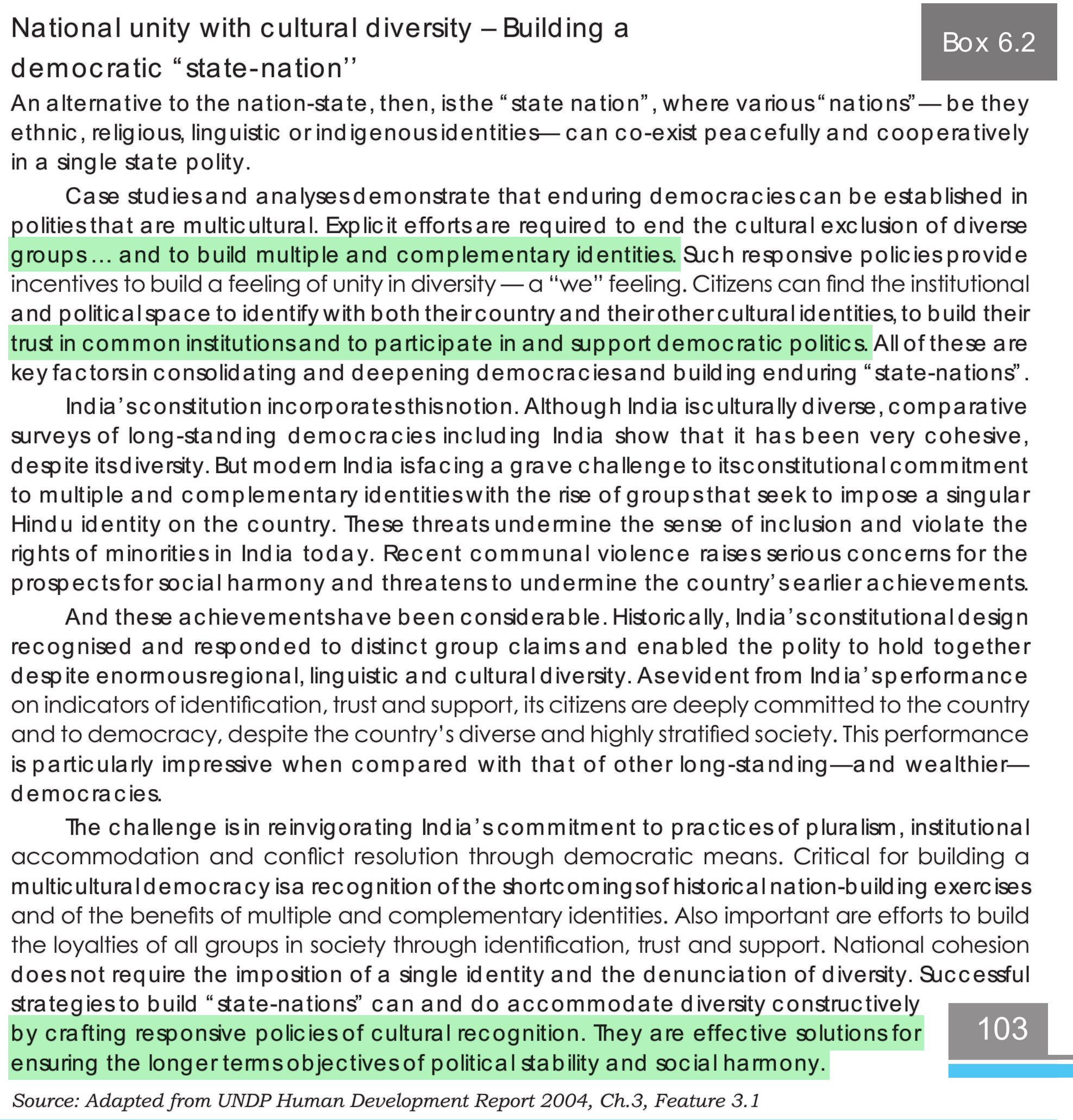
Some of the enduring characteristics of state - nation in India are:
(A) allow multiple and complementary identities
(B) political stability through policies of cultural recognition
(C) by following an assimilationist model
(D) participatory democracy
Choose the correct answer from the options given below:
Answer & explanation
Correct answer: option 4
The correct answer is Option (4) → (A), (B), (D) only
(A) allow multiple and complementary identities Correct. A ‘state-nation’ is a state in which various ‘nations’ – ethnic, religious, linguistic or indigenous identities – co-exist peacefully in a single polity. It is built by efforts to end cultural exclusion and to build multiple and complementary identities, and India’s constitution incorporates this notion.
(B) political stability through policies of cultural recognition Correct. Successful state-nations accommodate diversity by crafting responsive policies of cultural recognition, which are effective solutions for the longer-term objectives of political stability and social harmony.
(C) by following an assimilationist model Incorrect. Assimilation is the opposite path. States threatened by community identities have tried to secure their citizens’ loyalty through policies of assimilation or integration that suppress cultural diversity; India has not been ‘integrationist’ in that way.
(D) participatory democracy Correct. In a state-nation, citizens find the space to identify with both their country and their other cultural identities, to trust common institutions and to participate in and support democratic politics; these are key factors in deepening democracies.
NCERT: Indian Society — Chapter 6: The Challenges of Cultural Diversity, Box 6.2 (2025-26)
|