Which of the following is not the basic feature of an entrepreneur?
Answer & explanation
Correct answer: option 3
The correct answer is Option (3) → Risk aversion
Option (1) Innovation — A feature of an entrepreneur (Incorrect). Innovation is a basic feature of entrepreneurship. It means bringing new products, finding new markets or doing things in better ways.
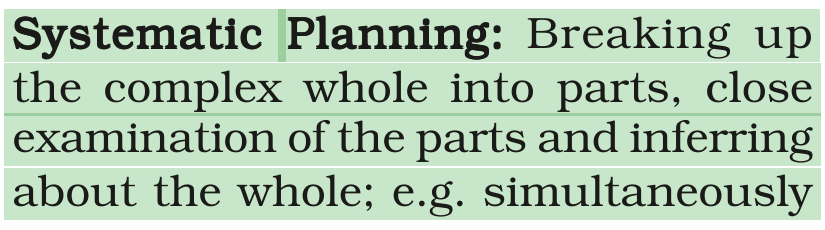
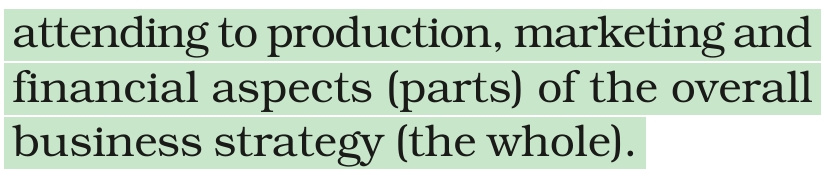
Option (2) Business planning skill — A feature of an entrepreneur (Incorrect). An entrepreneur must plan how to bring together land, labour, capital and technology to run a business. This needs planning skill.
Option (3) Risk aversion — Not a feature of an entrepreneur (Correct). Risk aversion means staying away from risk. An entrepreneur does the opposite. Risk-taking is a basic feature of entrepreneurship. He must pay rent, interest and wages even if the business fails, but his own profit is never sure.
Option (4) Leadership — A feature of an entrepreneur (Incorrect). An entrepreneur must win the support of investors, suppliers, workers and customers and guide them towards his goal. That needs leadership.
Note: This question is from the chapter Entrepreneurship Development, which is not in the current NCERT book (2026-27). The chapter is in the pre-rationalised NCERT, from which the extract below is taken. NCERT (Pre-rationalised Edition): “3. Innovation: … Entrepreneurship is creative also in the sense that it involves innovation- introduction of new products, discovery of new markets and sources of supply of inputs, technological breakthroughs as well as introduction of newer organisational forms for doing things better, cheaper, faster and, in the present context, in a manner that causes the least harm to the ecology/environment. …” “4. Organisation of Production: Production, implying creation of form, place, time personal utility, requires the combined utilisation of diverse factors of production, land, labour, capital and technology. Entrepreneur, in response to a perceived business opportunity mobilises these resources into a productive enterprise or firm. …” “5. Risk-taking: … As the entrepreneur contracts for an assured supply of the various inputs for his project, he incurs the risk of paying them off whether or not the venture succeeds. Thus, landowner gets the contracted rent, capital providers gets the contracted interest, and the workforce gets the contracted wages and salaries. However, there is no assurance of profit to the entrepreneur.”
|