
Given below are two statements: one is labelled as Assertion (A) and the other is labelled as Reason (R).
Assertion (A): In a corn cob, the tassels are the stigma and style which wave in the wind to trap pollen grains.
Reason (R): Wind-pollinated flowers often possess well-exposed stamens so that the pollen grains are easily dispersed into wind currents.
In the light of the above statements, choose the most appropriate answer from the options given below:
Answer & explanation
Correct answer: option 2
The correct answer is Option (2) → Both (A) and (R) are true but (R) is not the correct explanation of (A).
Assertion (A): In a corn cob, the tassels are the stigma and style which wave in the wind to trap pollen grains. — True. A is about the female part of a wind-pollinated flower. The tassels of the corn cob are the stigma and style, and they wave in the wind to trap pollen.
Reason (R): Wind-pollinated flowers often possess well-exposed stamens so that the pollen grains are easily dispersed into wind currents. — True. R is about the male part. Well-exposed stamens let the wind carry the pollen away.
Why R does not explain A? R tells how pollen is released into the wind from the stamens. A is about how pollen is trapped by the stigma and style. Trapping of air-borne pollen depends on the large, often feathery stigma, not on the stamens. So R is true but is not the correct explanation of A.
NCERT Extract:
Agents of Pollination – “… Wind pollination also requires that the pollen grains are light and non-sticky so that they can be transported in wind currents. They often possess well-exposed stamens (so that the pollens are easily dispersed into wind currents, Figure 1.10) and large often-feathery stigma to easily trap air-borne pollen grains. Wind-pollinated flowers often have a single ovule in each ovary and numerous flowers packed into an inflorescence; a familiar example is the corn cob – the tassels you see are nothing but the stigma and style which wave in the wind to trap pollen grains.”
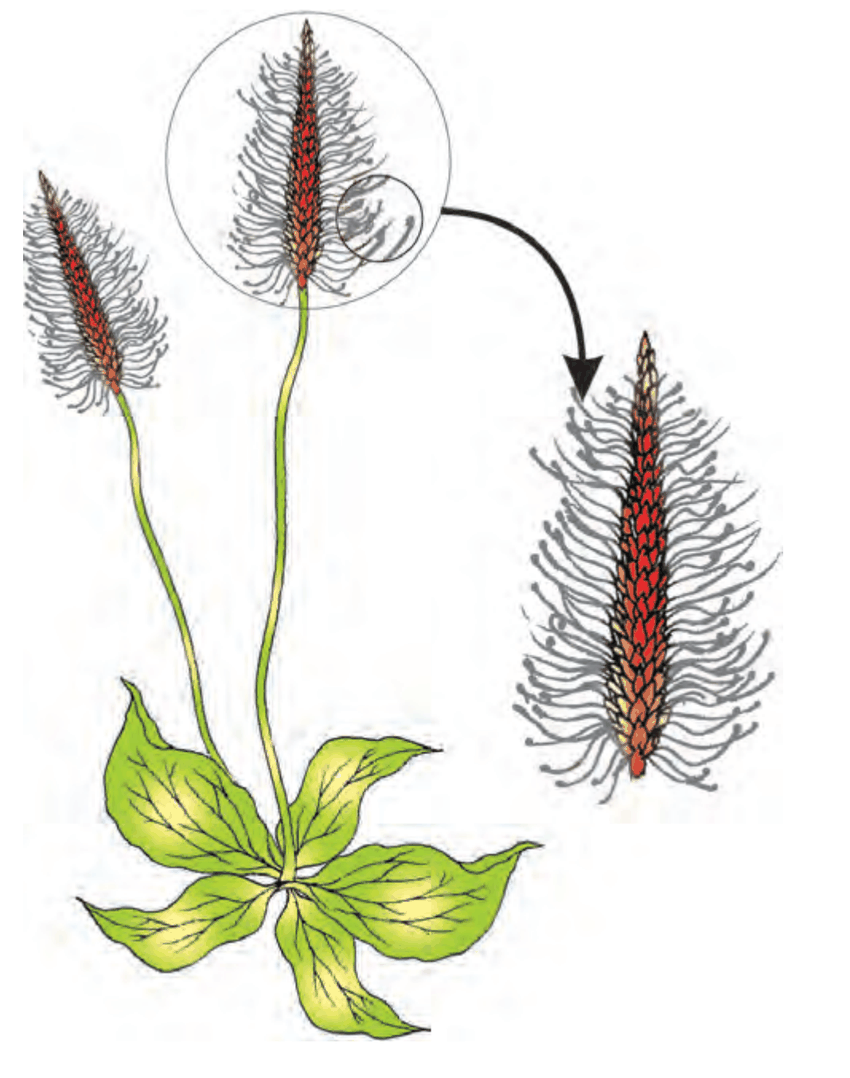
Figure 1.10 A wind-pollinated plant showing compact inflorecence and well-exposed stamens