Read the passage and answer the questions:
Revolt of 1857: Paintings
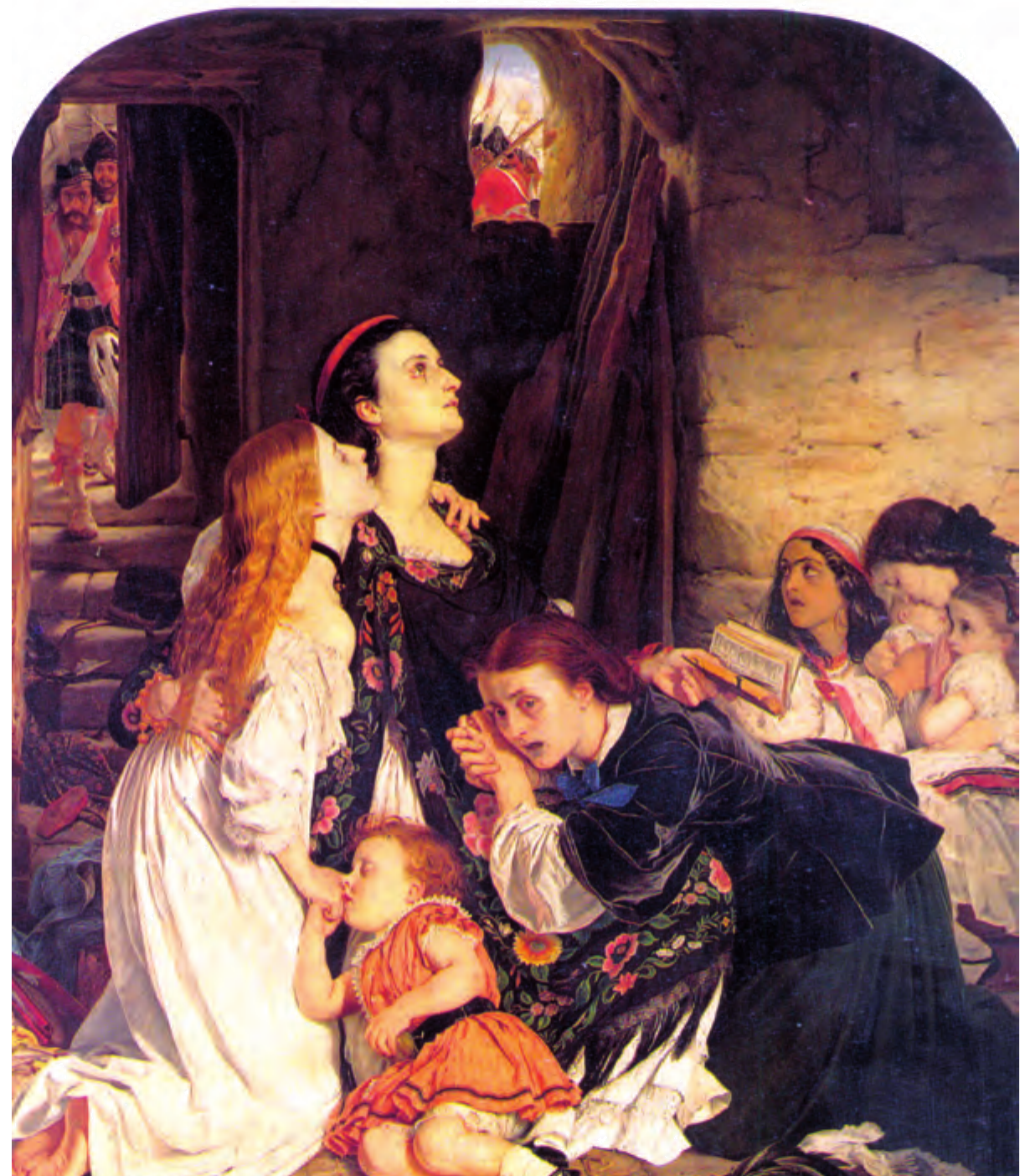
Newspaper reports have power over public imagination: they shape feelings and attitudes to events. Inflamed particularly by tales of violence against women and children, there were public demands in Britain for revenge and retribution. The British government was asked to protect the honor of innocent women and ensure the safety of helpless children. Artists expressed as well as shaped these sentiments through their visual representations of trauma and suffering. “In Memoriam” was painted by Joseph Noel Paton. You can see English women and children huddled in a circle, looking helpless and innocent, seemingly waiting for the inevitable – dishonour, violence and death. “In Memoriam” does not show gory violence, it only suggests it. It stirs up the spectator’s imagination, and seeks to provoke anger and fury. It represents the rebels as violent and brutish, even though they remain invisible in the picture. In the background, you can see the British forces arriving as saviours. In another set of sketches and paintings we see women in a different light. They appear heroic, defending themselves against the attack of rebels.
Identify the incorrect statements for the painting “In Memoriam”:
A. English women and children huddled in a square.
B. Gory violence is clearly shown in the painting.
C. The British forces acted as saviours.
D. Women were not seemingly waiting for violence.
Choose the correct answer from the options given below:
Answer & explanation
Correct answer: option 2
The correct answer is Option (2) → A, B and D only
A. English women and children huddled in a square. Incorrect statement (the answer). In the painting the women and children are huddled in a circle, not a square, looking helpless and innocent.
B. Gory violence is clearly shown in the painting. Incorrect statement (the answer). ‘In Memoriam’ does not show gory violence; it only suggests it. It stirs up the viewer’s imagination and seeks to provoke anger and fury, and the rebels themselves remain invisible.
C. The British forces acted as saviours. A correct statement (not the answer). In the background of the painting the British rescue forces arrive as saviours.
D. Women were not seemingly waiting for violence. Incorrect statement (the answer). The women are shown seemingly waiting for the inevitable – dishonour, violence and death. The word ‘not’ reverses what the painting shows.
Note: This passage is taken from the NCERT chapter ‘Rebels and the Raj’, almost word for word. The paintings of 1857 have their own section in that chapter; read it slowly, picture by picture, because every line of it can come back as a statement.
NCERT (2025-26): “5.2 English women and the honour of Britain … Artists expressed as well as shaped these sentiments through their visual representations of trauma and suffering. ‘In Memoriam’ (Fig. 10.11) was painted by Joseph Noel Paton two years after the mutiny. You can see English women and children huddled in a circle, looking helpless and innocent, seemingly waiting for the inevitable – dishonour, violence and death. ‘In Memoriam’ does not show gory violence; it only suggests it. It stirs up the spectator’s imagination, and seeks to provoke anger and fury. It represents the rebels as violent and brutish, even though they remain invisible in the picture. In the background you can see the British rescue forces arriving as saviours.”
Fig. 10.11 “In Memoriam”, by Joseph Noel Paton, 1859 |