Match List-I with List-II
| List-I | List-II |
| (Wave) | (Wavelength) |
| (A) Microwaves | (I) 100 m |
| (B) Gamma Rays | (II) 10-15 m |
| (C) A. M. Radio waves | (III) 10-10 m |
| (D) X-Rays | (IV) 10-3 m |
Choose the correct answer from the options given below:
Answer & explanation
Correct answer: option 2
The correct answer is Option (2) → (A) - (IV), (B) - (II), (C) - (I), (D) - (III)
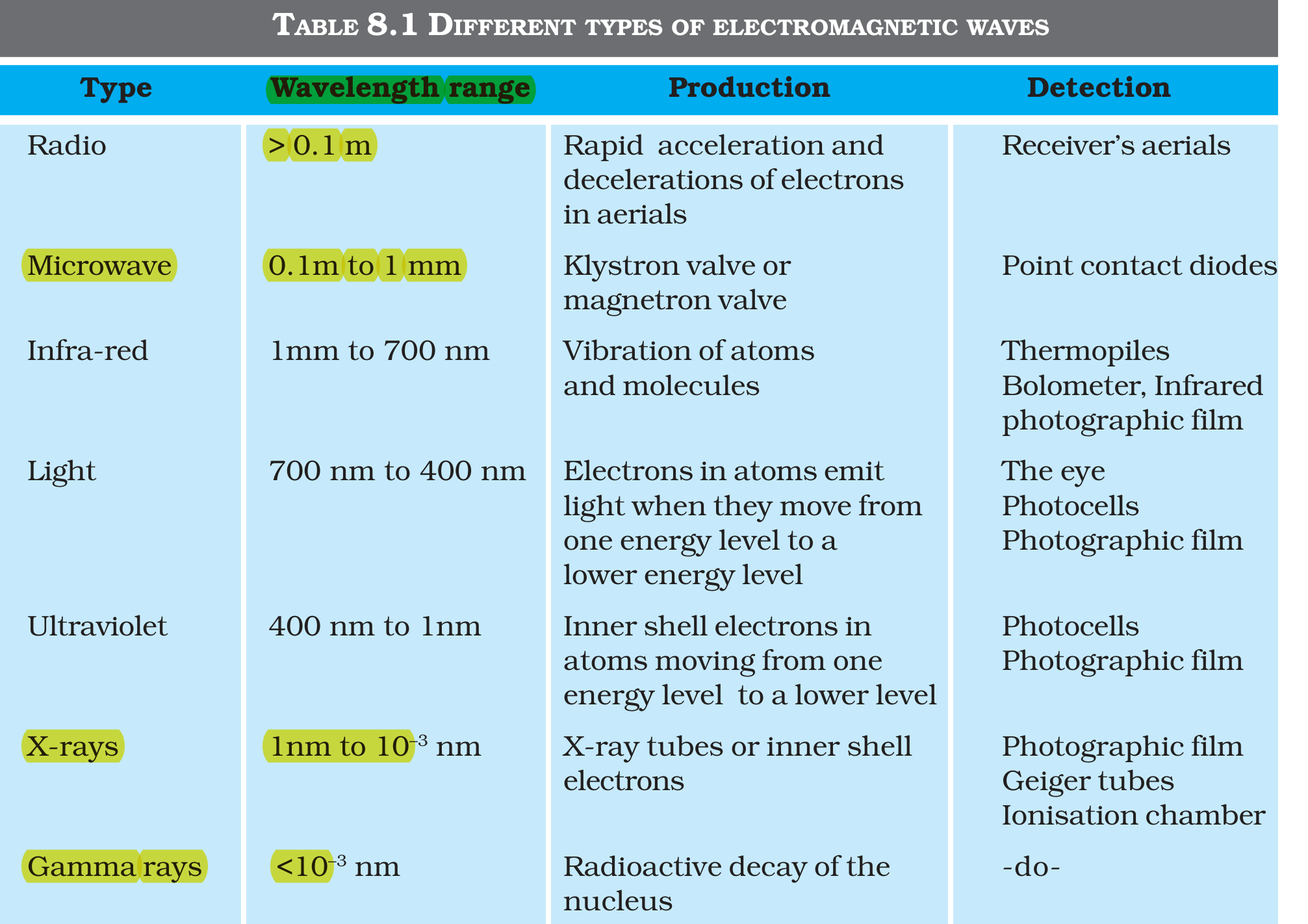
Across the electromagnetic spectrum the wavelength increases in the order gamma rays, X-rays, ultraviolet, visible, infrared, microwaves, radio waves. Match each wave with its typical wavelength.
(A) Microwaves — this matches (IV) 10-3 m. Microwaves lie between about 1 mm and 0.1 m, the range used in radar and microwave ovens.
(B) Gamma Rays — this matches (II) 10-15 m. Gamma rays come from nuclei and have the shortest wavelengths, below about 10−12 m.
(C) A. M. Radio waves — this matches (I) 100 m. AM (medium-wave) broadcasts use wavelengths of hundreds of metres, the longest in the list.
(D) X-Rays — this matches (III) 10-10 m. X-rays span about 10−8 m to 10−13 m; 10−10 m (1 angstrom) is typical of the X-rays used in diffraction by crystals.
NCERT (2026-27):
Gamma Rays – …