With the free entry of a new firm there will be a shift in the demand curve. How does that shift in the demand curve affect the equilibrium price?
Answer & explanation
Correct answer: option 3
The correct answer is Option (3) → Equilibrium price will remain unchanged
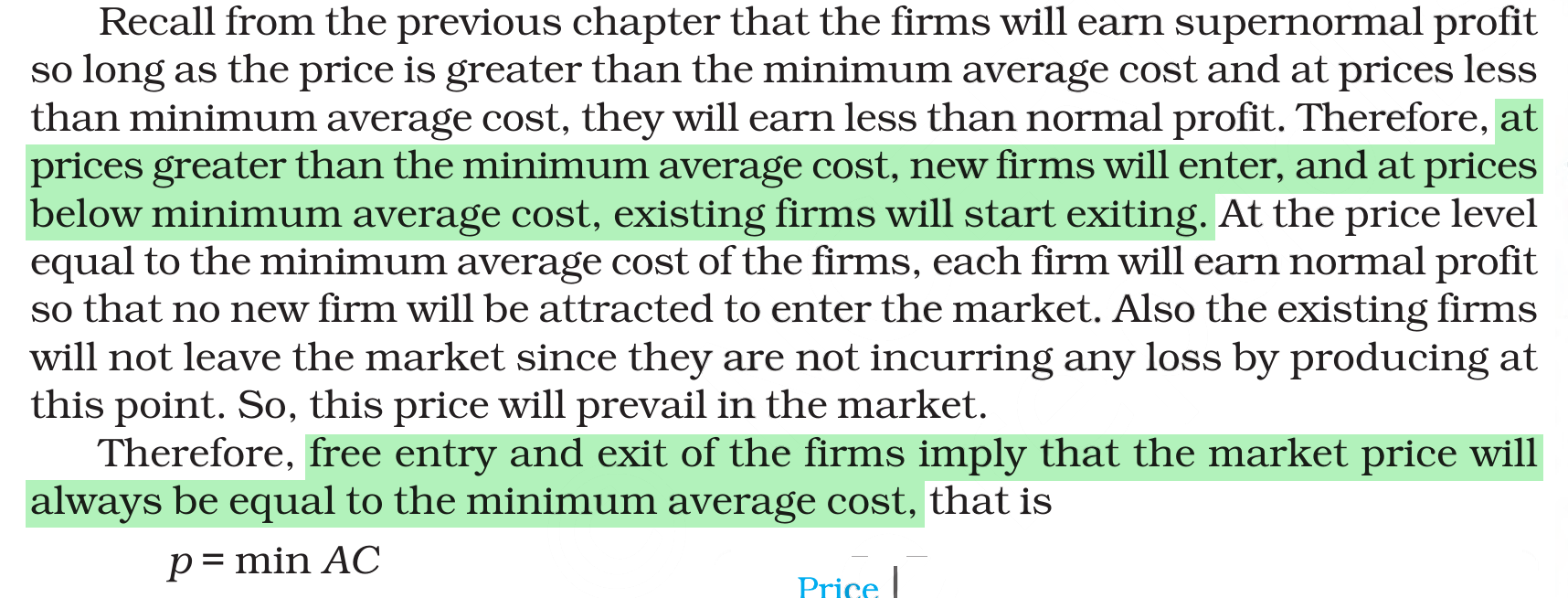
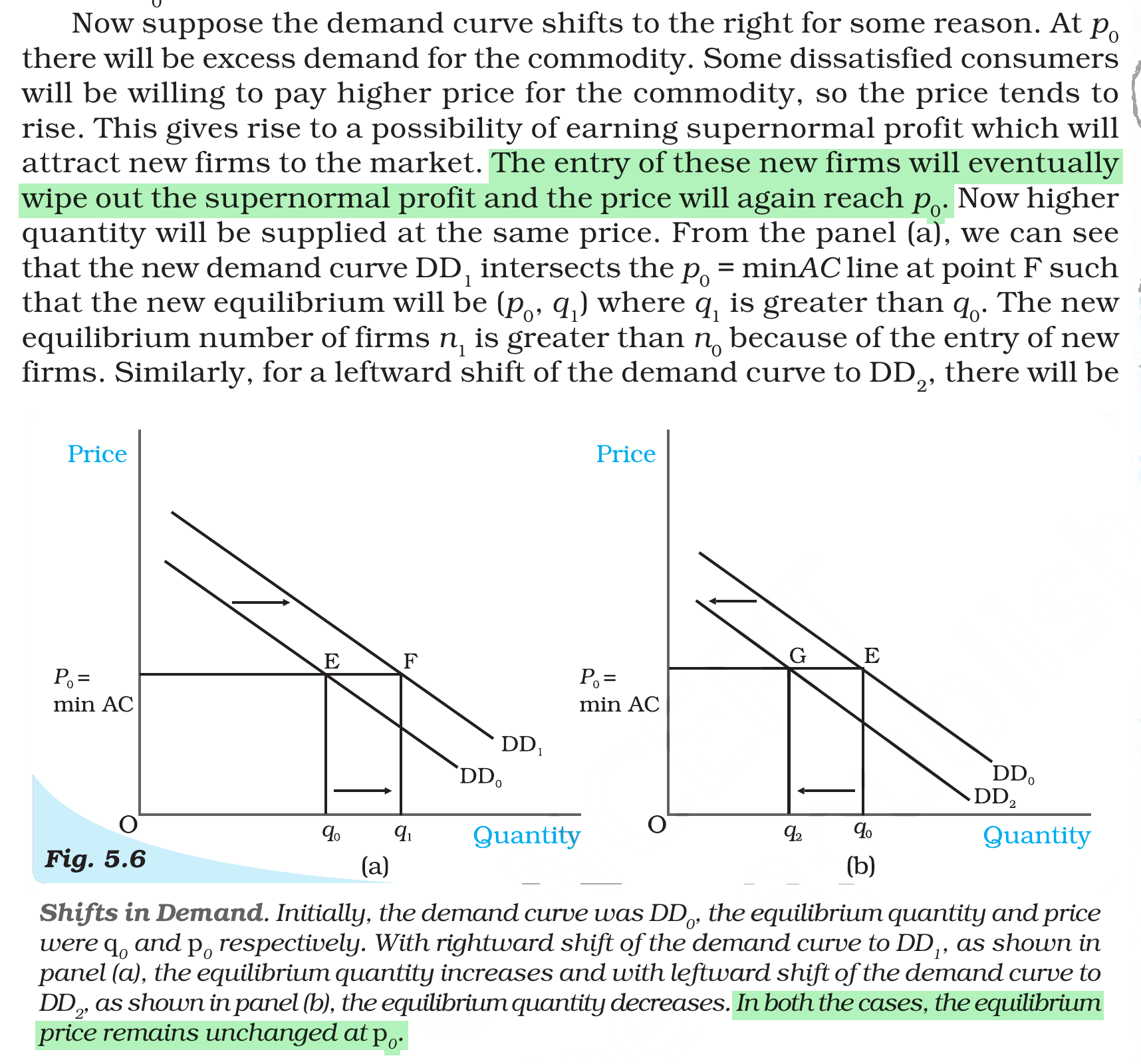
When the firms in a market earn more than normal profit, outsiders want a share and come in; when firms make losses, some leave. With free entry and exit this goes on until every firm earns just normal profit, which happens when the price equals the minimum average cost. The price is therefore pinned down by cost, not by demand, and a shift in the demand curve leaves the equilibrium price unchanged:
If demand rises, the price begins to rise above minimum average cost. Supernormal profit attracts new firms, supply expands, and the price returns to its old level, with more output and more firms.
If demand falls, the price begins to fall below minimum average cost. Losses make firms leave, supply contracts, and the price returns to its old level, with less output and fewer firms.
Why the other options are incorrect
Option (1) Equilibrium price will rise — Incorrect. This is the result when the number of firms is fixed. With free entry the extra supply from new firms brings the price back.
Option (2) Equilibrium price will fall — Incorrect. A price below minimum average cost means losses and exit, which pushes it back up.
Option (4) Equilibrium price will fall and then rise — Incorrect. The adjustment may begin with a temporary move, but it ends where it started, so the equilibrium price does not change.
NCERT: Introductory Microeconomics — Chapter 5: Market Equilibrium (2025-26)
|