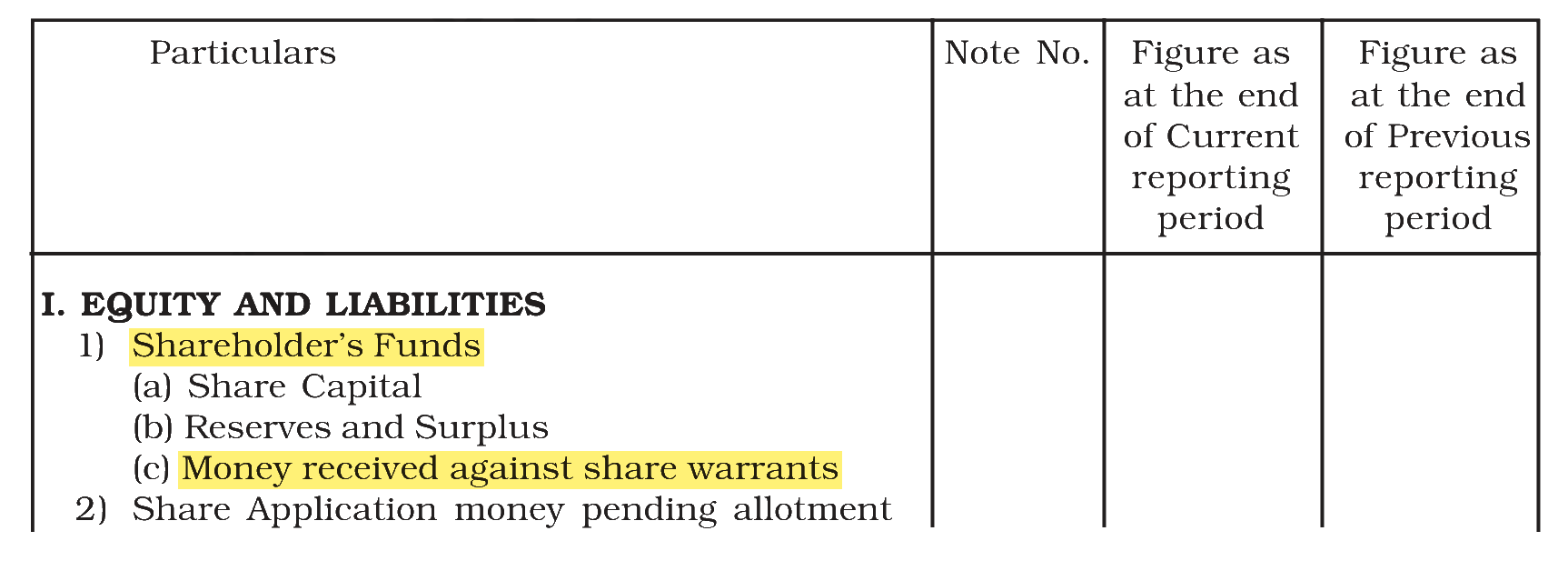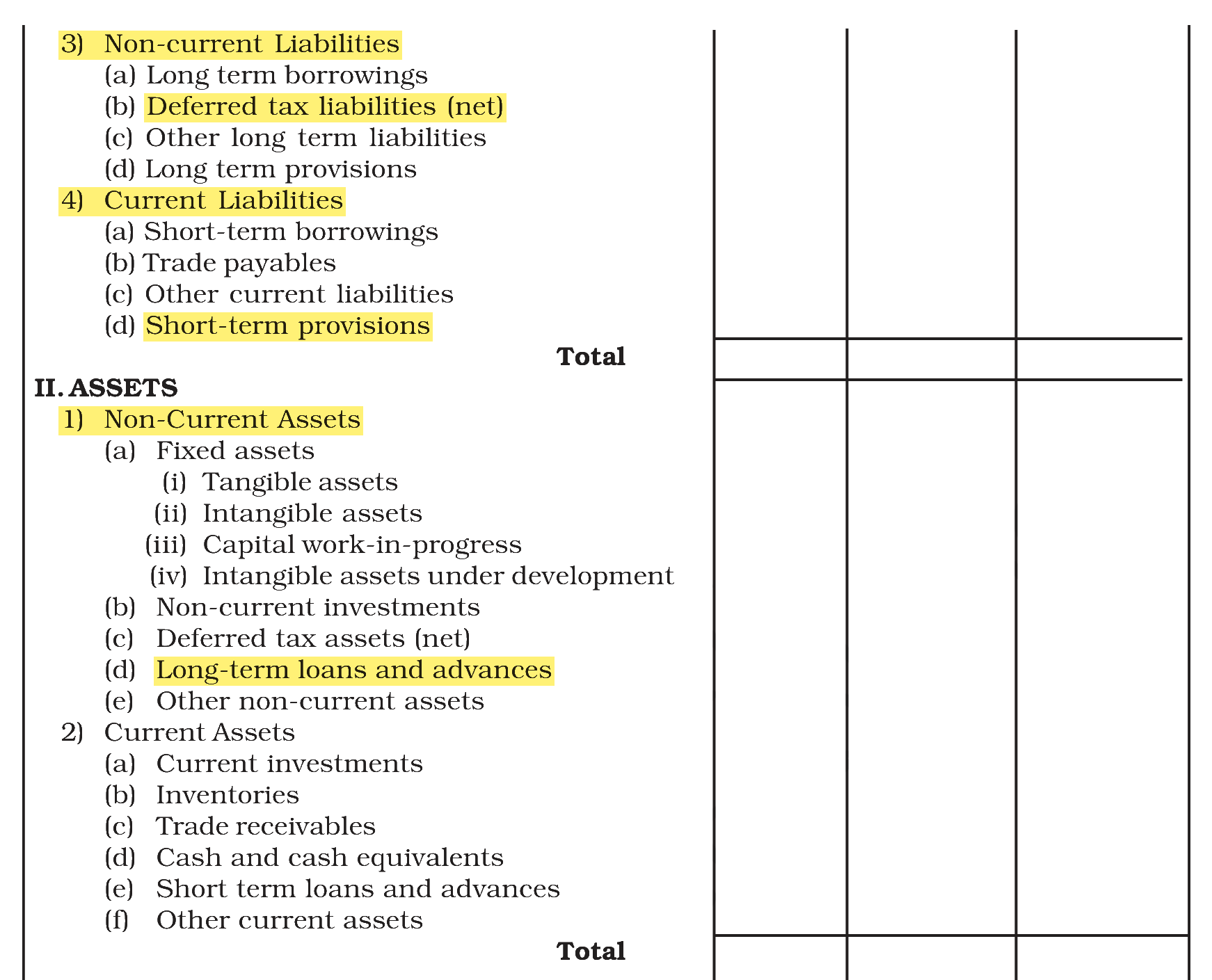
As per Schedule III to the Companies Act 2013, Match the LIST-I with LIST-II.
| LIST-I (Headings) | LIST-II (Sub-Headings) | ||
|---|---|---|---|
| A. | Shareholder's Funds | I. | Short-term provisions |
| B. | Non-current Liabilities | II. | Long-term loans and advances |
| C. | Current Liabilities | III. | Money received against share warrants |
| D. | Non-Current Assets | IV. | Deferred tax liabilities (net) |
Choose the correct answer from the options given below:
Answer & explanation
Correct answer: option 4
The correct answer is Option (4) → A-III, B-IV, C-I, D-II
Schedule III groups every item of the balance sheet under a main heading and then a sub-heading. Each List-II item belongs to one heading only.
(A) Shareholder's Funds — this matches (III) Money received against share warrants. Money received for share warrants will turn into share capital, so it is shown with the owners' funds, beside share capital and reserves and surplus.
(B) Non-current Liabilities — this matches (IV) Deferred tax liabilities (net). Tax that is postponed to later years is a long-term obligation, so it sits with the non-current liabilities.
(C) Current Liabilities — this matches (I) Short-term provisions. Provisions expected to be settled within twelve months, such as a provision for tax for the year, are current liabilities.
(D) Non-Current Assets — this matches (II) Long-term loans and advances. Loans and advances given by the company that are recoverable after more than twelve months are non-current assets.
NCERT (2026-27 edition):
|