Which of the following statements are correct regarding “human security” in its broadest formulation?
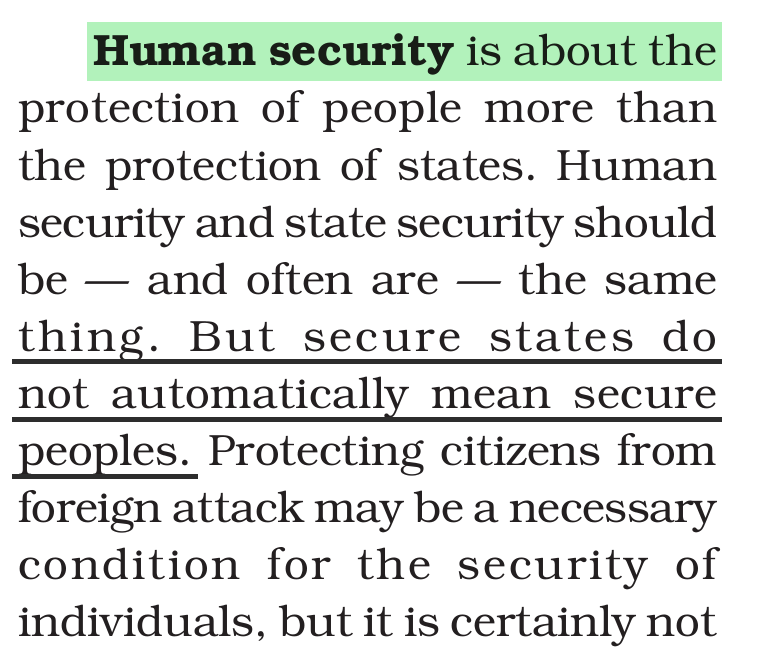
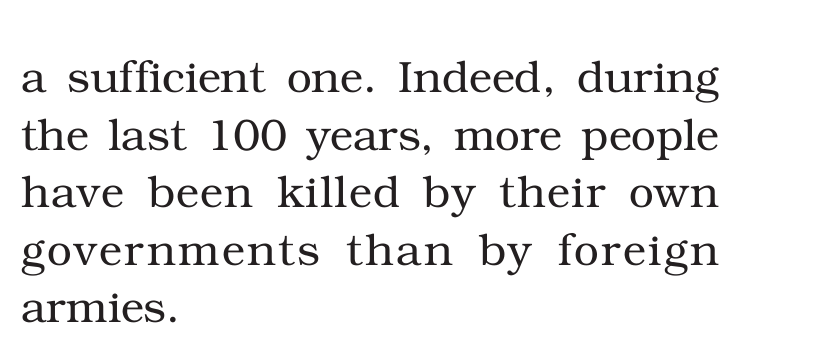
A. Secure states automatically mean secure people.
B. Hunger, disease and natural disasters are considered as threats by proponents of broad concept of human security.
C. Human security agenda encompasses threats to human dignity.
D. Human security stresses on both ‘freedom from want’ and ‘freedom from fear’.
Choose the correct answer from the options given below:
Answer & explanation
Correct answer: option 4
The correct answer is Option (4) → B, C and D only
A. Secure states automatically mean secure people. Incorrect. Secure states do not automatically mean secure peoples; more people have been killed by their own governments than by foreign armies in the last 100 years.
B. Hunger, disease and natural disasters are considered as threats by proponents of broad concept of human security. Correct.
C. Human security agenda encompasses threats to human dignity. Correct. This is its broadest formulation.
D. Human security stresses on both ‘freedom from want’ and ‘freedom from fear’. Correct.
NCERT (2025-26): “Non-Traditional Notions … Proponents of the ‘broad’ concept of human security argue that the threat agenda should include hunger, disease and natural disasters because these kill far more people than war, genocide and terrorism combined. Human security policy, they argue, should protect people from these threats as well as from violence. In its broadest formulation, the human security agenda also encompasses economic security and ‘threats to human dignity’. Put differently, the broadest formulation stresses what has been called ‘freedom from want’ and ‘freedom from fear’, respectively.…”
|