Arun spends 200 rupees on good X irrespective of its price whereas Varun buys 10 units of Good X irrespective of its price. The respective values of the price elasticity of demand for Good X for both the consumers is
Answer & explanation
Correct answer: option 2
The correct answer is Option (2) → 1 and 0
Price elasticity of demand is the percentage change in quantity demanded divided by the percentage change in price.
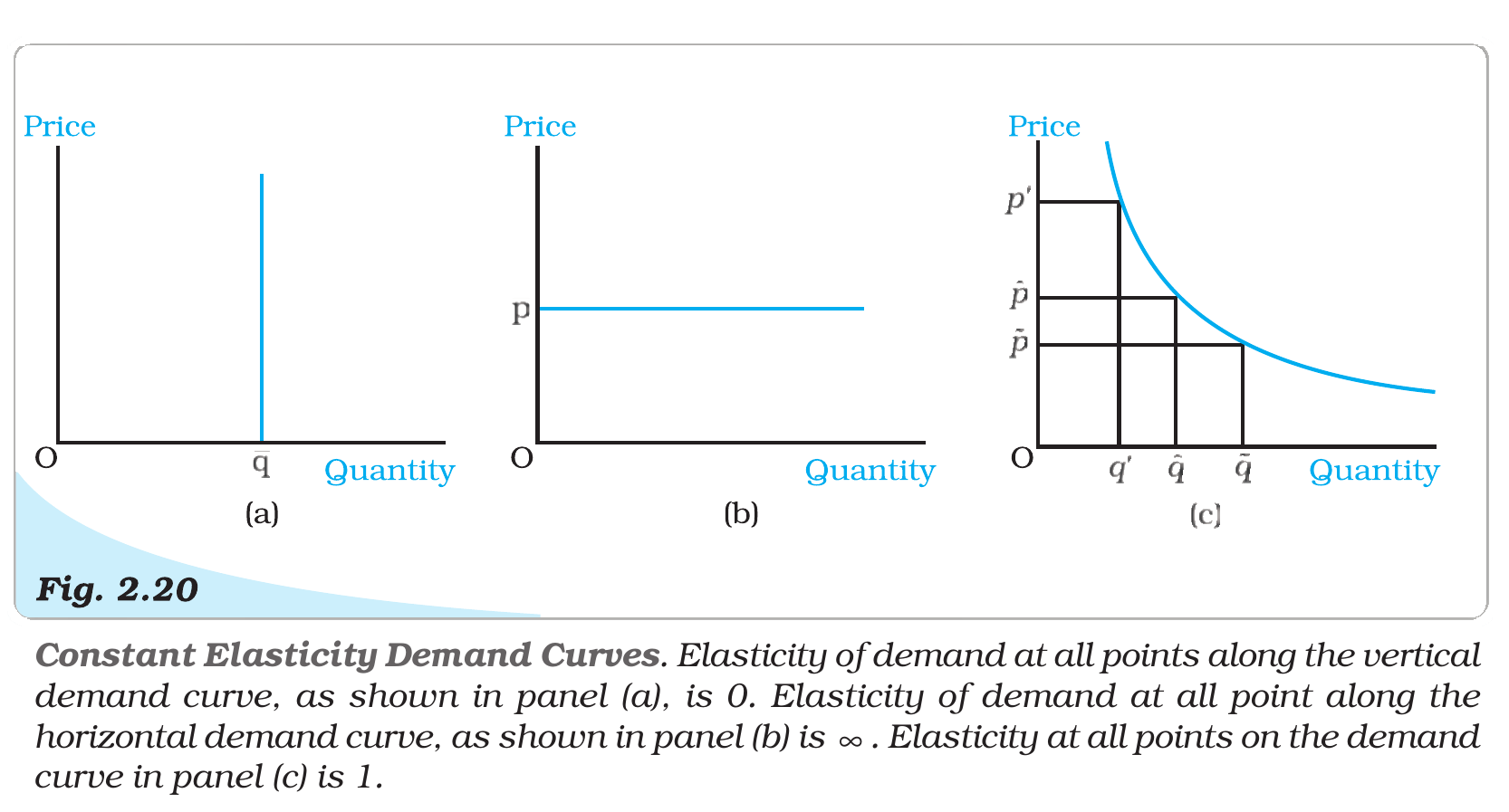
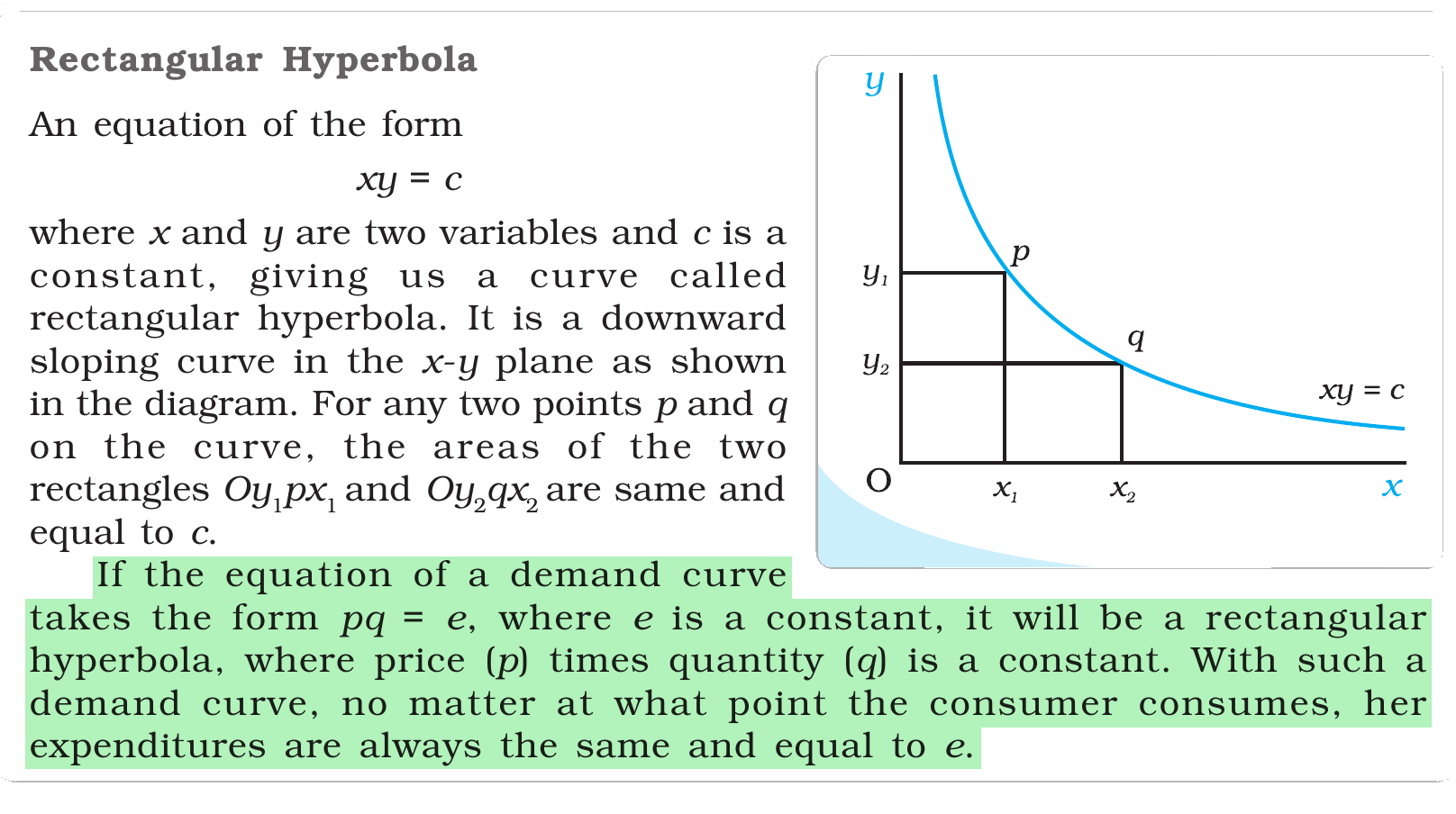
Arun spends the same 200 rupees at every price, so price × quantity stays constant. His demand curve is a rectangular hyperbola. A percentage change in price leads to an equal percentage change in quantity, so elasticity is 1.
Varun buys 10 units at every price, so his quantity does not change at all. His demand curve is vertical, and elasticity is 0.
NCERT (2026-27): “Constant Elasticity Demand Curve … Consider, for example, a vertical demand curve as the one depicted in Figure 2.20(a). Whatever be the price, the demand is given at the level q̄. A price never leads to a change in the demand for such a demand curve and |eD| is always 0. Therefore, a vertical demand curve is perfectly inelastic.… Figure 2.20(c) depicts a demand curve which has the shape of a rectangular hyperbola. This demand curve has a property that a percentage change in price along the demand curve always leads to equal percentage change in quantity. Therefore, |eD| = 1 at every point on this demand curve. This demand curve is called the unitary elastic demand curve.… 2.6.3 Elasticity and Expenditure The expenditure on a good is equal to the demand for the good times its price. … And if the percentage decline in quantity is equal to the percentage increase in the price, the expenditure on the good will remain unchanged (see row 3 in table 2.5).…”
|