
CUETMOCK
  • Pricing
  • Mentors
Log inStart freeStart free mocks→

First test, then trust

Try a free CUET mock test.

Join 5,00,000+ students who rehearsed exam day on the exact NTA screen before sitting CUET. On the web and on Android.

Start free mocks →Get the Android app
CUETMOCK

India's #1 CUET Mock Test Platform. Original NCERT-based questions on the exact NTA exam screen — trusted by 5,00,000+ students since CUET 2022.

Get it onGoogle PlayScan to download the CUETMOCK app

Mock tests

  • CUET mock test series
  • Commerce mocks
  • Humanities (Arts) mocks
  • Science mocks
  • Languages & GAT mocks
  • Free practice questions
  • Pricing

Resources

  • CUET exam guide
  • CUET syllabus
  • Universities accepting CUET
  • Expert blogs
  • News & notifications
  • Webinars & counselling
  • CUET score calculator
  • How we estimate your rank
  • FAQs

Company

  • About us
  • Our leadership & team
  • Our toppers
  • Mentors
  • For schools
  • Contact us
  • Terms
  • Privacy
  • Refund policy

Talk to us

+91 7696 6630 56info@cuetmock.comWhatsApp us

Our other platforms

  • JEE Mock — For IIT-JEE aspirants
  • NEET Mock — For NEET aspirants

Newsletter

Exam updates, study material and offers — no spam.

© 2026 NYC Ventures Pvt. Ltd.

701-702, Royal Business Park, Zirakpur, Punjab - 140603

  • Terms of use
  • Privacy policy
  • Refund policy
  • Contact us

iCUETMOCK is an independent preparation platform, not affiliated with the National Testing Agency (NTA). Always check exam details on the official NTA website.

  • Home
  • Mock tests
  • CUET guide
  • Pricing
  • Log in
Home/Practice questions/Chemistry
ChemistryOrganic: Haloalkanes and Haloarenes

Arrange the following Nucleophiles in the decreasing order of their a…

Arrange the following Nucleophiles in the decreasing order of their attacking strength :

(A) Structure A for Q38
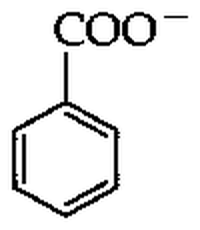
(B) CH3CH2CH2COO−
(C) CH3CH2CH2CH2S−
(D) CH3CH2CH2CH2O−

Choose the correct answer from the options given below :

Answer & explanation+

Correct answer: option 2

The correct answer is Option (2) → (C) > (D) > (B) > (A)

The strength of a nucleophile depends on how available its electron pair is:

  • Larger, more polarisable atom: sulphur is bigger and less electronegative than oxygen, so its lone pair is held less tightly. Thiolates (\( \ce{RS^{-}} \)) are stronger nucleophiles than alkoxides (\( \ce{RO^{-}} \)).

  • Localised vs delocalised charge: in an alkoxide the negative charge sits on one oxygen; in a carboxylate it is spread over two oxygens by resonance, so the carboxylate is a weaker nucleophile.

  • Further delocalisation: benzoic acid is a stronger acid than butanoic acid, so the benzoate ion is a weaker base and a weaker nucleophile than the butanoate ion.

  • (C) \( \ce{CH3CH2CH2CH2S^{-}} \) — 1st (strongest). Butanethiolate: the charge is on the large, polarisable sulphur atom, whose lone pair is held least tightly.

  • (D) \( \ce{CH3CH2CH2CH2O^{-}} \) — 2nd. Butoxide: the charge is localised on one small oxygen atom, so it is weaker than the thiolate but not spread out.

  • (B) \( \ce{CH3CH2CH2COO^{-}} \) — 3rd. Butanoate: the charge is shared by two oxygen atoms through resonance, so the electron pair is less available.

  • (A) \( \ce{C6H5COO^{-}} \) — 4th (weakest). Benzoate: a carboxylate too, and the conjugate base of benzoic acid, a stronger acid than butanoic acid, so it is the weakest base and nucleophile.

Note: The question is from beyond the NCERT textbook.

Advertisement

Practise more on Organic: Haloalkanes and Haloarenes

Chapter-wise mocks on the real NTA exam screen, with solutions and your rank. Your first mocks are free.

Start free mocks →

Advertisement

Next questions

  1. Using the digits 1, 2, 3, 4, and 5, a number having five digits is formed without any repetition. What is the probability that the number i…General Aptitude Test · Quantitative Reasoning
  2. Identify the correct sequence to be followed at the time of Dissolution of Partnership firm: (A) Payment of Partner's Loan Account (B) Real…Accountancy Part A · Dissolution of Partnership Firm
  3. Which of the following is used as an anticancer (anti-tumour) agent?Chemistry · Inorganic: Coordination Compounds
  4. कर्ता कारक का सही उदाहरण है -Hindi · व्याकरण - सकारक
  5. India’s emissions are predicted to rise to 1.6 tonnes per capita in ____.Political Science · Contemporary World Politics: Environment and Natural Resources
  6. Which of the following sets of parts can be fitted together, without gaps or overlaps, to make a complete square? The parts may be turned r…General Aptitude Test · Non-Verbal Reasoning
  7. Comprehension: In the following passage some words have been deleted. Fill in the blanks with the help of the alternatives given. Select th…English · Comprehension - (Narrative / Factual)
  8. A student who is irregular in attendance and does not complete and submit assignments timely is rewarded whenever s/he comes to school on t…Psychology · Therapeutic Approaches
  9. Assertion (A): A solution of n-hexane and n-heptane is nearly ideal in behaviour.Reason (R): In a solution of n-hexane and n-heptane, the A…Chemistry · Physical: Solutions
  10. What was the outcome of the elections held in Manipur in June 1948?Political Science · Politics in India Since Independence: Challenges of nation Building