Read the passage and answer the question:
Two rebels of 1857: Shah Mal
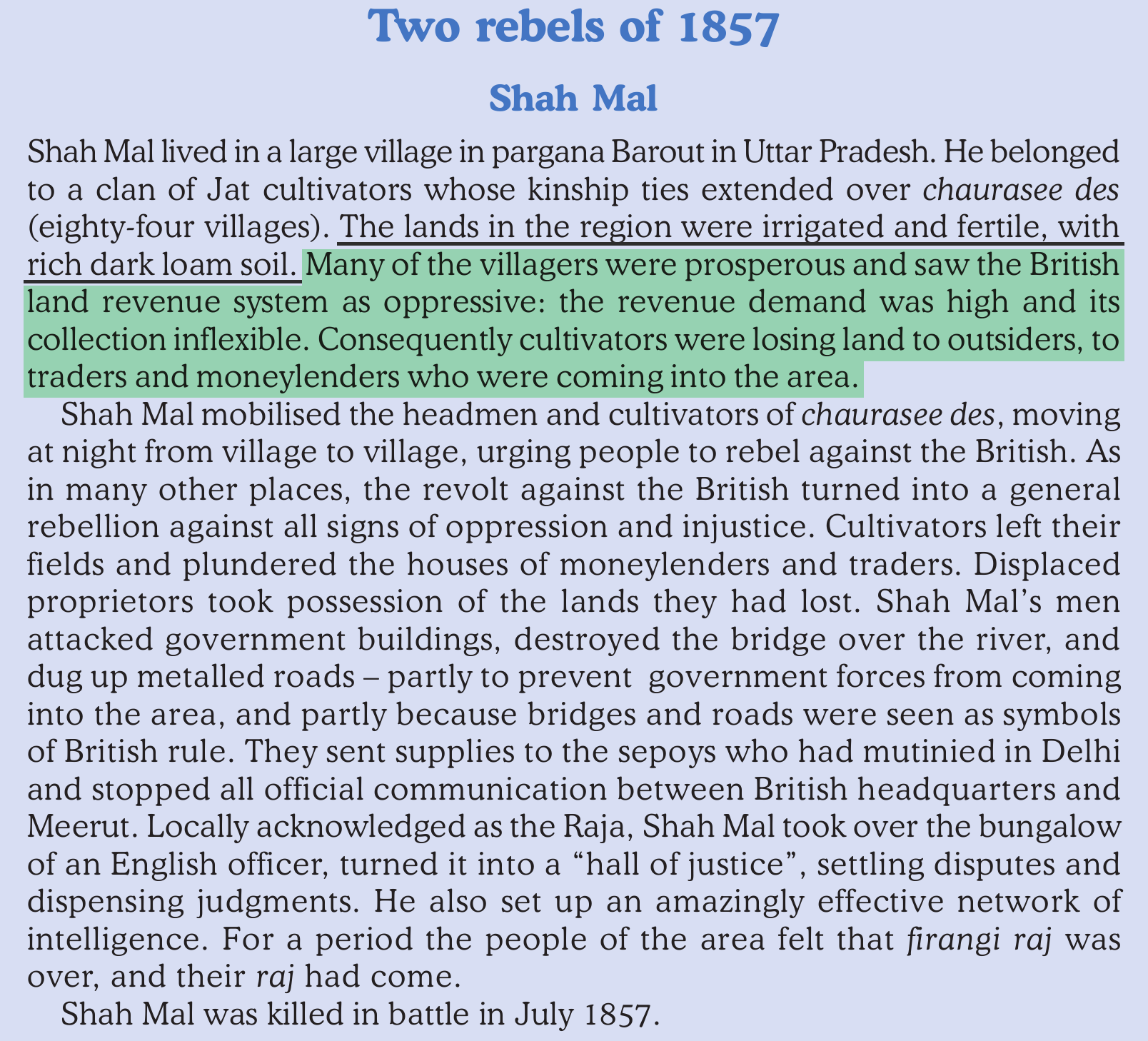
Shah Mal lived in a large village in pargana Barout in Uttar Pradesh. He belonged to a clan of Jat cultivators whose kinship ties extended over chaurasee des (eighty-four villages). The lands in the region were irrigated and fertile, with rich dark loam soil. Many of the villagers were prosperous and saw the British land revenue system as oppressive: the revenue demand was high and its collection inflexible. Consequently cultivators were losing land to outsiders, to traders and moneylenders who were coming into the area. Shah Mal mobilised the headmen and cultivators of chaurasee des, moving at night from village to village, urging people to rebel against the British. As in many other places, the revolt against the British turned into a general rebellion against all signs of oppression and injustice.
Cultivators left their fields and plundered the houses of moneylenders and traders. Displaced proprietors took possession of the lands they had lost. Shah Mal's men attacked government buildings, destroyed the bridge over the river, and dug up metalled roads partly to prevent government forces from coming into the area, and partly because bridges and roads were seen as symbols of British rule. They sent supplies to the sepoys who had mutinied in Delhi and stopped all official communication between British headquarters and Meerut.
Locally acknowledged as the Raja, Shah Mal took over the bungalow of an English officer, turned it into a "hall of justice", settling disputes and dispensing judgments. He also set up an amazingly effective network of intelligence. For a period the people of the area felt that firangi raj was over, and their raj had come.
Shah Mal was killed in battle in July 1857.
According to the passage, why were many cultivators becoming landless?
Answer & explanation
Correct answer: option 1
The correct answer is Option (1) → The revenue demand was very high.
Option (1) The revenue demand was very high. — Correct. The villagers saw the British land revenue system as oppressive: the revenue demand was high and its collection inflexible. Consequently cultivators were losing land to outsiders – to traders and moneylenders who were coming into the area.
Option (2) The land had become unproductive. — Incorrect. The lands of the region were irrigated and fertile, with rich dark loam soil, and many of the villagers were prosperous.
Option (3) There were too many floods. — Incorrect. The passage puts the loss of land down to the revenue system, not to any natural disaster; the irrigated, fertile land was the reason outsiders wanted it.
Option (4) The cultivators did not wish to practice agriculture anymore. — Incorrect. The cultivators lost their land against their will. During the revolt the displaced proprietors even took possession of the lands they had lost.
NCERT: Themes in Indian History Part III — Chapter 10: Rebels and the Raj (2026-27)
|