
The table gives the side chains (R) of the natural α-amino acids.
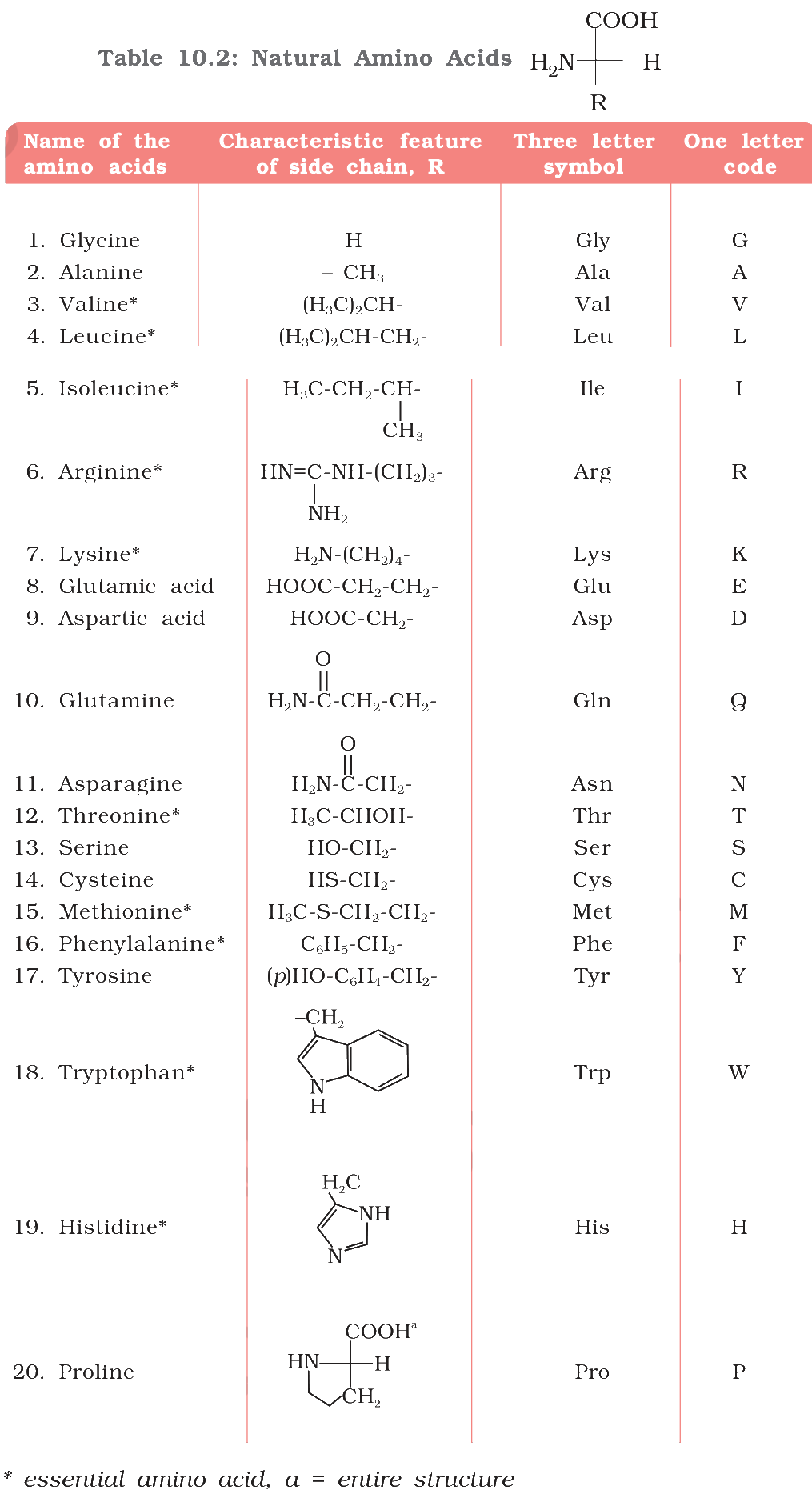
On the basis of the side chains shown in the table, which of the following amino acids is basic?
Answer & explanation
Correct answer: option 1
The correct answer is Option (1) → Lysine
An amino acid is classified as acidic, basic or neutral by the relative number of amino and carboxyl groups in its molecule. Every α-amino acid has one –NH2 and one –COOH group on the α-carbon, so the side chain R decides the class.
Lysine — its side chain H2N–(CH2)4– has one more –NH2 group: amino groups = 2, carboxyl groups = 1. More amino than carboxyl groups, so lysine is basic.
Why the other options are incorrect
Option (2) Aspartic acid — Incorrect. Its side chain HOOC–CH2– has one more –COOH group: amino groups = 1, carboxyl groups = 2, so aspartic acid is acidic.
Option (3) Threonine — Incorrect. Its side chain H3C–CHOH– has no amino or carboxyl group: amino groups = carboxyl groups = 1, so threonine is neutral.
Option (4) Cysteine — Incorrect. Its side chain HS–CH2– has no amino or carboxyl group: amino groups = carboxyl groups = 1, so cysteine is neutral.
NCERT (2026-27 edition):
10.2.2 Classification of Amino Acids – “Amino acids are classified as acidic, basic or neutral depending upon the relative number of amino and carboxyl groups in their molecule. Equal number of amino and carboxyl groups makes it neutral; more number of amino than carboxyl groups makes it basic and more carboxyl groups as compared to amino groups makes it acidic.”
Table 10.2: Natural Amino Acids