CUETMOCK
  • Pricing
  • Mentors
Log inStart freeStart free mocks→

First test, then trust

Try a free CUET mock test.

Join 5,00,000+ students who rehearsed exam day on the exact NTA screen before sitting CUET. On the web and on Android.

Start free mocks →Get the Android app
CUETMOCK

India's #1 CUET Mock Test Platform. Original NCERT-based questions on the exact NTA exam screen — trusted by 5,00,000+ students since CUET 2022.

Get it onGoogle PlayScan to download the CUETMOCK app

Mock tests

  • CUET mock test series
  • Commerce mocks
  • Humanities (Arts) mocks
  • Science mocks
  • Languages & GAT mocks
  • Free practice questions
  • Pricing

Resources

  • CUET exam guide
  • CUET syllabus
  • Universities accepting CUET
  • Expert blogs
  • News & notifications
  • Webinars & counselling
  • CUET score calculator
  • How we estimate your rank
  • FAQs

Company

  • About us
  • Our leadership & team
  • Our toppers
  • Mentors
  • For schools
  • Contact us
  • Terms
  • Privacy
  • Refund policy

Talk to us

+91 7696 6630 56info@cuetmock.comWhatsApp us

Our other platforms

  • JEE Mock — For IIT-JEE aspirants
  • NEET Mock — For NEET aspirants

Newsletter

Exam updates, study material and offers — no spam.

© 2026 NYC Ventures Pvt. Ltd.

701-702, Royal Business Park, Zirakpur, Punjab - 140603

  • Terms of use
  • Privacy policy
  • Refund policy
  • Contact us

iCUETMOCK is an independent preparation platform, not affiliated with the National Testing Agency (NTA). Always check exam details on the official NTA website.

  • Home
  • Mock tests
  • CUET guide
  • Pricing
  • Log in
Home/Practice questions/History
HistoryAncient India: Thinkers, Beliefs and Buildings

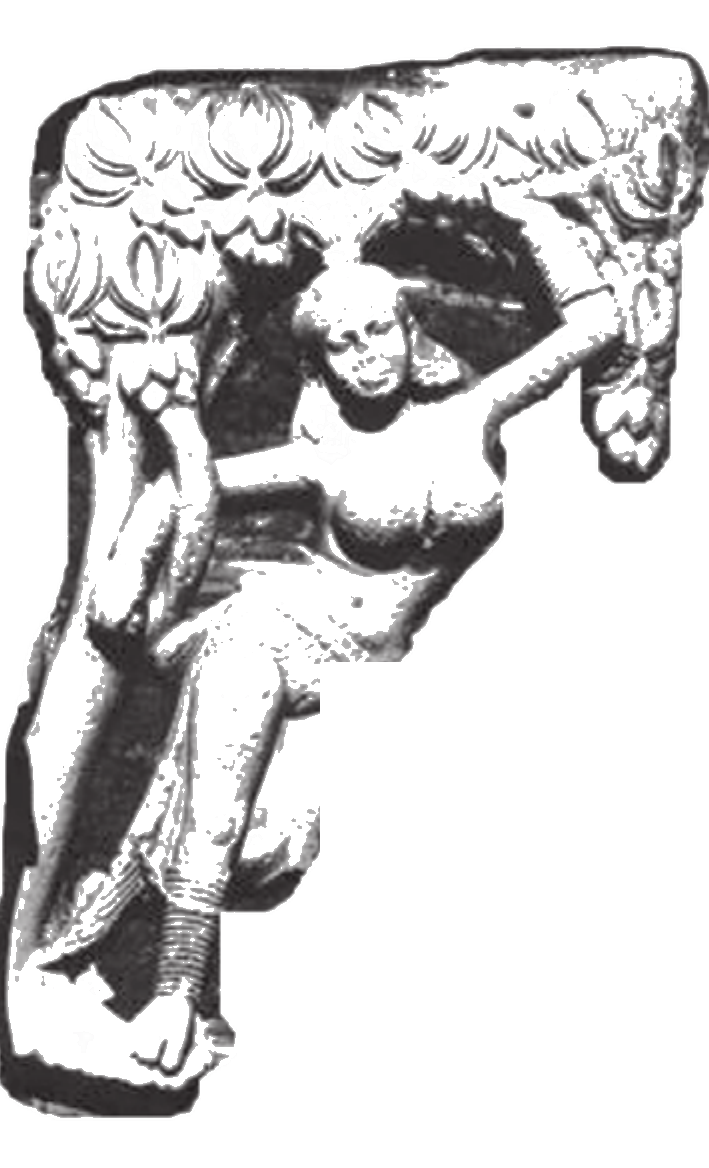
Identify the correct statements regarding the image of ‘Shalabhanjika…

Identify the correct statements regarding the image of ‘Shalabhanjika’ from below:

A. It is the image of beautiful women swinging from the edge of the gateway, holding onto a tree.

B. This was a woman whose touch caused trees to flower and bear fruit.

C. This motif suggests people who turned to Buddhism enriched it with their own pre-Buddhist and non-Buddhist beliefs, practices and ideas.

D. ‘Shalabhanjika’ is not a Pali word but a Sanskrit word.

Choose the correct answers from the options given below:

Answer & explanation+

Correct answer: option 3

The correct answer is Option (3) → A, B, C and D

A. It is the image of beautiful women swinging from the edge of the gateway, holding onto a tree. Correct. This sculpture on the gateway of the Sanchi stupa shows a beautiful woman swinging from the edge of the gateway, holding onto a tree. At first it puzzled scholars, because it seemed to have little to do with renunciation.

B. This was a woman whose touch caused trees to flower and bear fruit. Correct. According to popular belief, the shalabhanjika was a woman whose touch caused trees to flower and bear fruit. It was probably regarded as an auspicious symbol and made part of the decoration of the stupa.

C. This motif suggests people who turned to Buddhism enriched it with their own pre-Buddhist and non-Buddhist beliefs, practices and ideas. Correct. Many of the recurring motifs at Sanchi came from such traditions, which shows that people who became Buddhists brought their older beliefs with them.

D. ‘Shalabhanjika’ is not a Pali word but a Sanskrit word. Correct. Scholars found the meaning of the image by looking at other literary traditions: it could be a representation of what is described in Sanskrit as a shalabhanjika. The word comes from Sanskrit literature, not from the Pali texts of the Buddhists.


NCERT (2025-26): “9.3 Popular traditions … Other sculptures at Sanchi were perhaps not directly inspired by Buddhist ideas. These include beautiful women swinging from the edge of the gateway, holding onto a tree (Fig.4.17). Initially, scholars were a bit intrigued about this image, which seemed to have little to do with renunciation. However, after examining other literary traditions, they realised that it could be a representation of what is described in Sanskrit as a shalabhanjika. According to popular belief, this was a woman whose touch caused trees to flower and bear fruit. It is likely that this was regarded as an auspicious symbol and integrated into the decoration of the stupa. The shalabhanjika motif suggests that many people who turned to Buddhism enriched it with their own pre-Buddhist and even non-Buddhist beliefs, practices and ideas. Some of the recurrent motifs in the sculpture at Sanchi were evidently derived from these traditions.…”

NCERT extract

Fig. 4.17 The woman at the gate

Advertisement

Practise more on Ancient India: Thinkers, Beliefs and Buildings

Chapter-wise mocks on the real NTA exam screen, with solutions and your rank. Your first mocks are free.

Start free mocks →

Advertisement

Next questions

  1. Which of the following is an example of non-market exchange system?Sociology · Indian Society: Market as a social Institution
  2. In substitution nucleophilic bimolecular SN2 reaction, the configuration of the final product involvesChemistry · Organic: Haloalkanes and Haloarenes
  3. The virtual image can be formed by(A) Plane mirrors(B) Concave mirrors(C) Convex mirrors(D) Convex lensChoose the correct answer from the o…Physics · Ray Optics
  4. DNA fragments can be joined together by:Biology · Biotechnology -Principles and Processes
  5. Which statement is incorrect?General Aptitude Test · General Knowledge
  6. Choose the correct passive construction of the given sentence :Should we not obey our parents?(A) We should obey our parents.(B) Should our…English · Grammar: Active Passive Voice
  7. "Management is the process of working with and through others to effectively achieve organisational objectives by efficiently using limited…Business Studies · Nature and significance of Management
  8. If x=\ sqrta^tan^-1t and y=sqrta^cot^-1t , then (d^2y)/(dx^2) isMaths. Section B1 · Continuity and Differentiability
  9. Which of the following statement is incorrect about the ‘tantric’ practices of the subcontinent?History · Medieval India: Bhakti Sufi Traditions
  10. Steps in preparing a chart:(A) Create a basic chart using the pattern from the panel available on top of worksheet in Chart groups option.(…Accountancy Part C · Graphs and Charts for Business Data