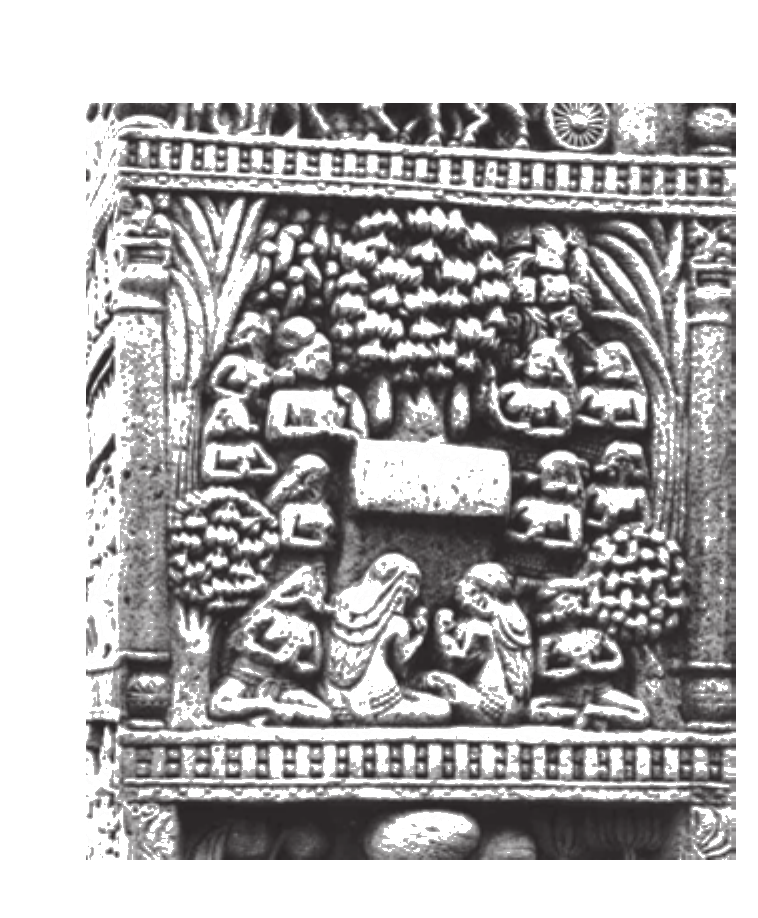
The ‘empty seat’ representation was meant to indicate the ____________ of the Buddha.
Answer & explanation
Correct answer: option 3
The correct answer is Option (3) → Meditation
Many early sculptors did not show the Buddha in human form; they showed his presence through symbols. The Buddha attained enlightenment while meditating under a tree, so the empty seat was meant to indicate the meditation of the Buddha.
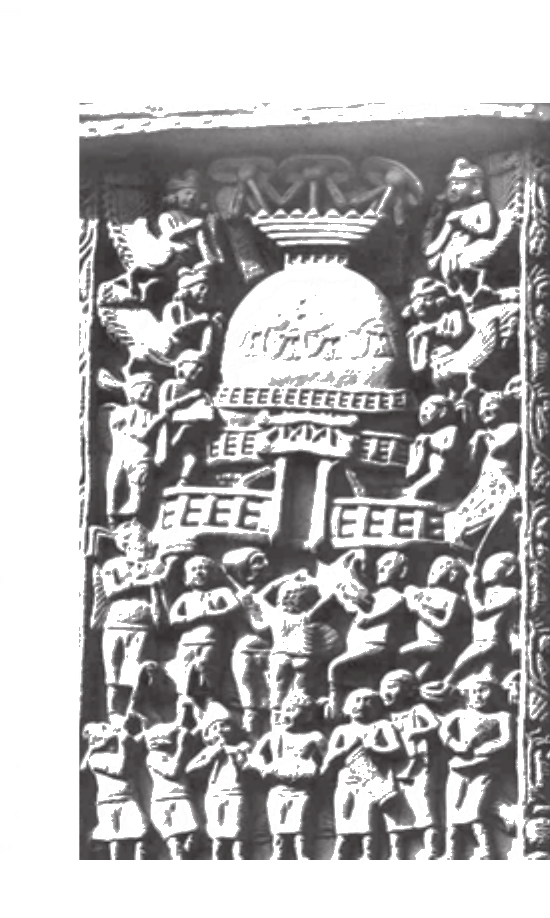
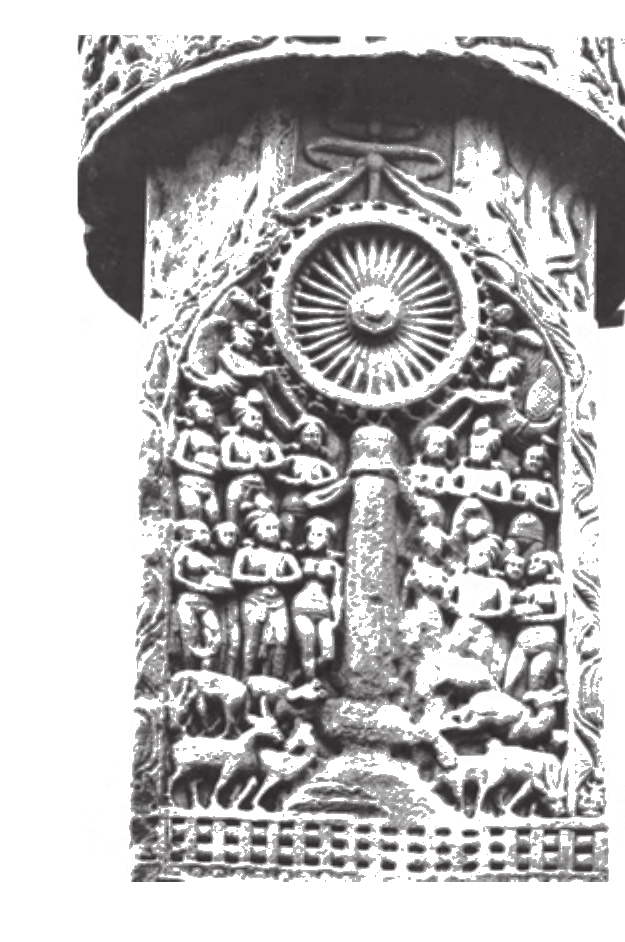
The other options go with other symbols: the stupa represented the mahaparinibbana, and the wheel (‘setting in motion the wheel of dharma’) stood for the first sermon, delivered at Sarnath.
NCERT (2025-26): “9.2 Symbols of worship … Art historians had to acquire familiarity with hagiographies of the Buddha in order to understand Buddhist sculpture. According to hagiographies, the Buddha attained enlightenment while meditating under a tree. Many early sculptors did not show the Buddha in human form – instead, they showed his presence through symbols. The empty seat (Fig. 4.14) was meant to indicate the meditation of the Buddha, and the stupa (Fig. 4.15) was meant to represent the mahaparinibbana. Another frequently used symbol was the wheel (Fig. 4.16). This stood for the first sermon of the Buddha, delivered at Sarnath.…”
|