Assume that the marginal propensity to consume is 0.8. The tax multiplier will then be ................
Answer & explanation
Correct answer: option 2
The correct answer is Option (2) → -4
Given:
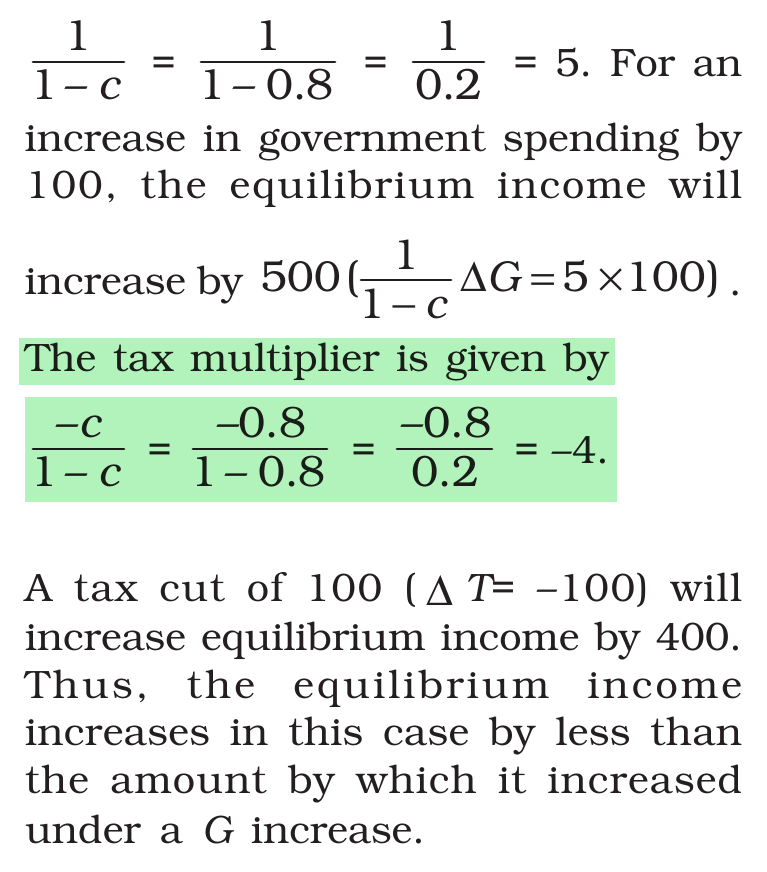
Marginal propensity to consume, c = 0.8
The tax multiplier shows how much output changes when taxes change by one rupee:
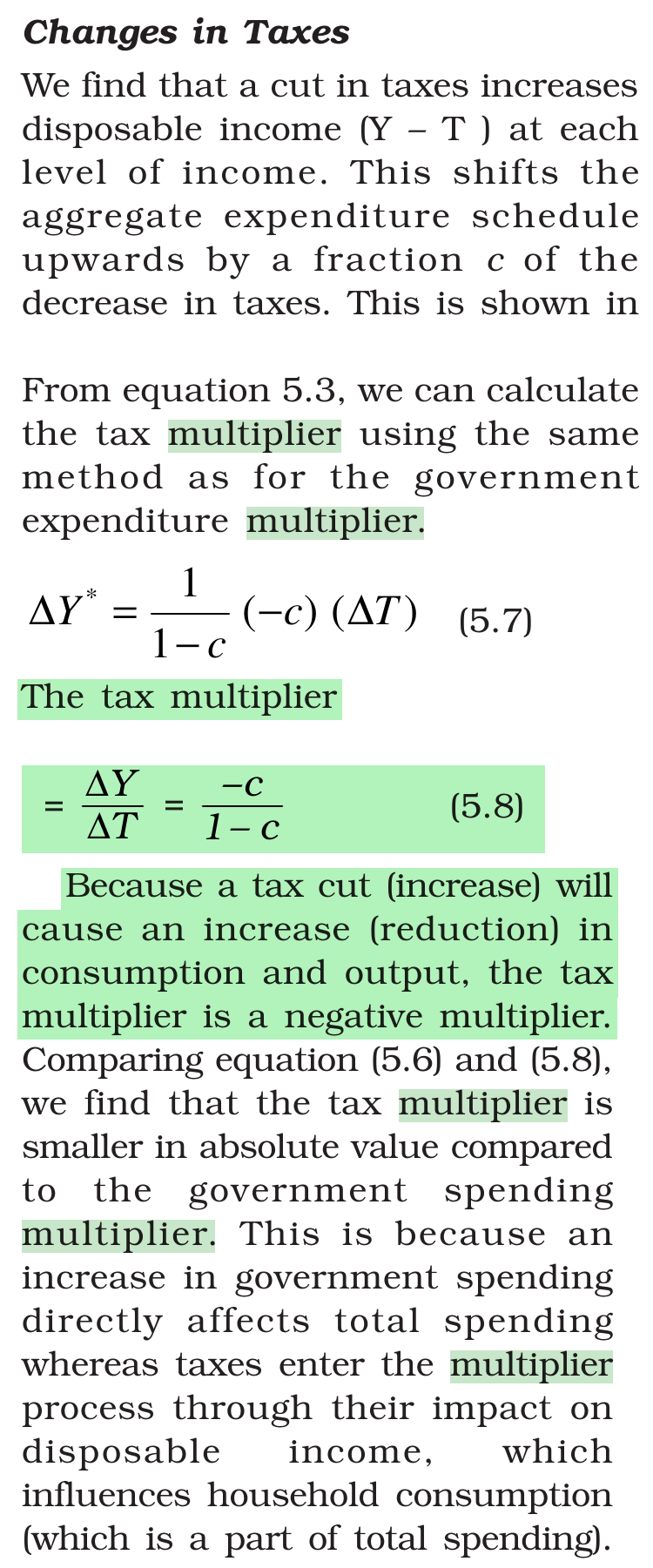
\( \displaystyle \text{Tax multiplier} = \frac{-c}{1-c} \)
\( \displaystyle \text{Tax multiplier} = \frac{-0.8}{1-0.8} \)
\( \displaystyle \text{Tax multiplier} = \frac{-0.8}{0.2} \) = −4
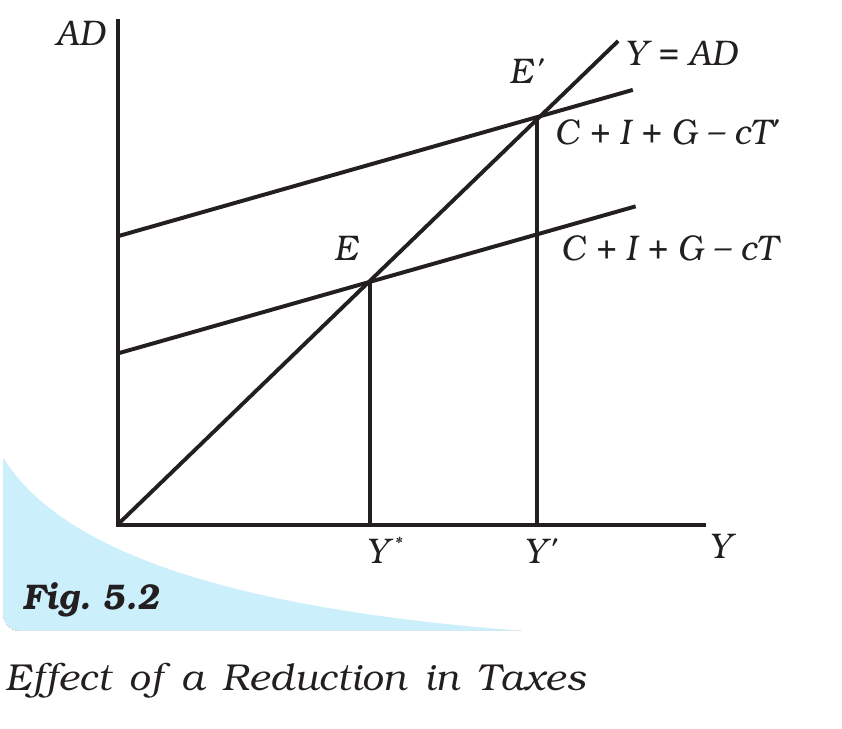
The sign is negative because a tax cut raises consumption and output, and a tax increase reduces them. The tax multiplier is smaller in absolute value than the government spending multiplier, which is 1/(1 − c) = 5 here.
Note 1: NTA has set this question from the example comparing the two multipliers in the chapter ‘Government Budget and the Economy’ of the NCERT book. The marginal propensity to consume, 0.8, is the same there.
Note 2: A same/similar question was asked in CUET (UG) in the papers below.
| 2026 | 2025 | 2024 | 2023 | 2022 |
| 07-06 S2* | 22-05 S2 | – | – | – |
* A similar question.
NCERT (2026-27): Introductory Macroeconomics — Chapter 5: Government Budget and the Economy
|