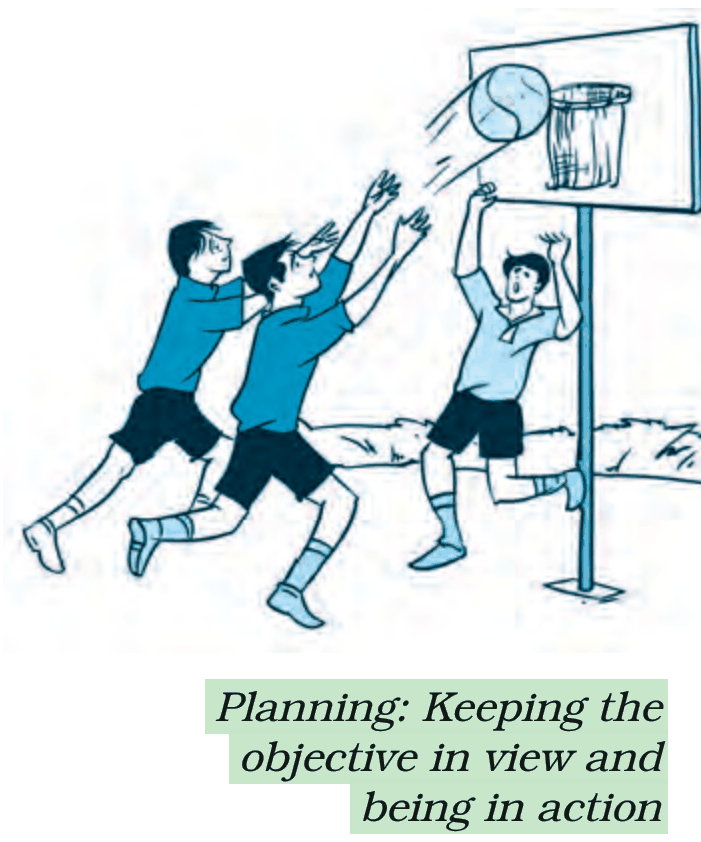
Consider the following statements about the concept of planning:
(A) Planning means keeping the objective in view and being in action.
(B) In planning, goals set the targets against which planned performance is measured.
(C) If the time factor is not taken into consideration, all business plans may go waste.
(D) A plan that is developed has to have a given time frame.
Which of the statements given above are correct?
Choose the correct answer from the options given below:
Answer & explanation
Correct answer: option 2
The correct answer is Option (2) → (A), (C) and (D) only
(A) Planning means keeping the objective in view and being in action. — Correct. A plan keeps the objective in view and turns it into action.
(B) In planning, goals set the targets against which planned performance is measured. — Incorrect. Goals set the targets against which actual performance is measured. Planned performance is the target itself.
(C) If the time factor is not taken into consideration, all business plans may go waste. — Correct. Ignoring time lets conditions in the environment change, and the plans lose their use.
(D) A plan that is developed has to have a given time frame. — Correct. Time is a limited resource, so every plan needs a time frame.
Note: Even the caption under the basketball picture carries a point about planning. Captions are short, so read them as you turn the page.
NCERT (2026-27 Edition): “Concept … These goals set the targets which need to be achieved and against which actual performance is measured. Therefore, planning means setting objectives and targets and formulating an action plan to achieve them. It is concerned with both ends and means i.e., what is to be done and how it is to be done. The plan that is developed has to have a given time frame but time is a limited resource. It needs to be utilised judiciously. If time factor is not taken into consideration, conditions in the environment may change and all business plans may go waste. Planning will be a futile exercise if it is not acted upon or implemented. …”
|