Match List-I with List-II.
| List-I | List-II |
| (A) GNP | (I) GNP - NFIA |
| (B) GDP | (II) NDP + NFIA |
| (C) NDP | (III) Depreciation + NNP |
| (D) NNP | (IV) GDP - Depreciation |
Choose the correct answer from the options given below :
Answer & explanation
Correct answer: option 2
The correct answer is Option (2) → A-III, B-I, C-IV, D-II
These aggregates differ by two adjustments. Depreciation, the wear and tear of capital, is what separates gross from net. Net factor income from abroad (NFIA) is what separates domestic from national.
| List-I | List-II | Reason |
|---|---|---|
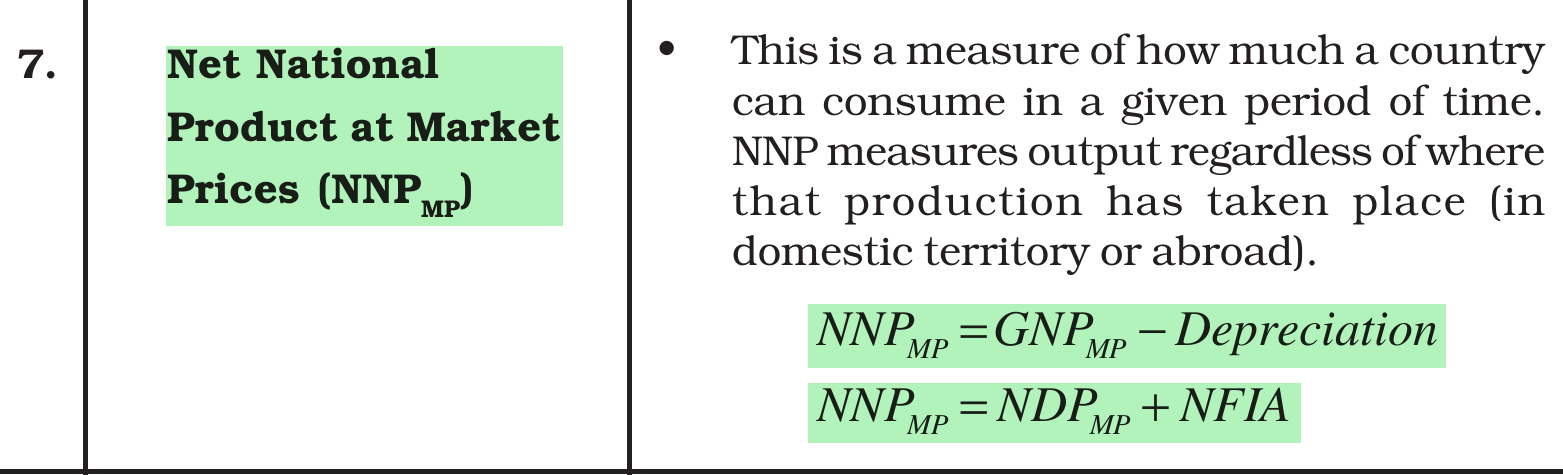
| (A) GNP | (III) Depreciation + NNP | Net national product (NNP) is gross national product (GNP) less depreciation. Adding depreciation back gives GNP. |
| (B) GDP | (I) GNP - NFIA | GNP is gross domestic product (GDP) plus NFIA. Taking NFIA out gives GDP. |
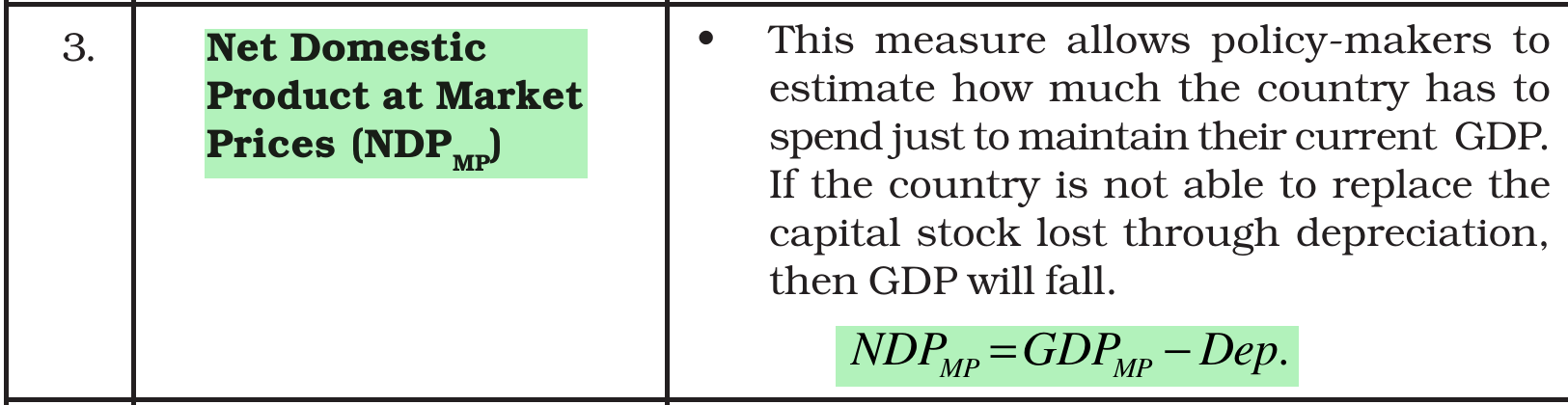
| (C) NDP | (IV) GDP - Depreciation | Taking depreciation out of GDP gives the net domestic product (NDP). |
| (D) NNP | (II) NDP + NFIA | Adding NFIA to NDP gives the net national product (NNP). |
NCERT (2026-27): “2.3 Some Macroeconomic Identities … Gross Domestic Product measures the aggregate production of final goods and services taking place within the domestic economy during a year. But the whole of it may not accrue to the citizens of the country.… Hence, GNP ≡ GDP + Net factor income from abroad (Net factor income from abroad = Factor income earned by the domestic factors of production employed in the rest of the world – Factor income earned by the factors of production of the rest of the world employed in the domestic economy). We have already noted that a part of the capital gets consumed during the year due to wear and tear. This wear and tear is called depreciation. Naturally, depreciation does not become part of anybody’s income. If we deduct depreciation from GNP the measure of aggregate income that we obtain is called Net National Product (NNP).…”
Table 2.4: Basic National Income Aggregates
Table 2.4: Basic National Income Aggregates |