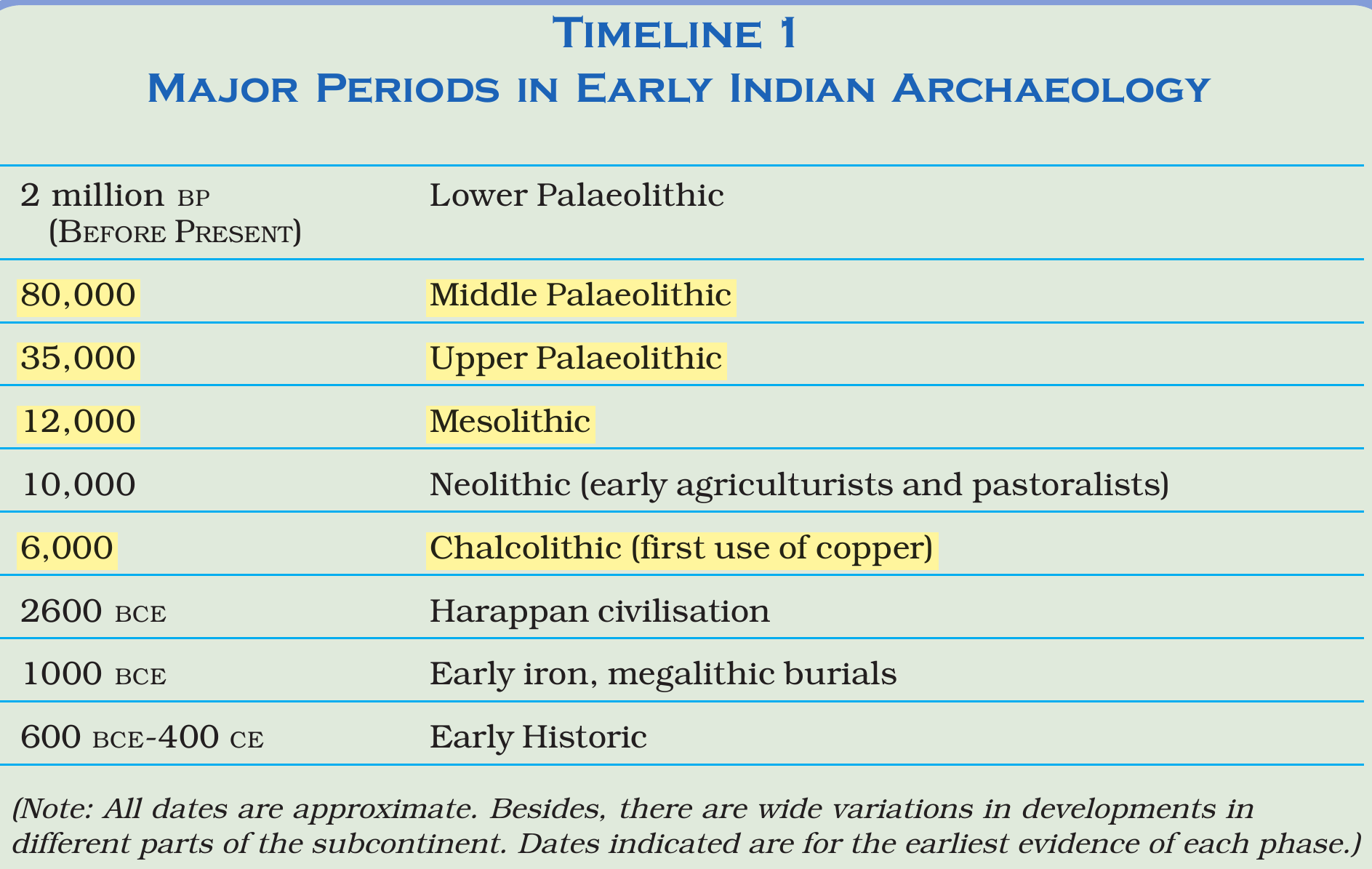
Match List-I with List-II:
| List-I Major Periods | List-II Timeline | ||
| (A) | Upper Palaeolithic | (I) | 6000 BP |
| (B) | Middle Palaeolithic | (II) | 35000 BP |
| (C) | Mesolithic | (III) | 12000 BP |
| (D) | Chalcolithic | (IV) | 80000 BP |
Choose the correct answer from the options given below:
Answer & explanation
Correct answer: option 4
The correct answer is Option (4) → (A)-(II), (B)-(IV), (C)-(III), (D)-(I)
(A) Upper Palaeolithic — this matches (II) 35000 BP. The Upper Palaeolithic follows the Middle Palaeolithic, so its date is later, that is, closer to the present.
(B) Middle Palaeolithic — this matches (IV) 80000 BP. It is the oldest of the four periods asked, after the Lower Palaeolithic of 2 million BP.
(C) Mesolithic — this matches (III) 12000 BP. It comes after the Upper Palaeolithic and before the Neolithic of 10,000 BP, the age of the early agriculturists and pastoralists.
(D) Chalcolithic — this matches (I) 6000 BP. The Chalcolithic is the period of the first use of copper, the latest of the four.
Tip: BP stands for Before Present, so the larger the number, the older the period. Revise the chapter timelines; this whole question is one of them.
NCERT: Themes in Indian History Part I — Chapter 1: Bricks, Beads and Bones (2026-27)
|