
In a depression in freezing point experiment, it is found that:
(A) The vapour pressure of the solution is less than that of the pure solvent.
(B) The vapour pressure of the solution is more than that of the pure solvent.
(C) Only solute molecules solidify at the freezing point.
(D) Only solvent molecules solidify at the freezing point.
Choose the correct answer from the options given below:
Answer & explanation
Correct answer: option 3
The correct answer is Option (3) → A and D only
A non-volatile solute lowers the vapour pressure of the solvent. The solution freezes when its vapour pressure becomes equal to that of the pure solid solvent, which happens at a lower temperature than for the pure solvent.
(A) The vapour pressure of the solution is less than that of the pure solvent. — True. The solute particles lower the vapour pressure of the solvent; this lowering is the cause of the depression of freezing point.
(B) The vapour pressure of the solution is more than that of the pure solvent. — False. It is the reverse of (A); a non-volatile solute lowers the vapour pressure.
(C) Only solute molecules solidify at the freezing point. — False. The solid that separates is the pure solid solvent; the solute stays in the liquid solution.
(D) Only solvent molecules solidify at the freezing point. — True. At the freezing point the liquid solution is in equilibrium with the pure solid solvent, so only solvent molecules solidify.
NCERT (2026-27 edition):
1.6.1 Relative Lowering of Vapour Pressure – “We have learnt in Section 1.4.3 that the vapour pressure of a solvent in solution is less than that of the pure solvent.”
1.6.3 Depression of Freezing Point – “The lowering of vapour pressure of a solution causes a lowering of the freezing point compared to that of the pure solvent (Fig. 1.8). … A solution will freeze when its vapour pressure equals the vapour pressure of the pure solid solvent as is clear from Fig. 1.8.”
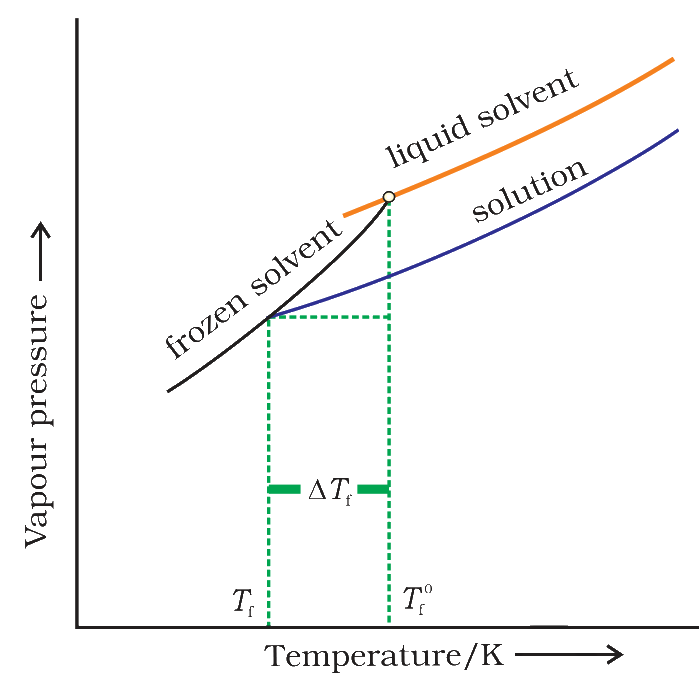
Fig. 1.8: Diagram showing ΔTf, depression of the freezing point of a solvent in a solution