Which of the following statements about the steps of the controlling process are correct?
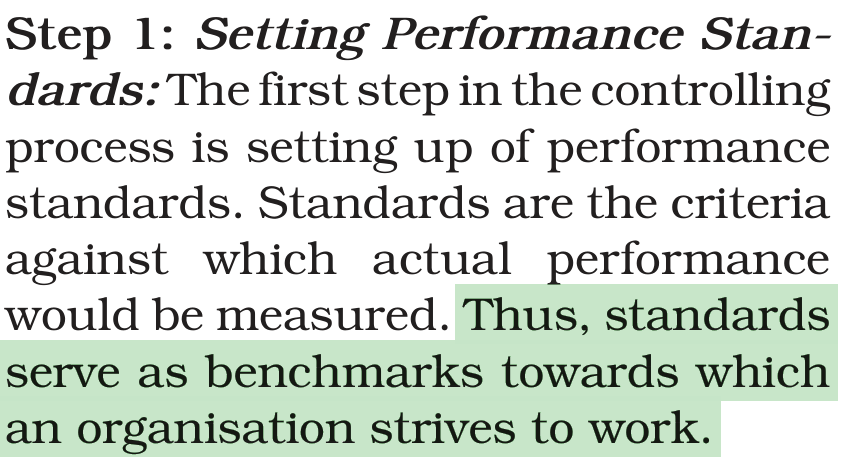
(A) Standards serve as benchmarks towards which an organisation strives to work.
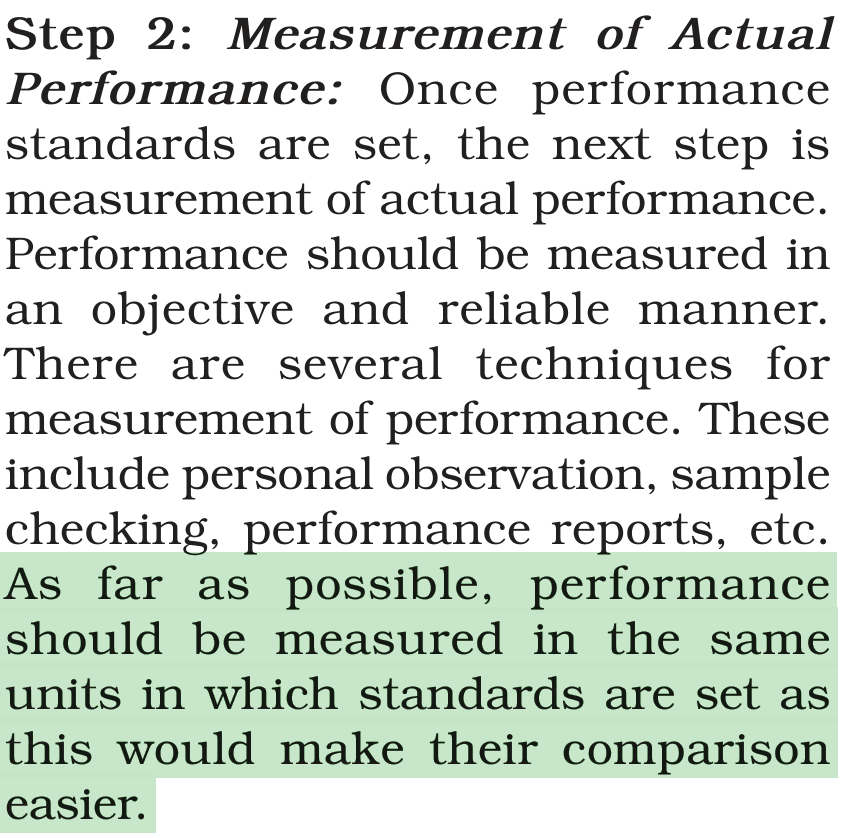
(B) As far as possible, performance should be measured in the same units in which standards are set.
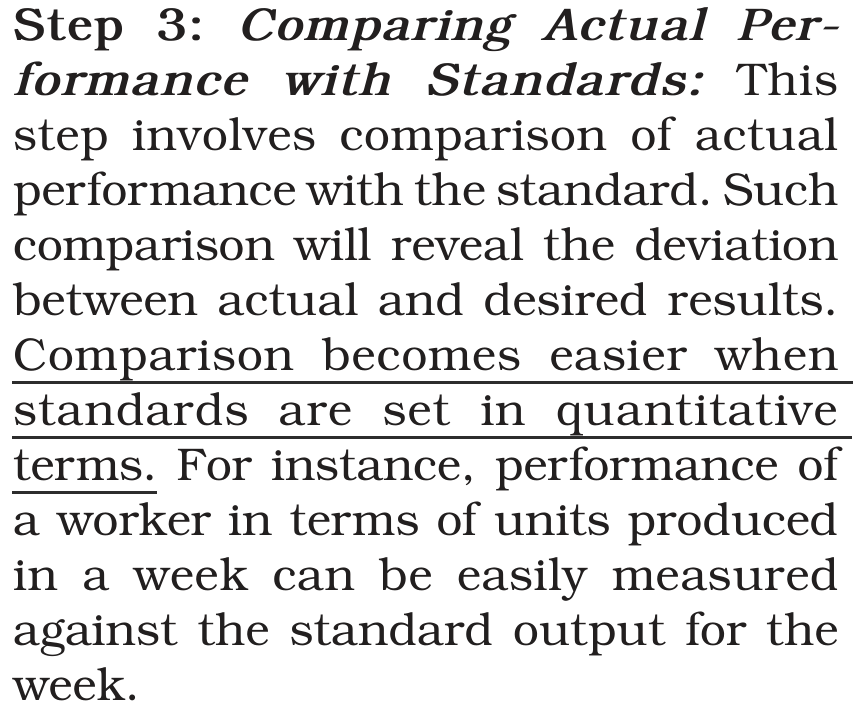
(C) Comparison of actual performance with standards becomes easier when standards are set in qualitative terms.
(D) No corrective action is required when the deviations are within acceptable limits.
Choose the correct answer from the options given below:
Answer & explanation
Correct answer: option 1
The correct answer is Option (1) → (A), (B) and (D) only
(A) Standards serve as benchmarks towards which an organisation strives to work. — Correct. Standards are the criteria against which actual performance is measured. So they act as benchmarks the organisation works towards.
(B) As far as possible, performance should be measured in the same units in which standards are set. — Correct. Measuring performance in the same units as the standard makes the comparison easier.
(C) Comparison of actual performance with standards becomes easier when standards are set in qualitative terms. — Incorrect. Comparison becomes easier when standards are set in quantitative terms. Figures, such as units produced in a week, can be checked straight against the standard.
(D) No corrective action is required when the deviations are within acceptable limits. — Correct. Deviations within acceptable limits need no corrective action. Action is needed only when they go beyond the acceptable range.
NCERT (2026-27 Edition):
“Step 5: Taking Corrective Action: The final step in the controlling process is taking corrective action. No corrective action is required when the deviations are within acceptable limits. …” |