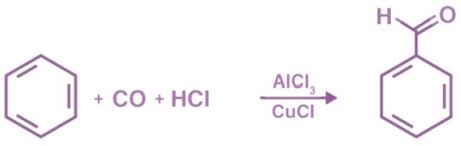
Name the following reaction.

Answer & explanation
Correct answer: option 4
The correct answer is Option (4) → Gatterman reaction
The given reaction shows the conversion of an aryl diazonium salt (ArN₂⁺X⁻) into an ary l bromide (ArBr) using copper and hydrogen bromide.
During the reaction:
- The diazonium group (–N₂⁺) is replaced by bromine
- Nitrogen gas (N₂) is released
- Copper halide is formed as a by-product
General reaction:
ArN₂⁺X⁻ + HBr (Cu) → ArBr + N₂ + CuX
This reaction is known as the Gattermann reaction.
In the Gattermann reaction, aryl diazonium salts react with hydrogen halides (HCl or HBr) in the presence of copper powder to produce aryl halides.
Option-wise Explanation
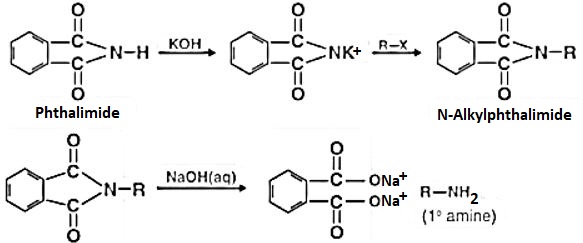
Option 1: Gabriel synthesis
Gabriel synthesis is used for preparing primary amines from alkyl halides using phthalimide. It does not involve diazonium salts or halogen substitution. Therefore this option is incorrect.
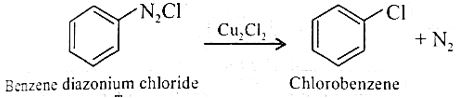
Option 2: Sandmeyer reaction
The Sandmeyer reaction converts aryl diazonium salts into aryl halides using copper(I) salts such as CuCl or CuBr. In the given reaction, hydrogen bromide and copper powder are used instead of copper(I) halide salts. Hence this option is incorrect.
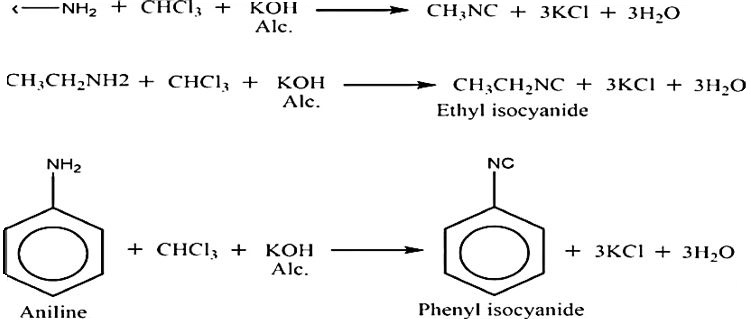
Option 3: Carbylamine reaction
Carbylamine reaction involves primary amines reacting with chloroform and alcoholic KOH to produce isocyanides. It does not involve diazonium salts. Therefore this option is incorrect.
Option 4: Gattermann reaction
The Gattermann reaction specifically involves the replacement of the diazonium group by halogen using hydrogen halides (HCl or HBr) in the presence of copper powder. The given reaction exactly matches this description. Hence this option is correct.