
How many of the following statements about the packaging of DNA are correct?
A. In prokaryotes, DNA is held with some proteins in a region termed the nucleoid.
B. In prokaryotes, the DNA in the nucleoid is organised in large loops held by proteins.
C. The nucleosomes in chromatin are seen as a ‘beads-on-string’ structure when viewed under the light microscope.
D. The beads-on-string structure in chromatin is packaged to form chromatin fibres that are further coiled and condensed at metaphase to form chromosomes.
Choose the correct answer from the options given below:
Answer & explanation
Correct answer: option 3
The correct answer is Option (3) → Three
DNA is far longer than the cell that holds it, so it has to be packed. In prokaryotes it is held in a region called the nucleoid; in eukaryotes it is wound into nucleosomes, which are then packed further into chromatin fibres and chromosomes.
A. In prokaryotes, DNA is held with some proteins in a region termed the nucleoid. — True.
B. In prokaryotes, the DNA in the nucleoid is organised in large loops held by proteins. — True.
C. The nucleosomes in chromatin are seen as a ‘beads-on-string’ structure when viewed under the light microscope. — False. The beads-on-string structure is seen under the electron microscope (EM).
D. The beads-on-string structure in chromatin is packaged to form chromatin fibres that are further coiled and condensed at metaphase to form chromosomes. — True.
A, B and D are correct, so three statements are correct.
NCERT Extract:
Packaging of DNA Helix – “… DNA (being negatively charged) is held with some proteins (that have positive charges) in a region termed as ‘nucleoid’. The DNA in nucleoid is organised in large loops held by proteins.”
Packaging of DNA Helix – “… The nucleosomes in chromatin are seen as ‘beads-on-string’ structure when viewed under electron microscope (EM) (Figure 5.4 b). … The beads-on-string structure in chromatin is packaged to form chromatin fibers that are further coiled and condensed at metaphase stage of cell division to form chromosomes.”
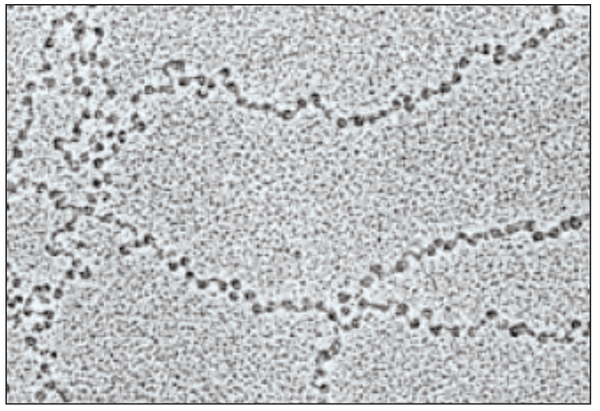
Figure 5.4b EM picture – ‘Beads-on-String’