Match the LIST-I with LIST-II
| LIST-I | LIST-II | ||
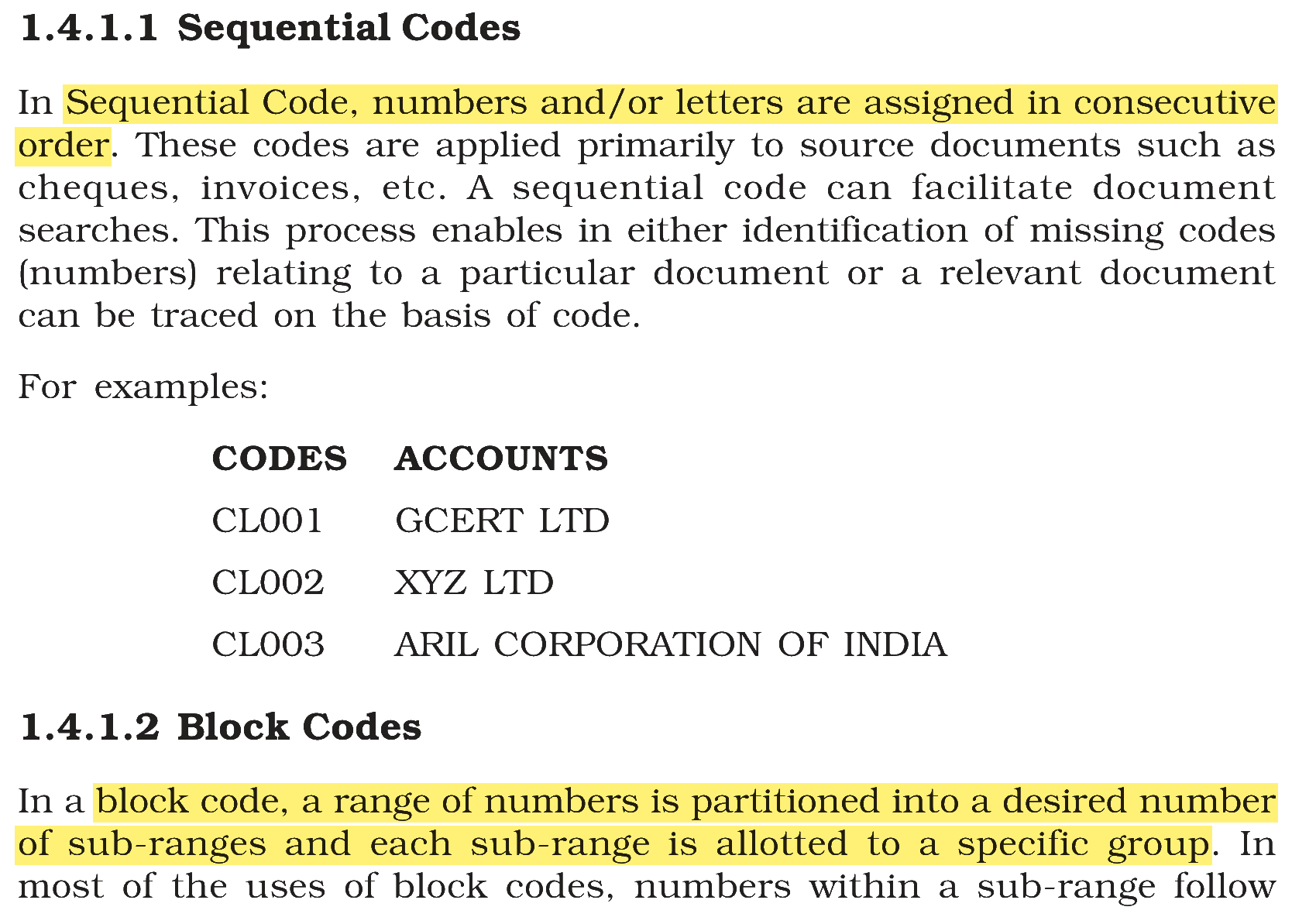
| A. | Numbers and/or letters are assigned in consecutive order. | I. | Block code |
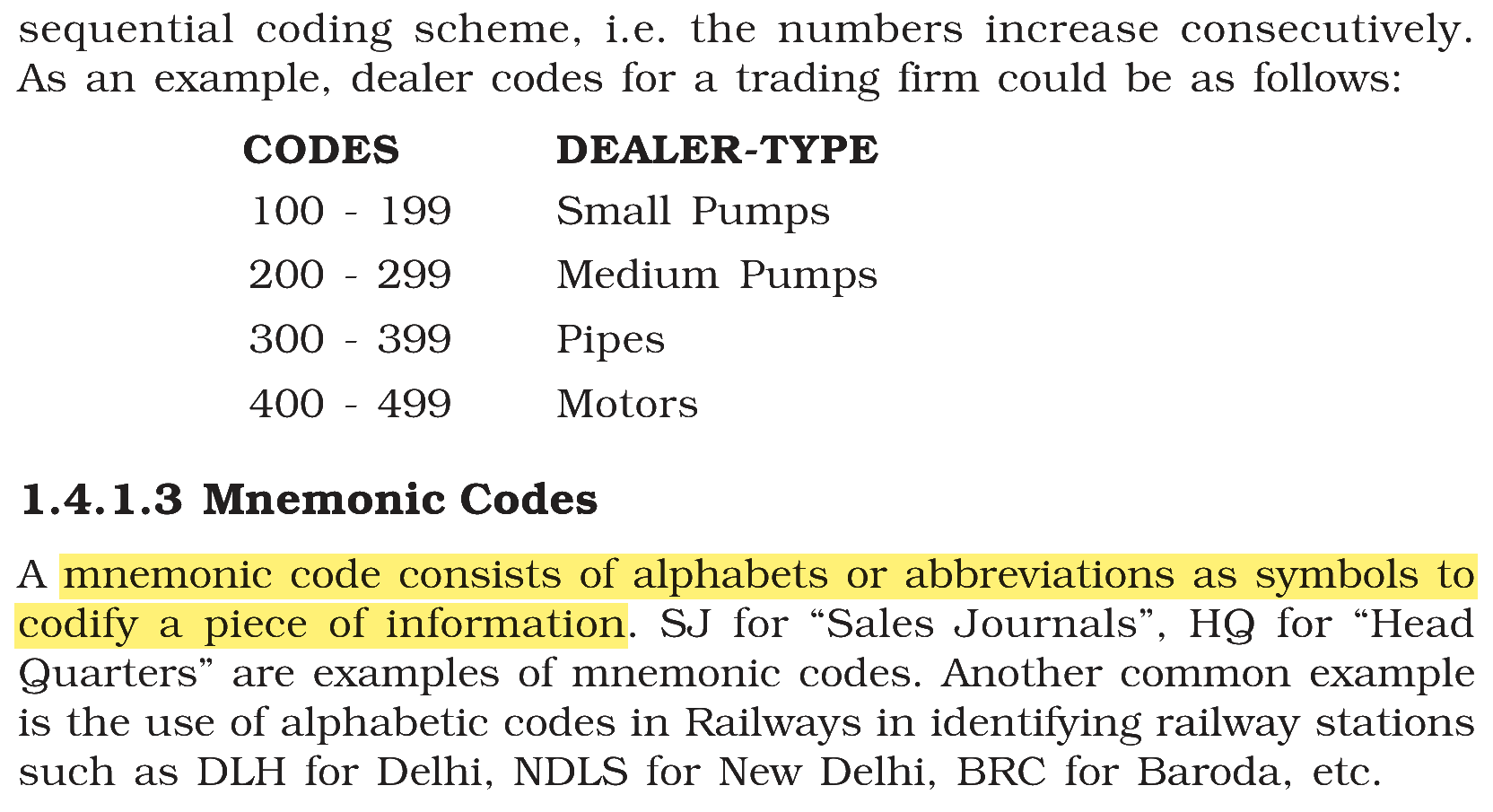
| B. | A range of numbers is partitioned into a desired number of sub-ranges and each sub-range is allotted to a specific group. | II. | Sequential Code |
| C. | Consists of alphabets or abbreviations as symbols to codify a piece of information. | III. | Data Vault |
| D. | Software provides additional security through data encryption | IV. | Mnemonic code |
Choose the correct answer from the options given below:
Answer & explanation
Correct answer: option 1
The correct answer is Option (1) → A-II, B-I, C-IV, D-III
Three items are ways of coding accounts, and one is a security feature of accounting software.
(A) Numbers and/or letters are assigned in consecutive order. — this matches (II) Sequential Code. Cheques and invoices are numbered one after another in this way, which makes a missing number easy to spot.
(B) A range of numbers is partitioned into a desired number of sub-ranges and each sub-range is allotted to a specific group. — this matches (I) Block code. For example, 100–199 can stand for one dealer type and 200–299 for another.
(C) Consists of alphabets or abbreviations as symbols to codify a piece of information. — this matches (IV) Mnemonic code. The letters hint at what they stand for, like SJ for Sales Journal.
(D) Software provides additional security through data encryption — this matches (III) Data Vault. Encryption scrambles the data so that it cannot be read without the key.
NCERT (2026-27 edition):
NCERT (2026-27 edition):
|