Edema is caused by
Answer & explanation
Correct answer: option 1
The correct answer is Option (1) → Water retention (osmosis) due to high intake of salt
Osmosis is the flow of solvent through a semipermeable membrane from the side of lower solute concentration to the side of higher solute concentration. Cell membranes behave like such membranes.
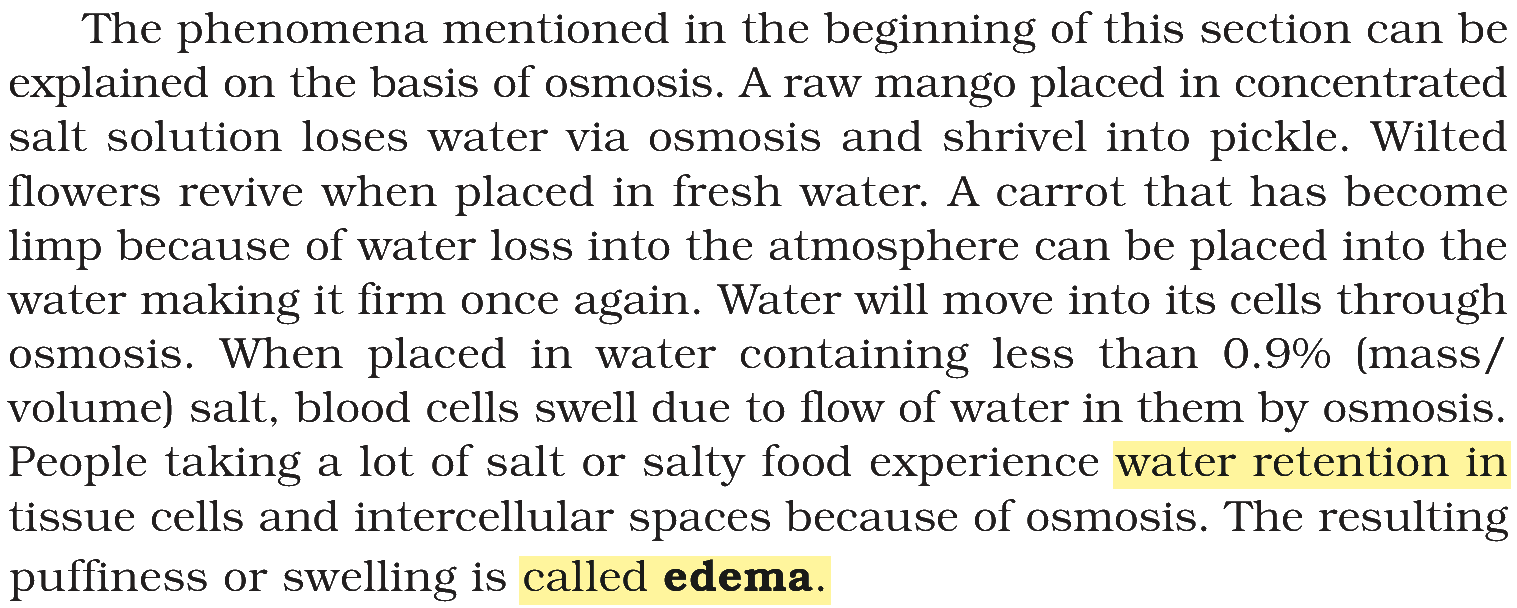
When a person takes a lot of salt or salty food, the concentration of salt in the tissue cells and the spaces between them rises. Water then flows into these regions by osmosis and is retained there. The resulting puffiness or swelling is called edema.
Why the other options are incorrect
Option (2) Water loss (reverse osmosis) due to high intake of salt — Incorrect. Edema is swelling, a gain of water. Reverse osmosis also needs an external pressure larger than the osmotic pressure, as in desalination plants; it does not happen in tissues.
Option (3) Water retention (reverse osmosis) due to low intake of salt — Incorrect. Low salt would draw less water into the tissues, and the process is ordinary osmosis.
Option (4) Water loss (osmosis) due to high intake of salt — Incorrect. High salt draws water into the tissues, so the result is retention, not loss.
NCERT (2026-27 edition):
Osmosis and Osmotic Pressure – …