Match List-I with List-II
|
List-I |
List-II |
|
(A) Operating activities |
(I) Proceeds from long-term borrowings |
|
(B) Investing activities |
(II) Short-term deposit |
|
(C) Financing activities |
(III) Rent paid |
|
(D) Cash equivalents |
(IV) Proceeds from sale of old machinery |
Choose the correct answer from the options given below:
Answer & explanation
Correct answer: option 4
The correct answer is Option (4) → (A)-(III), (B)-(IV), (C)-(I), (D)-(II)
Cash flows are grouped by the activity that causes them: the main business, long-term assets, or long-term funds; very short, liquid investments are treated as cash itself.
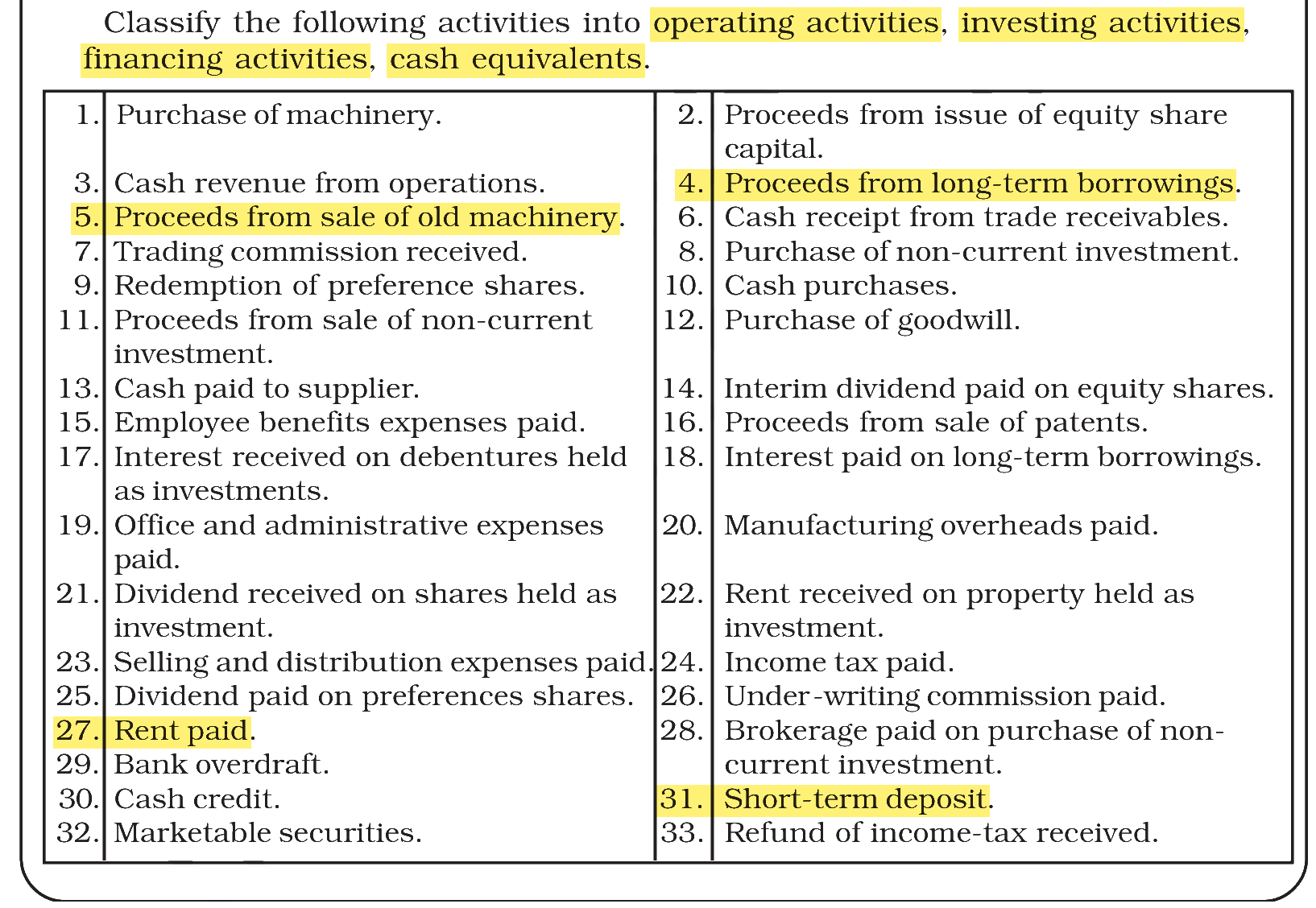
(A) Operating activities — this matches (III) Rent paid. Rent is a running expense of the main business, so its payment is an operating outflow.
(B) Investing activities — this matches (IV) Proceeds from sale of old machinery. Machinery is a long-term asset, and cash from disposal of fixed assets is an investing inflow.
(C) Financing activities — this matches (I) Proceeds from long-term borrowings. Borrowing changes the long-term funds of the enterprise, so it is a financing inflow.
(D) Cash equivalents — this matches (II) Short-term deposit. A short-term deposit is a highly liquid investment with a short maturity, readily turned into a known amount of cash.
NCERT (2026-27 edition):
|