
Statement I: Each antibody molecule has four peptide chains, two small called heavy chains and two longer called light chains.
Statement II: Graft rejection is due to the cell-mediated immune response, which is mediated by T-lymphocytes.
In the light of the above statements, choose the correct answer from the options given below:
Answer & explanation
Correct answer: option 2
The correct answer is Option (2) → Only Statement II is correct.
An antibody is a protein made by B-lymphocytes. Each antibody molecule has four peptide chains: two small light chains and two longer heavy chains, so it is written as H2L2. The second type of acquired immune response, cell-mediated immunity (CMI), is carried out by T-lymphocytes.
Statement I: Each antibody molecule has four peptide chains, two small called heavy chains and two longer called light chains. — False. The number of chains is right, but the names are swapped. The two small chains are the light chains and the two longer chains are the heavy chains.
Statement II: Graft rejection is due to the cell-mediated immune response, which is mediated by T-lymphocytes. — True. The body can tell ‘self’ from ‘non-self’. A graft from an unmatched source is treated as non-self and is rejected by the cell-mediated immune response, which the T-lymphocytes carry out.
NCERT Extract:
Acquired Immunity – “… The T-cells themselves do not secrete antibodies but help B cells to produce them. Each antibody molecule has four peptide chains, two small called light chains and two longer called heavy chains. Hence, an antibody is represented as H2L2. … The second type is called cell-mediated immune response or cell-mediated immunity (CMI). The T-lymphocytes mediate CMI.”
Acquired Immunity – “… The body is able to differentiate ‘self’ and ‘nonself’ and the cell-mediated immune response is responsible for the graft rejection.”
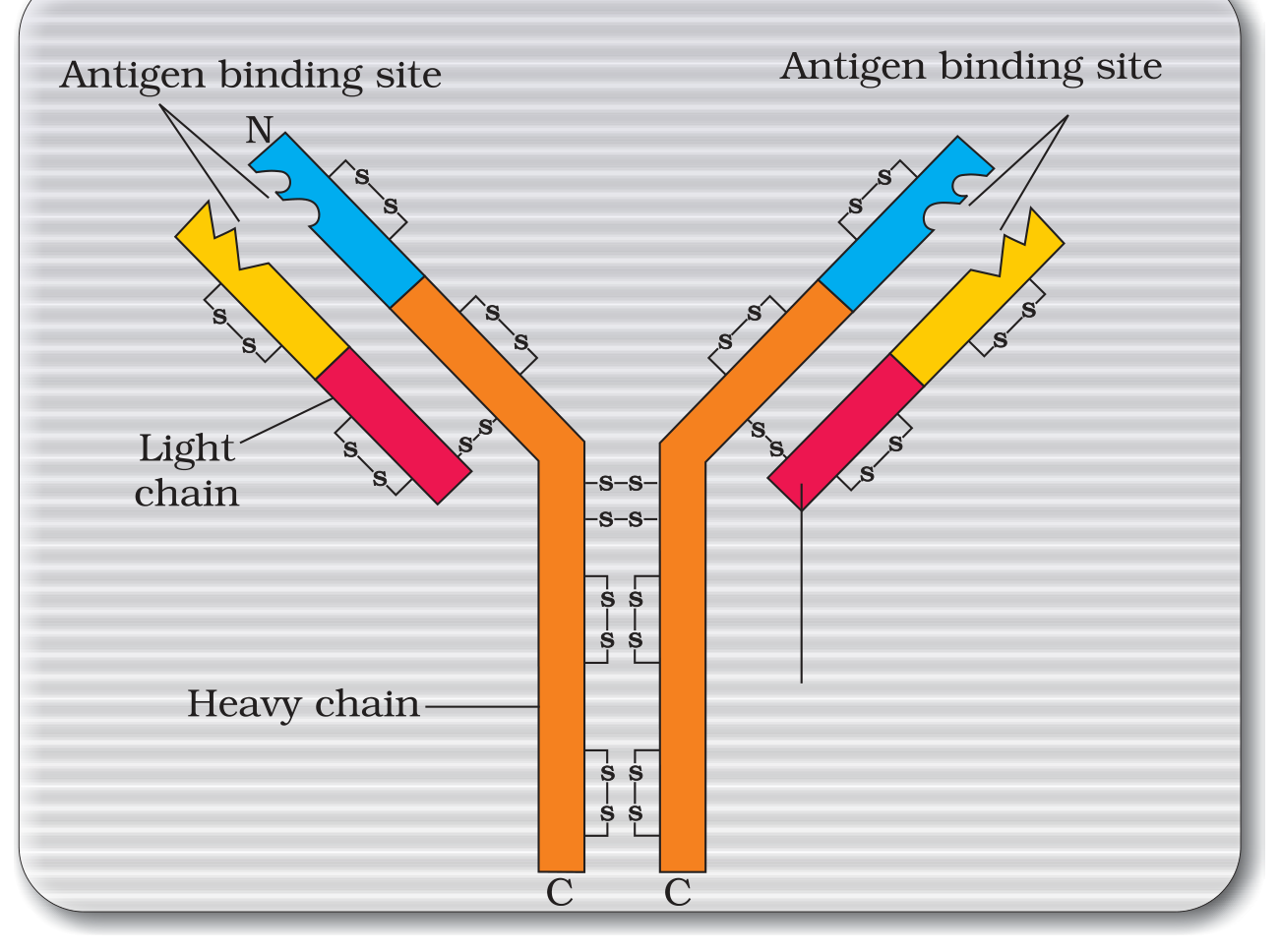
Figure 7.4 Structure of an antibody molecule