Read the case study and answer the following.
The rupee rose by 3 paise to settle at 72.94 (provisional) against the US dollar on Monday, extending its gains for the fifth straight session despite heavy selling in domestic equity market. At the inter-bank Forex market, the rupee opened at 72.95 against the American currency and hit an intraday high of 72.89 and a low of 72.96 in day trade. It finally finished at 72.94, higher by 3 paise over its last close. On Friday, the rupee had settled at 72.97 against the American currency. Meanwhile, the dollar index, which gauges the greenback's strength against a basket of six currencies advanced 0.10 percent to 90.32. The rupee has managed to hold its fort around the 72.90 to 73 levels, but given the sell-off in equities and the likelihood of a rebound in the dollar index, we see the trend tilting slightly towards depreciation going forward.
Depreciation of currency is caused due to :
Answer & explanation
Correct answer: option 2
The correct answer is Option (2) → More supply and less demand of currency
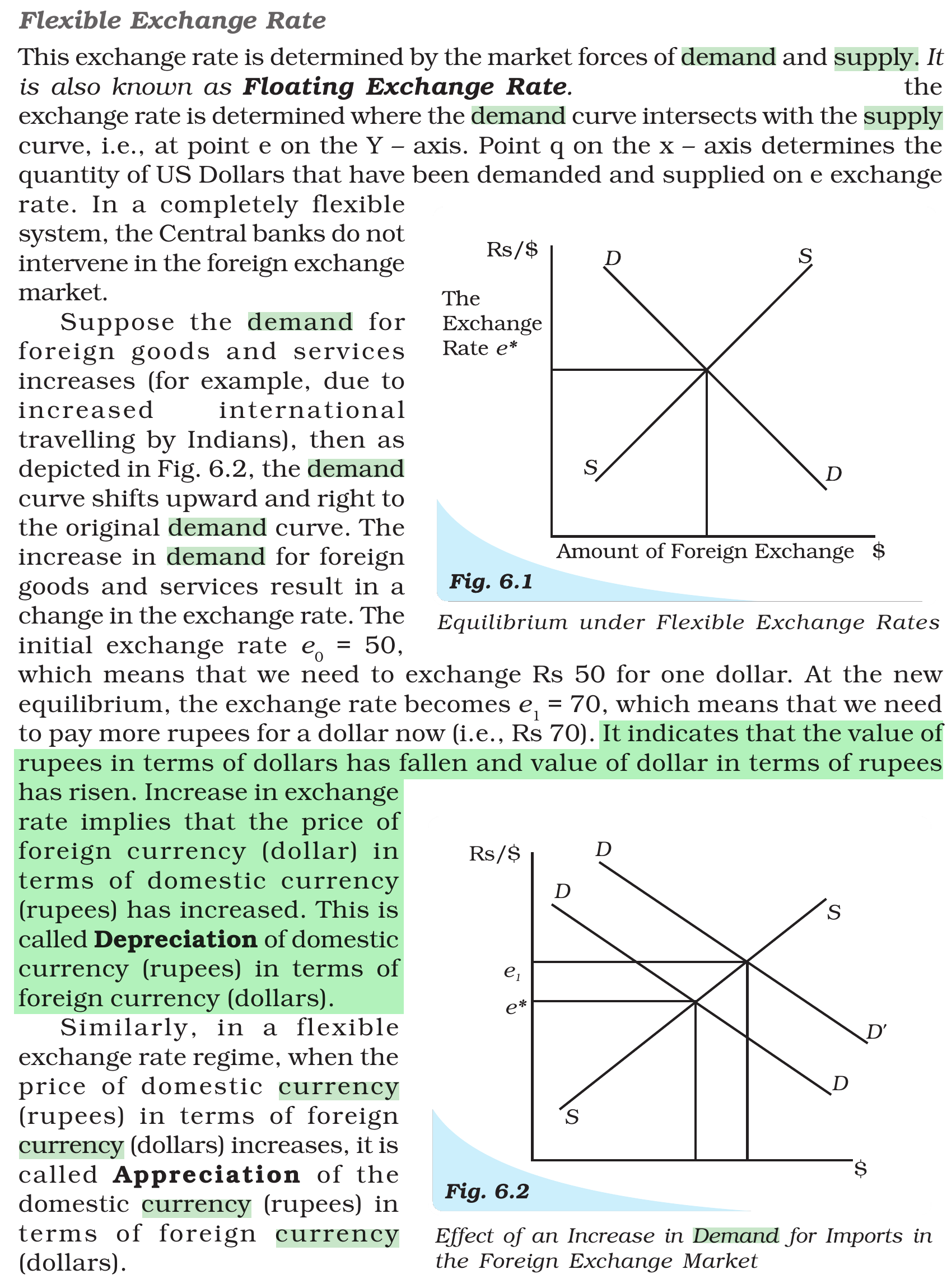
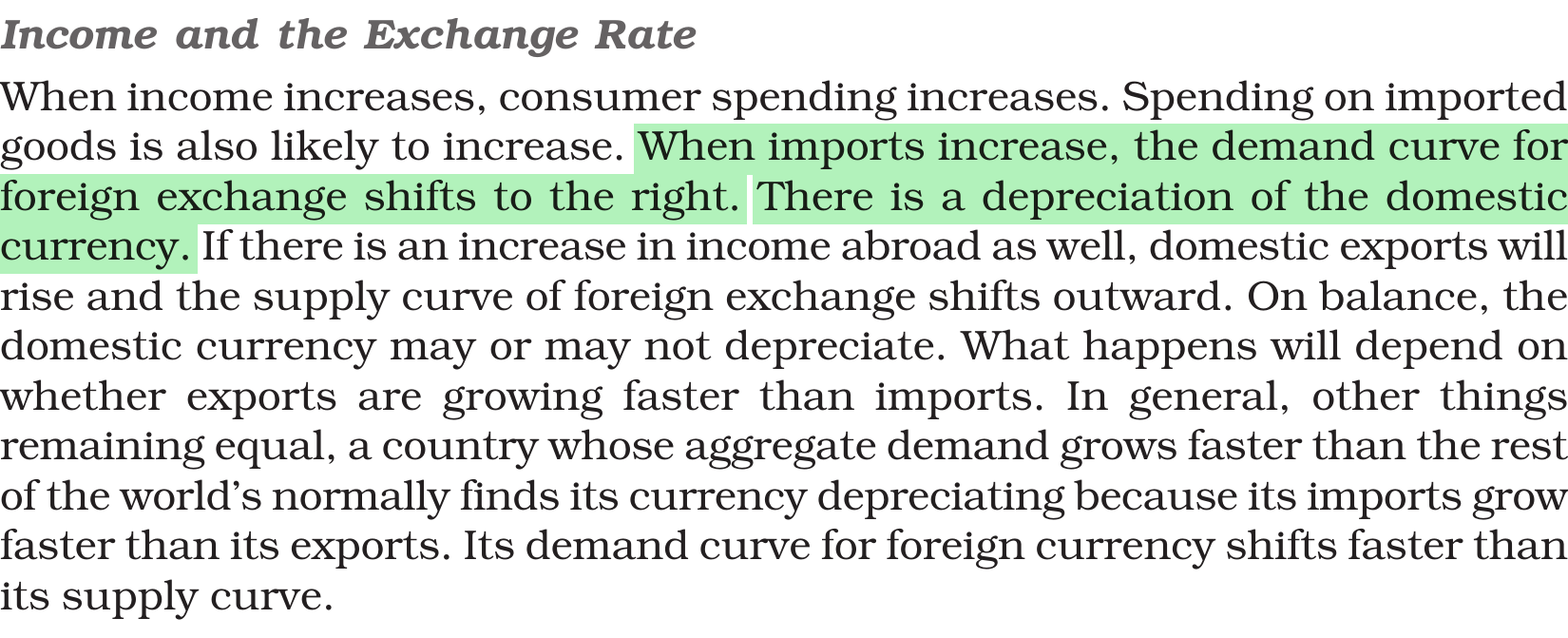
The exchange rate is a price. So a currency loses value when its demand falls and its supply rises.
Option (1) More demand and less supply of currency — Incorrect. Both forces push the currency’s price up. That gives appreciation.
Option (2) More supply and less demand of currency — Correct. Depreciation is a fall in a currency’s value in terms of another currency. Both forces push its price down.
Option (3) More demand and more supply of currency — Incorrect. The two forces pull in opposite directions. The price may go either way, so depreciation does not have to follow.
Option (4) Less demand and less supply of currency — Incorrect. Here too the forces pull in opposite directions, so the result is not settled.
NCERT (2026-27): Introductory Macroeconomics — Chapter 6: Open Economy Macroeconomics
|