Read the passage carefully and answer the questions based on the passage:
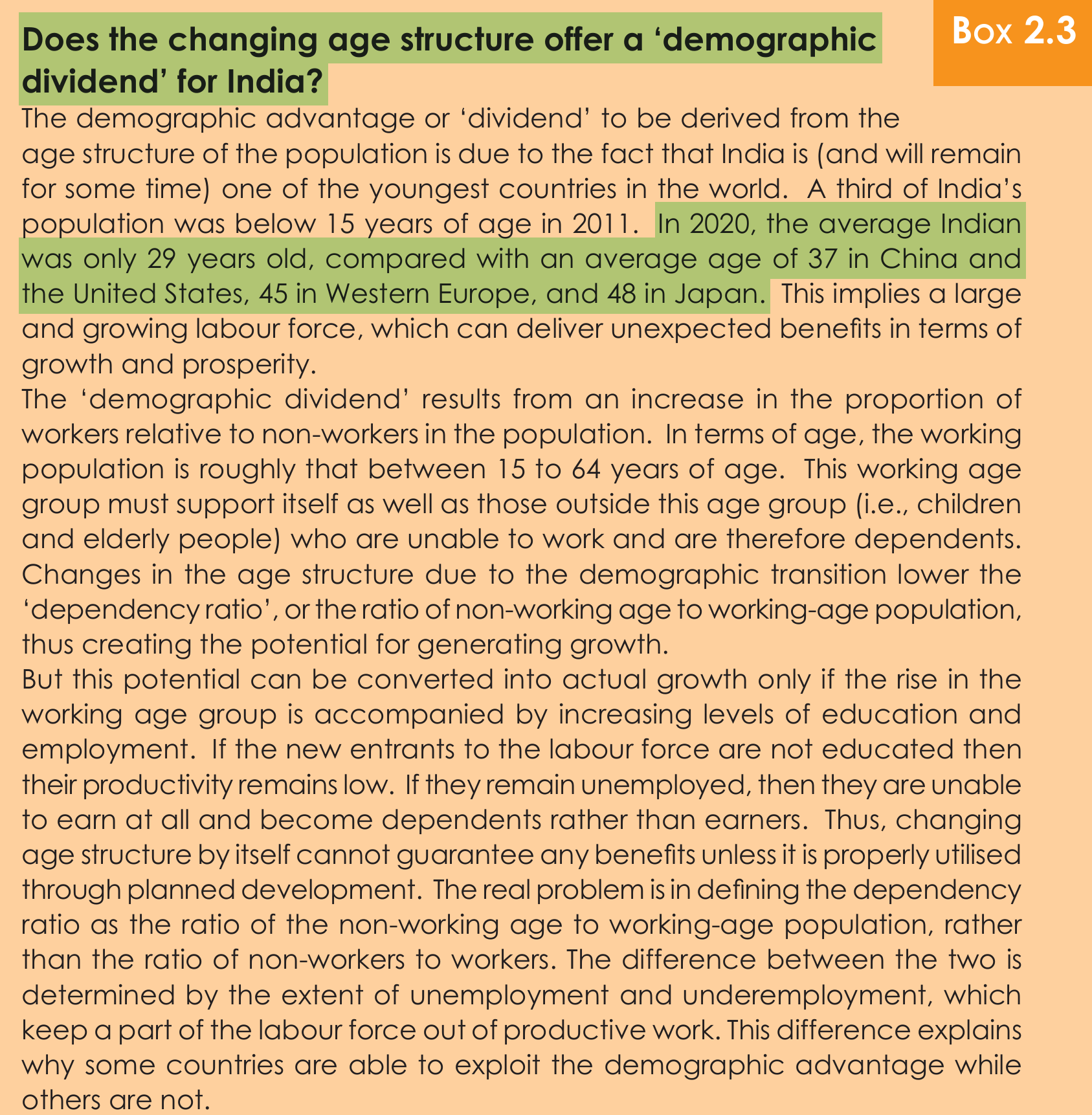
The demographic advantage or 'dividend' to be derived from the age structure of the population is due to the fact that India is (and will remain for some time) one of the youngest countries in the world. A third of India's population was below 15 years of age in 2011. In 2020, the average Indian was only 29 years old, compared with an average age of 37 in China and the United States, 45 in Western Europe, and 48 in Japan. This implies a large and growing labor force, which can deliver unexpected benefits in terms of growth and prosperity.
Which country was the best poised to benefit from demographic dividend according to the 2020 data?
Answer & explanation
Correct answer: option 2
The correct answer is Option (2) → China
The passage compares the average age in 2020: India 29 years, China and the United States 37, Western Europe 45 and Japan 48. The younger the population, the larger its labour force in the years ahead and the smaller the number of old people it has to support, so the youngest population is the best placed to gain from the dividend. India is the youngest, but it is not among the options; of the options, China, with an average age of 37, is the youngest. Western Europe (45) and Japan (48) have much older populations. Canada does not appear in the passage at all, so it cannot be chosen on the 2020 data the question refers to.
Note: The passage gives only the average ages; it does not say which country is best placed, so the answer rests on reasoning. A younger population has a larger share of people entering the working ages and fewer old people to support, so it is better placed to gain from the demographic dividend. Among the options, China, with an average age of 37, is the youngest.
NCERT: Indian Society — Chapter 2: The Demographic Structure of the Indian Society (2025-26)
|