
Match List-I with List-II:
| List-I | List-II |
| A. Producers | I. Primary carnivores |
| B. Primary consumers | II. Herbivores |
| C. Secondary consumers | III. Saprotrophs |
| D. Decomposers | IV. Plants and photosynthetic bacteria |
Choose the correct answer from the options given below:
Answer & explanation
Correct answer: option 1
The correct answer is Option (1) → A-IV, B-II, C-I, D-III
(A) Producers — this matches (IV) Plants and photosynthetic bacteria. They are autotrophs: they fix the sun’s energy to make food from simple inorganic materials. They form the first trophic level.
(B) Primary consumers — this matches (II) Herbivores. Primary consumers feed on the producers, the plants, so they are plant-eaters, for example insects, cows and zooplankton.
(C) Secondary consumers — this matches (I) Primary carnivores. They eat the herbivores. The book calls them primary carnivores, though they are secondary consumers.
(D) Decomposers — this matches (III) Saprotrophs. Decomposers are heterotrophs that meet their energy and nutrient needs by degrading dead organic matter (detritus), so they are also called saprotrophs (sapro: to decompose).
NCERT Extract:
Energy Flow – “… We know that plants and photosynthetic bacteria (autotrophs), fix Sun’s radiant energy to make food from simple inorganic materials. … All animals depend on plants (directly or indirectly) for their food needs. They are hence called consumers and also heterotrophs. If they feed on the producers, the plants, they are called primary consumers, and if the animals eat other animals which in turn eat the plants (or their produce) they are called secondary consumers. Likewise, you could have tertiary consumers too. Obviously the primary consumers will be herbivores. … The consumers that feed on these herbivores are carnivores, or more correctly primary carnivores (though secondary consumers). … The detritus food chain (DFC) begins with dead organic matter. It is made up of decomposers which are heterotrophic organisms, mainly fungi and bacteria. They meet their energy and nutrient requirements by degrading dead organic matter or detritus. These are also known as saprotrophs (sapro: to decompose).”
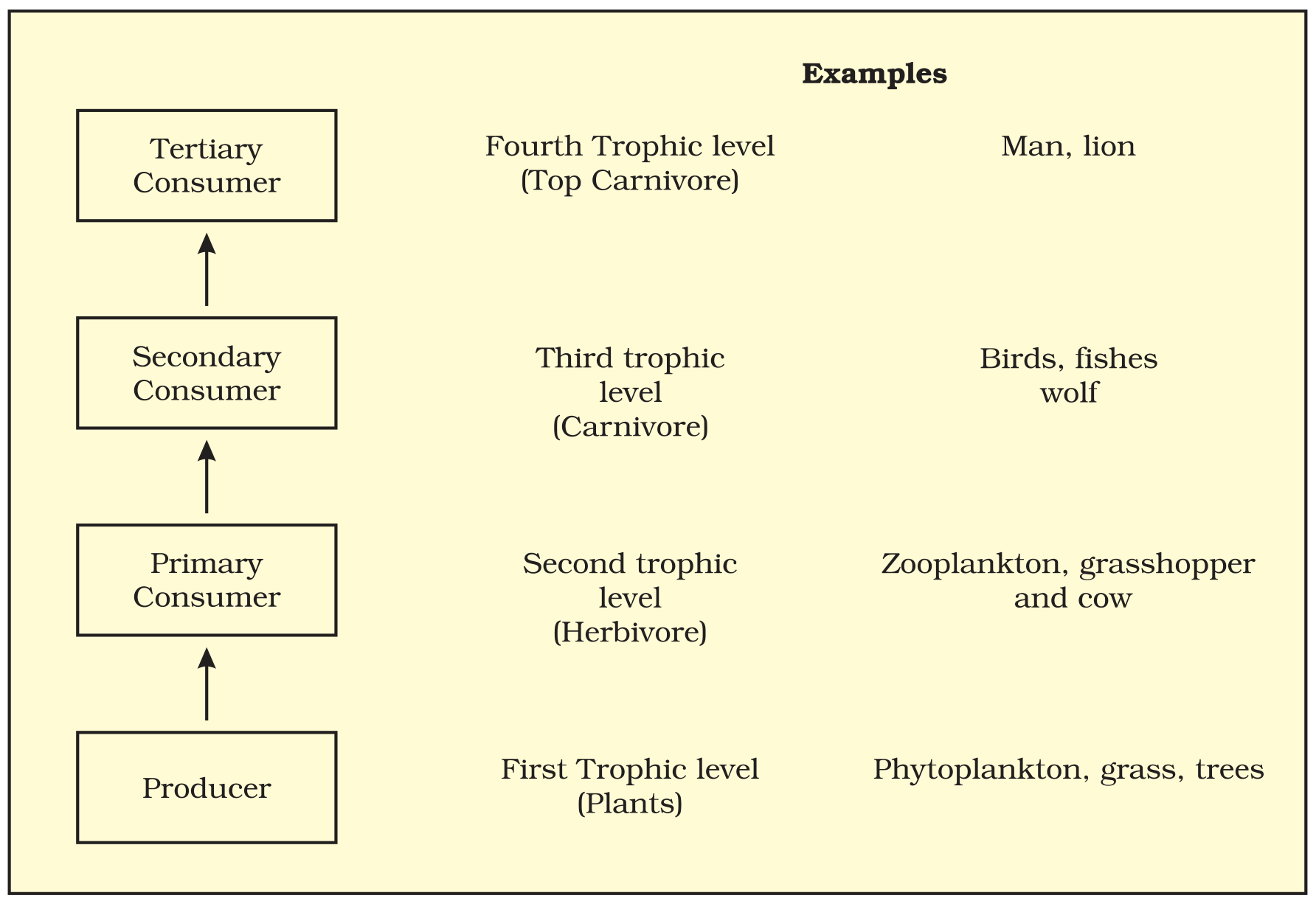
Figure 12.2 Diagrammatic representation of trophic levels in an ecosystem