
Match the LIST-I with LIST-II.
| LIST-I (Structures) | LIST-II (Name of the compounds) | ||
| A. | 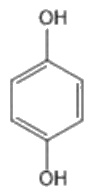 | I. | Resorcinol |
| B. | 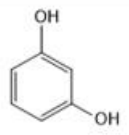 | II. | Quinol |
| C. | 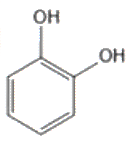 | III. | Aspirin |
| D. | 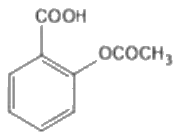 | IV. | Catechol |
Choose the correct answer from the options given below:
Answer & explanation
Correct answer: option 2
The correct answer is Option (2) → A-II, B-I, C-IV, D-III
Benzene has three dihydroxy derivatives, which differ only in the positions of the two –OH groups on the ring. Each has a common name:
1,2- (ortho): benzene-1,2-diol, catechol
1,3- (meta): benzene-1,3-diol, resorcinol
1,4- (para): benzene-1,4-diol, quinol (hydroquinone)
(A) Structure A — This matches (II) Quinol. The two –OH groups are on opposite carbons of the ring (1,4 or para), so it is benzene-1,4-diol.
(B) Structure B — This matches (I) Resorcinol. The –OH groups are separated by one carbon (1,3 or meta), so it is benzene-1,3-diol.
(C) Structure C — This matches (IV) Catechol. The –OH groups are on adjacent carbons (1,2 or ortho), so it is benzene-1,2-diol.
(D) Structure D — This matches (III) Aspirin. It has a –COOH group and an acetoxy (–OCOCH3) group on adjacent carbons, so it is 2-acetoxybenzoic acid (acetylsalicylic acid).
Shortcut: The pair C–IV appears in Options (2) and (4), and A–II then leaves only Option (2).